


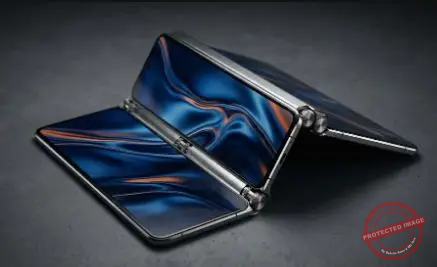
Why the next wave of mobile innovation is all about hinges, hybrid displays and new ways of holding a phone.
From Niche Curiosity To Fast-Growing Category
Foldable smartphones spent their first few years as expensive experiments. By 2026, they have become one of the most dynamic segments of the market. Analyst houses such as TrendForce project foldable shipments around the high-teens millions in 2024, with penetration rising toward nearly five percent of the smartphone market by 2028 as prices fall and durability improves. TrendForce+1
A maturing supply chain propels this growth for ultra-thin glass and flexible OLED, as well as better hinge engineering that can withstand hundreds of thousands of folds. It is also driven by a new generation of software that takes advantage of changing aspect ratios and multi-window layouts, rather than simply stretching phone apps across odd-shaped screens.
In 2026, a premium Android shelf at a carrier store is as likely to display clamshells, book-style foldables and even tri-fold devices as it is to show traditional slabs. While Samsung remains the best-known global name in the foldable arena, challengers from China, Korea and the United States are rapidly broadening the choice of sizes and price points. The Times of India
Huawei’s Tri-Fold Gamble And The Race To Larger Canvases
One of the boldest hardware statements of the last year has been Huawei’s Mate XT, a tri-fold smartphone that unfolds into a tablet-class, ten-plus inch display. The device, launched in global markets at a price closer to high-end laptops than phones, is as much a symbol as a product, signaling Huawei’s determination to stay on the bleeding edge of form factor design despite ongoing U.S. technology restrictions. AP News Tri-fold designs represent the logical extreme of the foldable trend: a device that can go from phone to small tablet to nearly ultrabook width. They pose significant engineering challenges around hinge reliability, display layering, and crease visibility, but they also unlock unique experiences such as three-pane multitasking and immersive reading modes.
In parallel, dual-fold and wraparound designs are emerging in China, experimenting with different ways of balancing external cover screens, internal foldable panels and battery placement. Many of these concepts will never reach mass-market volumes, but the experimentation is reshaping expectations of what a “phone” looks like.
Apple’s Anticipated Foldable And The Mainstreaming Moment
If there is a single event that could push foldables from enthusiast favorite to mainstream default, it is Apple’s entry into the category. Supply chain analysts have repeatedly pointed to 2026 as the likely time frame for the first foldable iPhone or foldable iPad, with early shipment estimates in the eight to ten million unit range and potential growth toward the mid-twenties millions by 2027. 36Kr
Apple’s design decisions are expected to ripple across the ecosystem. If the company opts for a larger foldable iPad-style device, it will validate foldables as productivity and content-consumption tools. A smaller foldable iPhone would strengthen the narrative that foldables are everyday phones rather than exotic gadgets. In either case, Apple’s approach to software continuity, app optimization, and repairability will influence regulators and competitors alike.
For Android vendors, Apple’s arrival is both a threat and an opportunity. On one hand, it will intensify competition in the high-end foldable bracket. On the other, it will dramatically expand consumer awareness and normalize the idea of folding screens, potentially lifting all ships in the segment.
Software: The Hidden Battlefront
The most capable hinge or foldable OLED panel means little if apps behave poorly when the screen changes shape. The most important advances in 2026 are thus happening at the level of operating systems and frameworks.
Android’s large-screen initiative has matured into a cohesive set of guidelines and APIs for continuity, multi-window layouts and drag-and-drop workflows across panels. Homescreens on foldables evolve dynamically, rearranging widgets and shortcuts when the device transitions between folded and unfolded states. Gaming engines increasingly ship with adaptive layouts so that controls and HUD elements reposition themselves intelligently when users shift aspect ratios.
On the iOS side, developers are preparing for possible foldable hardware by embracing responsive design patterns from the iPad ecosystem. Universal apps that can gracefully scale from iPhone to large iPad will be best placed to capitalize on a foldable future. Apple’s rumored focus on pro-grade creative tools and multitasking on larger canvases would further blur the line between tablets and lightweight laptops.
Durability, Repairability And Sustainability Questions
As foldables scale beyond early adopters, uncomfortable questions about long-term durability and repairability are coming into sharper focus. Early-generation devices were notorious for fragile screens and high repair costs. Analysts still flag repair rates and the cost of panel replacements as key barriers to mass adoption, even as hinge designs improve. TrendForce
Manufacturers are responding with new warranties that explicitly cover fold failures within specified usage ranges, and by partnering with specialist repair networks certified to handle flexible OLED devices. Some vendors are experimenting with modular hinge components that can be replaced separately from the main display assembly, reducing waste and cost.
Sustainability advocates, meanwhile, question the environmental cost of producing complex multilayered displays with adhesives that are difficult to separate for recycling. Expect regulators, especially in Europe, to push for clearer repairability scores and recyclability disclosures for foldables, just as they have for laptops and traditional phones.
Closing Thoughts And Looking Forward
By 2026, foldable and multi-screen phones will no longer be speculative showcases but core pillars of vendors’ premium lineups. The experimentation window has not closed; instead, it is widening into new directions, from tri-fold panels to rollable concepts that extend vertically for reading and scrolling.
The big question for the next three to five years is not whether foldables will survive, but what share of the premium market they will claim. If Apple’s rumored device lands well and Android vendors continue iterating on durability and software, the answer may be that the default “big phone” experience is foldable, with slab phones relegated to the midrange.
For users, the upside is clear: more screen when you need it, less bulk when you do not, and new possibilities for multitasking, creativity and entertainment in a single pocketable object. The hinge, once a relic of flip-phones past, has become the frontier of smartphone innovation.
References
[Press Release] Foldable Phone Shipments Gradually Rise, Market Penetration Expected to Reach Nearly 5% by 2028, TrendForce, https://www.trendforce.com/presscenter/news/20240603-12170.html
Global foldable phone shipments rise: How Samsung, Oppo, Vivo and other brands performed, Times of India, https://timesofindia.indiatimes.com/technology/mobiles-tabs/global-foldable-phone-shipments-rise-how-samsung-oppo-vivo-and-other-brands-performed/articleshow/110704787.cms
OLED Market for Foldable Phones Poised to Double by 2028, DisplayDaily, https://displaydaily.com/oled-market-for-foldable-phones-poised-to-double-by-2028/
Huawei’s tri-foldable phone hits global markets in a show of defiance amid US curbs, Associated Press, https://apnews.com/article/f8a18e6031a881d1febb691dbaeeb156
Report: Apple’s First Foldable iPhone Shipment May Hit 8–10 Million Units in 2026, 36Kr Global, https://eu.36kr.com/en/p/3451824534312582
Author and Co-Editor: Pierre Tremblay – Mobility Technologies, Montreal, Quebec;
Peter Jonathan Wilcheck, Co-Editor, Miami, Florida.
#FoldablePhones #TriFoldDisplays #FlexibleOLED #SamsungFoldables #HuaweiMateXT #AppleFoldable #MultiScreenUX #MobileFormFactors #SmartphoneInnovation #Mobility2026
Post Disclaimer
The information provided in our posts or blogs are for educational and informative purposes only. We do not guarantee the accuracy, completeness or suitability of the information. We do not provide financial or investment advice. Readers should always seek professional advice before making any financial or investment decisions based on the information provided in our content. We will not be held responsible for any losses, damages or consequences that may arise from relying on the information provided in our content.

 AAPL
AAPL AMD
AMD CIS.HA
 DELL
DELL IBM
IBM INTC
INTC MSFT
MSFT GOOG
GOOG HPE
HPE NVDA
NVDA TSLA
TSLA TMC
TMC MSI
MSI NOK
NOK ECDH26.CME
 OPEAZZX