


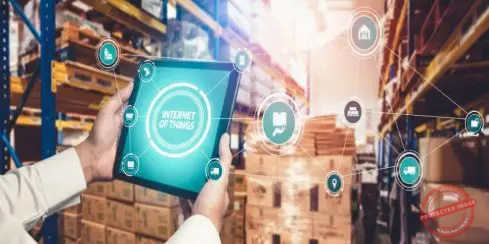
Intelligent automation, digital twins, and real-time data are turning opaque global networks into transparent, customer-centric delivery ecosystems.
The next eighteen months are set to redefine consumer expectations for speed, reliability, and transparency in how goods move from factory to front door. After years of volatility, leading retailers, logistics providers, and manufacturers are converging on a common target: a supply chain that is not only efficient and resilient, but visibly so from the consumer’s point of view. Artificial intelligence, digital twins, automation, Internet of Things (IoT), and blockchain are no longer conceptual pilots; they are being woven into operational supply chain platforms that promise faster fulfillment, proactive disruption management, and sustainable choices as a default rather than a premium option.ASCM+1
AI-driven fulfillment turns prediction into a consumer feature
By 2026, the most important differentiator for consumer brands will not be whether they can ship quickly, but how predictively they can orchestrate inventory and logistics in advance of demand. Advanced AI and machine learning models are being trained on years of transactional history, seasonal patterns, weather data, promotional calendars, and external signals to anticipate demand at a granular level, down to SKU and micro-region.APS Fulfillment, Inc+1
This predictive layer allows fulfillment centers to slot inventory closer to where it will be needed, pre-position stock across regional hubs, and dynamically allocate last-mile resources. Autonomous Mobile Robots (AMRs) and robotic picking systems further accelerate warehouse operations, making same-day or next-day delivery less of a premium service and more of a baseline capability in major urban corridors.advatix.com+1
For consumers, this translates into more accurate delivery estimates, fewer split shipments, and less “out of stock” frustration at checkout. As autonomous and electric vehicles increase their share of last-mile routes, late-night and low-emissions delivery windows will move from experiment to standard offering in advanced markets.The Intellify –+1
Real-time visibility and traceability become standard expectations
Consumer trust is increasingly tied to visibility. Shoppers want to know not just when a parcel will arrive, but how and from where it is sourced. Advanced tracking platforms backed by IoT sensors, GPS, and yard-management systems now stream location and status data in real time, giving both logistics teams and end customers a live view of the product journey.Supply Chain 24/7
Blockchain has emerged as a powerful complement to these visibility platforms. Immutable ledgers can record each handoff, transformation, and quality check from raw material to finished product, creating verifiable provenance data. For categories such as food, pharmaceuticals, luxury goods, and ethically sensitive products like conflict minerals or organic textiles, blockchain records support both compliance and brand storytelling around quality and responsible sourcing.Deloitte
As consumer apps expose this traceability data, the ability to scan a QR code and see origin, carbon impact, and handling history will shift from novelty to hygiene factor. Companies that cannot provide this level of transparency risk being perceived as laggards, regardless of how efficient their internal operations may be.
From fragile to antifragile: Digital twins and predictive resilience
The last few years of shocks have underscored a painful truth: traditional supply chains were designed for cost, not resilience. Digital twin technology is changing this equation by creating living, virtual replicas of networks, enabling scenario testing before disruptions hit the physical world.McKinsey & Company
In practice, this means companies can simulate the impact of a port closure, a regional weather event, or a supplier failure and understand how to reroute flows, adjust inventory policies, or trigger alternative sourcing. AI-enabled control towers connect these digital twins with real-time data feeds, shifting operations from reactive firefighting to proactive disruption management.advatix.com
For consumers, the result is fewer abrupt stockouts and less dramatic delivery delays when unexpected events occur. Networks become “antifragile,” improving their performance and contingency playbooks every time they are stressed.
Sustainability and regionalization move from marketing copy to operating model
Consumer expectations around sustainability have matured considerably. It is no longer enough to offset emissions or run one “green” pilot route. Leading enterprises are hard-coding sustainability into network design, inventory policies, and last-mile strategies. AI models now routinely consider carbon intensity and energy consumption as constraints alongside cost and service level when optimizing networks.APS Fulfillment, Inc
A parallel shift toward regionalized and near-shored production is reducing dependence on single distant sources. While cost arbitrage remains important, companies are increasingly factoring in geopolitical risk, transportation emissions, and lead-time variability when deciding where to manufacture and store goods. This diversification of suppliers and nodes enhances resilience and shortens average delivery distances, aligning economic incentives with consumer demand for reliability and lower environmental impact.Reply
As sustainable options become easier to access and price premiums narrow, eco-conscious choices will be presented by default, not buried in optional filters.
Security and trust as foundations of the digital supply chain
As more data flows through connected platforms, autonomous systems, and cloud-based control towers, cybersecurity is becoming a core pillar of supply chain strategy. Ransomware attacks and data breaches targeting logistics providers, shipping lines, and retailers have elevated cyber risk to board level.advatix.com
Supply chain platforms are responding with zero-trust architectures, pervasive encryption, multi-factor authentication for all critical applications, and continuous monitoring across partners. Providers like Advatix emphasize that modern supply chains must treat cybersecurity as an embedded design requirement, not an afterthought, tying identity, device authentication, and data-access controls into every integration and automation layer.advatix.com
For consumers, this increased security posture will manifest as stronger authentication at checkout, more explicit consent flows, and reduced risk of fraud or identity theft tied to logistics data.
Closing thoughts and looking forward
By 2026, consumers will not only receive their orders faster; they will understand more about how those orders move, what risks they avoided, how sustainable the journey was, and how well their personal data was protected along the way. The convergence of AI, digital twins, blockchain, and IoT is transforming supply chains from invisible back-office functions into visible, experience-defining platforms. The winners will be brands and logistics providers that translate these technologies into tangible, trustworthy experiences, making reliability, transparency, and sustainability feel as intuitive as tapping “order now.”
Serge Boudreaux, Author, Montreal, Quebec.
Peter Jonathan Wilcheck, Co-Editor, Miami, Florida.
References:
-
“Top 10 Supply Chain Trends 2025,” ASCM, https://www.ascm.org/globalassets/ascm_website_assets/docs/top-10-trends-report-2025.pdf
-
“Using blockchain to drive supply chain transparency,” Deloitte, https://www.deloitte.com/us/en/services/consulting/articles/blockchain-supply-chain-innovation.html
-
“Why Supply Chains Must Transform in 2026,” Advatix, https://www.advatix.com/blog/supply-chain-trends/
-
“Using digital twins to unlock supply chain growth,” McKinsey & Company, https://www.mckinsey.com/capabilities/quantumblack/our-insights/digital-twins-the-key-to-unlocking-end-to-end-supply-chain-growth
-
“Top 5 Supply Chain Visibility Trends for 2025,” SupplyChain247, https://www.supplychain247.com/article/top_5_supply_chain_visibility_trends_for_2025_embracing_transparency_and_traceability
#SupplyChainManagement #AIinLogistics #DigitalTwins #PredictiveAnalytics #LastMileDelivery #BlockchainTraceability #SustainableLogistics #SupplyChainVisibility #AutonomousVehicles #ResilientSupplyChains
Post Disclaimer
The information provided in our posts or blogs are for educational and informative purposes only. We do not guarantee the accuracy, completeness or suitability of the information. We do not provide financial or investment advice. Readers should always seek professional advice before making any financial or investment decisions based on the information provided in our content. We will not be held responsible for any losses, damages or consequences that may arise from relying on the information provided in our content.
 AAPL
AAPL AMD
AMD CIS.HA
 DELL
DELL IBM
IBM INTC
INTC MSFT
MSFT GOOG
GOOG HPE
HPE NVDA
NVDA TSLA
TSLA TMC
TMC MSI
MSI NOK
NOK OPEAZZX