


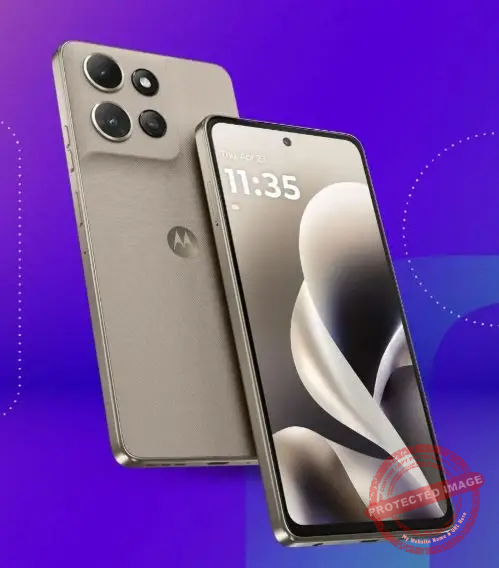
As the smartphone market matures, Motorola is engineering a comeback grounded in intelligence, sustainability, and human-centered design. 2026 marks the year when its devices stop chasing trends—and start defining them.
Motorola’s story in 2026 is not one of nostalgia but reinvention. Once synonymous with early mobile freedom, the company is now leveraging artificial intelligence and advanced materials engineering to reclaim relevance in a saturated global market. Its strategy blends technological precision with design empathy, positioning Motorola as both a heritage brand and a forward-looking innovator. The result: a mobile portfolio that fuses computational power, environmental responsibility, and contextual awareness into a single narrative of purposeful technology.
Over the past decade, Motorola’s fortunes have risen and fallen with consumer expectations. The return of the Razr in 2019 signaled ambition; the 2026 roadmap signals maturity. Where others pursue ecosystem lock-in, Motorola is cultivating openness. Where competitors automate interactions, it is personalizing experiences. And where most design conversations focus on form, Motorola’s focus in 2026 is on feeling—the tactile, visual, and cognitive relationship between user and device. This philosophical shift, driven by AI integration and material research, underscores Motorola’s intent to design technology that understands people as much as people understand technology.
The Market Context
From Commodity Smartphones to Cognitive Companions
By 2026, global smartphone shipments have stabilized, but the market’s meaning has changed. Consumers no longer upgrade for incremental specifications; they upgrade for differentiated experiences. Artificial intelligence—once a novelty—has become the foundation of product identity. Motorola’s competitive advantage lies not in chasing sheer processing speed but in optimizing intelligence per watt, per gesture, per glance. The company’s engineering teams in Chicago, São Paulo, and Shenzhen now collaborate on adaptive computing frameworks that learn from user context, ambient signals, and device usage patterns to anticipate intent rather than react to input.
This shift mirrors the broader transformation of the mobile industry. The era of “smartphones” is ending; the era of “aware phones” is beginning. Devices now interpret emotional tone during voice input, adjust thermal behavior based on grip detection, and curate interface layouts dynamically through AI-assisted ergonomics. Motorola’s proprietary Context Engine 2.0—an on-device neural framework designed to process environmental and biometric data locally—anchors this transition. It allows new flagship models to personalize user interface contrast, battery optimization, and even audio equalization in real time, without transmitting private data to the cloud.
Strategic Positioning for 2026
Heritage Meets Human-Centered Intelligence
Motorola’s resurgence is grounded in the balance between heritage and innovation. While the brand still carries nostalgia for its pioneering role in mobile communications, its current strategy is unambiguously contemporary. The company’s 2026 design language emphasizes material honesty—combining titanium frames, vegan leather finishes, and ultra-thin flexible OLED panels—to create tactile experiences that reflect both durability and empathy. This design evolution is as strategic as it is aesthetic: it reinforces the company’s sustainability commitments while aligning with next-generation manufacturing efficiencies within Lenovo’s global supply chain.
At the same time, AI serves as the connective tissue of Motorola’s modern identity. The integration of neural co-processors optimized for low-power contextual reasoning means its devices no longer rely entirely on cloud infrastructure for intelligence. This aligns with consumer demand for privacy, performance, and personalization—a triad that defines 2026’s competitive landscape. Motorola’s message to the market is clear: intelligence should serve individuality, not the other way around.
AI-Driven Product Innovation
From Smart Interaction to Anticipatory Design
Motorola’s 2026 product strategy centers on creating devices that behave less like tools and more like extensions of the user’s cognitive space. The company’s R&D divisions refer to this philosophy as “anticipatory design”—an approach where artificial intelligence predicts user intent and preconfigures device behavior accordingly. Instead of users scrolling through settings or swiping through menus, Motorola phones adapt themselves continuously, optimizing layout, color temperature, and haptic feedback to match context and emotion. This design ethos reduces cognitive friction, transforming the phone from an interface into an intuitive partner.
At the core of this evolution lies Motorola’s NeuraSense AI Framework, a proprietary inference engine trained on multimodal inputs such as voice cadence, motion patterns, ambient light, and environmental acoustics. The framework operates entirely on-device, ensuring that personalization remains private. The result is subtle but significant: devices that adjust their performance profile when the user is commuting, prioritize focus modes during work hours, and switch seamlessly to immersive entertainment settings when connected to wireless displays. In this ecosystem, AI is no longer a feature—it is the user experience itself.
Design as Intelligence
The Material Science of Emotion
Motorola’s designers have adopted a new mantra for 2026: “Material communicates.” The company’s design teams are using advanced polymers and flexible glass composites that not only reduce weight and thickness but also respond to temperature and grip. These innovations are part of what Motorola calls “haptic empathy”—the ability of a device to subtly communicate through texture, vibration, and heat. For example, a 2026 Razr Fold prototype can emit microthermal pulses to alert users of notifications in silent environments, blending functional design with sensory communication.
Color science plays an equally central role. Partnering with Pantone’s AI-assisted pigment analysis division, Motorola now applies adaptive color-matching technology to its premium devices. This allows chassis hues to subtly shift under different lighting conditions, mirroring the warmth or coolness of the environment. Beyond aesthetics, the effect enhances user connection and emotional engagement with the device. As industrial designers put it, “AI teaches materials how to feel.”
Competitive Strategy
Positioning in a Market of Giants
In a market dominated by Apple, Samsung, and Google, Motorola’s success hinges on focus rather than scale. Its 2026 roadmap emphasizes differentiated craftsmanship, niche segmentation, and cross-platform collaboration instead of attempting to match marketing budgets or flagship volumes. While the company continues to serve midrange buyers through the Edge series, its flagship innovations now target the design-conscious professional—users who prioritize authenticity and longevity over brand prestige. The foldable Razr Ultra, with its integrated AI experience and tactile design cues, embodies this refined positioning.
Motorola’s alliance strategy also reflects this pragmatic approach. Rather than building a walled ecosystem, the company has prioritized interoperability. Partnerships with Google for ambient AI services, Qualcomm for neuromorphic chipsets, and Lenovo for sustainable supply chain management allow Motorola to compete through synergy rather than sheer vertical integration. This modular strategy has earned praise from analysts who see it as a model for adaptive innovation—a business architecture capable of evolving as fast as its technologies.
At the strategic level, Motorola’s bet is clear: users will gravitate toward technology that feels personal, not procedural. By focusing on contextual AI, sustainable design, and emotional ergonomics, the company is positioning itself as the human alternative in an increasingly automated smartphone market. In 2026, that authenticity may be its greatest competitive advantage.
Beyond Hardware: The Software Horizon
Clean Android and the AI Layer
Motorola’s software vision for 2026–2027 revolves around what executives call a “purely intelligent Android.” The company has doubled down on maintaining the near-stock Android experience but has layered it with subtle contextual enhancements driven by its NeuraSense framework. Unlike competitors that crowd their devices with proprietary overlays, Motorola’s approach preserves performance efficiency while giving users discreet, on-device AI that learns without intrusion. This minimalism, combined with privacy-preserving computation, positions Motorola’s software as the understated counterpoint to feature-heavy alternatives.
Motorola’s integration with Google’s federated AI infrastructure allows real-time updates to on-device learning models without compromising privacy. New system behaviors—battery calibration, gesture prediction, and dynamic camera adjustments—are tuned across a global fleet of devices and validated through differential learning feedback. For users, it means a phone that grows smarter in the background yet remains transparent in its function. For Motorola, it is proof that simplicity can coexist with sophistication.
Sustainability and Supply-Chain Ethics
Technology with Responsibility Built In
In 2026, sustainability has evolved from corporate social responsibility to competitive necessity. Motorola’s circular-manufacturing framework—developed in partnership with Lenovo’s Environmental Innovation Lab—has made measurable progress toward carbon neutrality in handset production. The company sources recycled rare-earth materials, employs biodegradable packaging, and operates closed-loop component recovery for post-consumer devices. Each handset includes a digital provenance record stored on a blockchain ledger, allowing customers to trace material origins and repair histories.
More significant than the process itself is the narrative it represents: technology as stewardship. Motorola’s sustainability efforts have begun to influence purchasing behavior, particularly among younger demographics and enterprise clients with ESG mandates. In an industry often criticized for disposability, Motorola’s approach turns longevity into a design feature. Repairable foldable screens, modular batteries, and software support commitments of up to five years reinforce the company’s message that innovation must also mean endurance.
Looking Ahead to 2027
The Return of Emotional Technology
By 2027, Motorola envisions a smartphone market defined less by specifications and more by relationships—between humans, devices, and the environments they share. The next wave of development is already underway: flexible carbon-fiber chassis, on-device language translation powered by neural accelerators, and AI-curated wellness experiences that respond to circadian rhythm data. The company’s research blueprint extends beyond form factors into human factors, aiming to build devices that interpret context, intent, and emotion without invading privacy.
Analysts describe this as the era of emotional technology—devices designed not only to serve but to understand. Motorola’s challenge will be scaling this philosophy globally while maintaining its identity as an authentic, human-centered innovator. Yet if its 2026 trajectory holds, the brand’s renewed commitment to intelligence, design integrity, and sustainability could restore it to a position of influence it has not enjoyed in over a decade. In redefining mobility, Motorola is quietly redefining relevance.
References
IDC Worldwide Quarterly Mobile Phone Tracker, Q3 2026 — International Data Corporation. https://www.idc.com
Lenovo Environmental Innovation Lab Annual Report 2026 — Lenovo Group. https://www.lenovo.com
Google AI Edge Computing Partnership Announcements, 2026 — Google Research. https://research.google
Pantone AI Color Intelligence White Paper, 2026 — Pantone Digital Labs. https://www.pantone.com
McKinsey Consumer Electronics Outlook 2027 — McKinsey & Company. https://www.mckinsey.com
Dan Ray, Co-Editor, Montreal, Quebec.
Peter Jonathan Wilcheck, Co-Editor, Miami, Florida.
#Motorola #AIphones #DesignInnovation #NeuraSense #Mobility2026 #Sustainability #Android #EmotionalTech #FoldableDevices #SmartDesign
Post Disclaimer
The information provided in our posts or blogs are for educational and informative purposes only. We do not guarantee the accuracy, completeness or suitability of the information. We do not provide financial or investment advice. Readers should always seek professional advice before making any financial or investment decisions based on the information provided in our content. We will not be held responsible for any losses, damages or consequences that may arise from relying on the information provided in our content.

 AAPL
AAPL AMD
AMD CIS.HA
 DELL
DELL IBM
IBM INTC
INTC MSFT
MSFT GOOG
GOOG HPE
HPE NVDA
NVDA TSLA
TSLA TMC
TMC MSI
MSI NOK
NOK OPEAZZX