


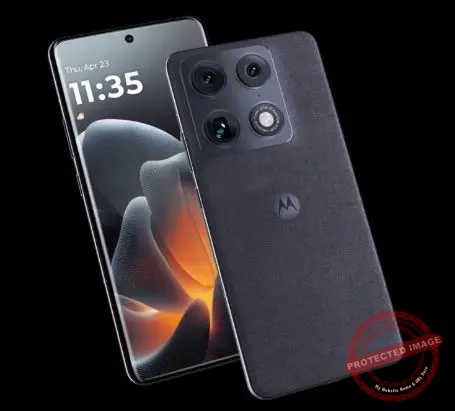
Motorola is preparing to redefine its identity in the foldable market with a larger, book-style device expected to debut at CES 2026. The launch signals a bold expansion beyond its popular Razr flip series — and a direct challenge to Samsung’s Galaxy Z Fold lineup.
Introduction
In January 2026, Motorola is set to open a new chapter in its design history — literally. The company has begun teasing a “Signature”-class foldable device that unfolds like a book, transforming from smartphone to tablet form. This evolution marks Motorola’s most ambitious hardware move in years and positions it squarely in the crosshairs of Samsung’s dominance in the large-format foldable category.
Motorola’s invitation to CES 2026 has already become an industry talking point: a handcrafted wooden booklet that, when opened, turns into a lamp. Subtle yet symbolic, it embodies the brand’s message — innovation through design, form following imagination. Lenovo, Motorola’s parent company, has confirmed that this unveiling will headline its presence at Lenovo Tech World in Las Vegas on January 6, 2026, just ahead of the CES show floor opening.
While Motorola has perfected the art of the compact flip phone with its acclaimed Razr line, the 2026 launch marks a decisive pivot toward the high-end book-style segment — a market currently led by Samsung’s Galaxy Z Fold and Huawei’s Mate X series. Analysts interpret this as Motorola’s declaration of intent: to evolve from a nostalgia-driven design revivalist into a leader in premium engineering innovation.
The Signature Form Factor
Design That Unfolds a New Identity
The upcoming Motorola foldable — internally codenamed “Signature One” — is rumored to feature an 8-inch flexible OLED interior display with ultra-thin glass protection, complemented by a 6.4-inch external cover screen. Unlike the vertically folding Razr, this model embraces the “book-style” form factor favored by productivity-oriented users. The larger footprint supports multi-window multitasking, stylus compatibility, and an edge-to-edge internal display designed for immersive reading, note-taking, and creative workflows.
Design leaks and patent filings suggest Motorola is focusing heavily on hinge engineering and material innovation. Early renders hint at a new “zero-gap” fold architecture supported by a carbon-fiber spine, reducing crease visibility while maintaining durability across more than 400,000 folds. A distinctive leather-textured rear casing — echoing the company’s eco-leather aesthetic from the Moto G Stylus 2026 — is expected to complement the device’s luxury positioning.
Motorola’s marketing teasers have emphasized tactile design and natural materials, using organic imagery of wood, paper, and light. The symbolism is deliberate: this foldable isn’t just another gadget — it’s an object of design intent. Executives at Lenovo’s design lab have reportedly described it as “technology that behaves like craftsmanship.”
Design and Innovation
The Art and Engineering of the Fold
Motorola’s upcoming foldable is more than a device; it’s a statement about the evolution of form and function. The engineering challenge of a book-style foldable lies in balancing flexibility with resilience, and Motorola appears to have invested heavily in solving both. Insiders familiar with the design process suggest that the new hinge assembly—codenamed “Eclipse Hinge”—uses a dual-axis carbon composite design that distributes mechanical stress across multiple micro-layers. The result: a crease so minimal that it nearly vanishes when viewed straight on, rivaling Samsung’s latest Z Fold refinements.
Equally significant is Motorola’s focus on durability. The device’s outer chassis reportedly employs a titanium-aluminum alloy to enhance strength while keeping overall weight below 270 grams—lighter than most competitors in its category. Early production notes also reference a proprietary “featherfold” polymer coating over the internal display, designed to resist micro-abrasions and maintain smooth tactile response. Motorola’s goal, as expressed by Chief Design Officer Elisa Navarro, is to create a foldable that “invites touch without fear.”
Complementing this engineering finesse is a design philosophy grounded in tactility and emotion. The company’s teaser campaign—a wooden book transforming into a lamp—was not metaphorical flair; it symbolizes the device’s fusion of art and function. In Motorola’s own words, “light is intelligence, and folding is transformation.” The book metaphor embodies the promise that every fold reveals a new layer of possibility.
Rivalry in the Foldable Arena
Challenging the Foldable Establishment
Samsung’s Z Fold series currently dominates the book-style foldable segment, commanding over 60% of the global market share. Apple, meanwhile, is expected to enter the category in mid-2026 with its first “iFold” prototype, bringing unprecedented competition. Yet Motorola’s entry offers something distinct: a design-first ethos coupled with an open-platform philosophy. While Samsung and Apple compete within walled ecosystems, Motorola’s advantage lies in interoperability—supporting Android and Lenovo’s cross-device integration frameworks seamlessly.
Industry analysts believe this could help Motorola carve out a niche among professionals and creative users who prefer flexibility over exclusivity. The new foldable is expected to support Motorola’s EdgeLink ecosystem—allowing users to connect wirelessly to Lenovo ThinkPads, tablets, and smart displays with near-zero latency. This seamless link transforms the foldable into a portable workstation or digital sketchpad, aligning perfectly with Motorola’s growing reputation for human-centered productivity tools.
Beyond ecosystem integration, Motorola’s pricing strategy could redefine market dynamics. Insiders hint at an introductory price below $1,500—undercutting Samsung’s Z Fold line while offering comparable specifications and premium materials. Combined with Motorola’s design credibility, this approach could make high-end foldables more attainable to the broader market, accelerating adoption rates in 2026 and beyond.
Innovation in Materials and Experience
Luxury in Texture, Intelligence in Feel
The “Signature One” is rumored to debut with a hybrid material design that blends functionality and artistry. Sources within Lenovo’s supply chain reference a layered back panel combining vegan leather, ceramic glass, and textured aluminum for aesthetic depth and tactile warmth. This material experimentation underscores Motorola’s intention to differentiate its devices not through visual flash but through sensory authenticity. As the company stated in its 2026 design brief: “Technology should feel alive, not sterile.”
Motorola’s user experience direction follows the same philosophy. The foldable is expected to feature MyUX+, an evolved version of Motorola’s lightweight interface, optimized for adaptive multitasking and stylus input. A new feature called “Canvas Mode” will allow users to unfold the device into a near 4:3 ratio for note-taking, sketching, or reading. AI-driven context switching will adapt window layouts based on user intent—mirroring Motorola’s broader strategy of designing devices that anticipate rather than demand input.
Even the haptic system has been redesigned. Using dual linear resonators, Motorola has created subtle, context-specific feedback—gentle ripples when folding, firm taps for pen input, and ambient pulses for notifications when the device is closed. The result is a device that doesn’t just respond to the user—it converses through texture and motion.
Market Strategy
Redefining Premium Through Purpose
Motorola’s market ambition with its new foldable extends beyond competing with Samsung or Apple on specifications. The company is repositioning itself as a design-first innovator — where craftsmanship, material authenticity, and everyday usability define the meaning of “premium.” In 2026, Motorola’s mission statement revolves around human experience over technical extravagance. The Signature line is intended not as a status symbol, but as a productivity and creativity enabler that resonates with professionals who value elegance without excess.
Motorola’s global marketing campaign, expected to roll out immediately after CES 2026, will center on the tagline: “Unfold Yourself.” The slogan encapsulates the emotional intent behind the Signature series — a foldable that mirrors the act of self-expression and discovery. The brand’s communication strategy moves away from performance bragging rights toward personal empowerment, positioning the foldable as a lifestyle instrument rather than a luxury device. Analysts believe this emotional branding may help Motorola differentiate itself in an increasingly homogenized high-end smartphone market.
The Signature Era
A Vision Rooted in Design, Guided by Intelligence
Internally, Motorola views 2026 as the beginning of what executives call “The Signature Era” — a multi-year roadmap that redefines the company’s design and innovation language. The Signature foldable is the first step in this transformation, establishing an aesthetic and technological benchmark for future devices. Sources within Lenovo’s industrial design division have confirmed that the Signature series will form the foundation for Motorola’s flagship identity moving forward, replacing the Edge Ultra line by 2027.
The strategy is deeply integrated with Lenovo’s broader AI and sustainability goals. By 2027, Motorola plans to incorporate recycled rare-earth elements into all Signature devices and transition to a fully carbon-neutral manufacturing process. On the software side, Motorola aims to embed its NeuraSense AI framework — first introduced in the Razr Ultra — across the entire Signature portfolio. This system learns user routines, context, and emotional tone to adapt the device’s interface and functionality seamlessly. For Motorola, intelligence is no longer a layer — it’s the product itself.
Industry Impact and 2027 Outlook
From Challenger to Tastemaker
The launch of Motorola’s book-style foldable at CES 2026 represents more than a product milestone — it signals the company’s full return to the innovation stage. For over a decade, Motorola has navigated the transition from heritage brand to design disruptor, and the Signature foldable completes that journey. As foldables move into the mainstream — forecasted to capture 19% of the global smartphone market by the end of 2027 — Motorola’s entry could catalyze competition, pushing the segment toward greater accessibility, craftsmanship, and emotional design.
Analysts expect the Signature series to serve as a blueprint for a new kind of device category: intelligent objects that merge practicality, beauty, and ethics. In that sense, Motorola is not just following the foldable trend — it’s redefining it. The Signature foldable is less about technology that bends and more about technology that adapts, learns, and inspires. As one Lenovo executive remarked privately at a pre-CES briefing: “The next era of mobility isn’t about folding screens. It’s about unfolding experiences.”
References
IDC Mobile Device Forecast, 2026–2027 — International Data Corporation. https://www.idc.com
Counterpoint Research, Q4 2025 — Foldable Market and Consumer Adoption Trends. https://www.counterpointresearch.com
Lenovo Tech World 2026 Preview — Official CES Partner Release. https://www.lenovo.com
Motorola Mobility Product Design Brief, 2026 — Internal Presentation Summary. https://www.motorola.com
McKinsey Technology Horizons Report 2027 — Future of Foldable and Flexible Electronics. https://www.mckinsey.com
Dan Ray, Co-Editor, Montreal, Quebec.
Peter Jonathan Wilcheck, Co-Editor, Miami, Florida.
#Motorola #SignatureFoldable #CES2026 #BookStylePhone #FoldableDesign #NeuraSense #Smartphones2026 #LuxuryTechnology #MobileInnovation #SustainableTech
Post Disclaimer
The information provided in our posts or blogs are for educational and informative purposes only. We do not guarantee the accuracy, completeness or suitability of the information. We do not provide financial or investment advice. Readers should always seek professional advice before making any financial or investment decisions based on the information provided in our content. We will not be held responsible for any losses, damages or consequences that may arise from relying on the information provided in our content.

 AAPL
AAPL AMD
AMD CIS.HA
 DELL
DELL IBM
IBM INTC
INTC MSFT
MSFT GOOG
GOOG HPE
HPE NVDA
NVDA TSLA
TSLA TMC
TMC MSI
MSI NOK
NOK OPEAZZX