


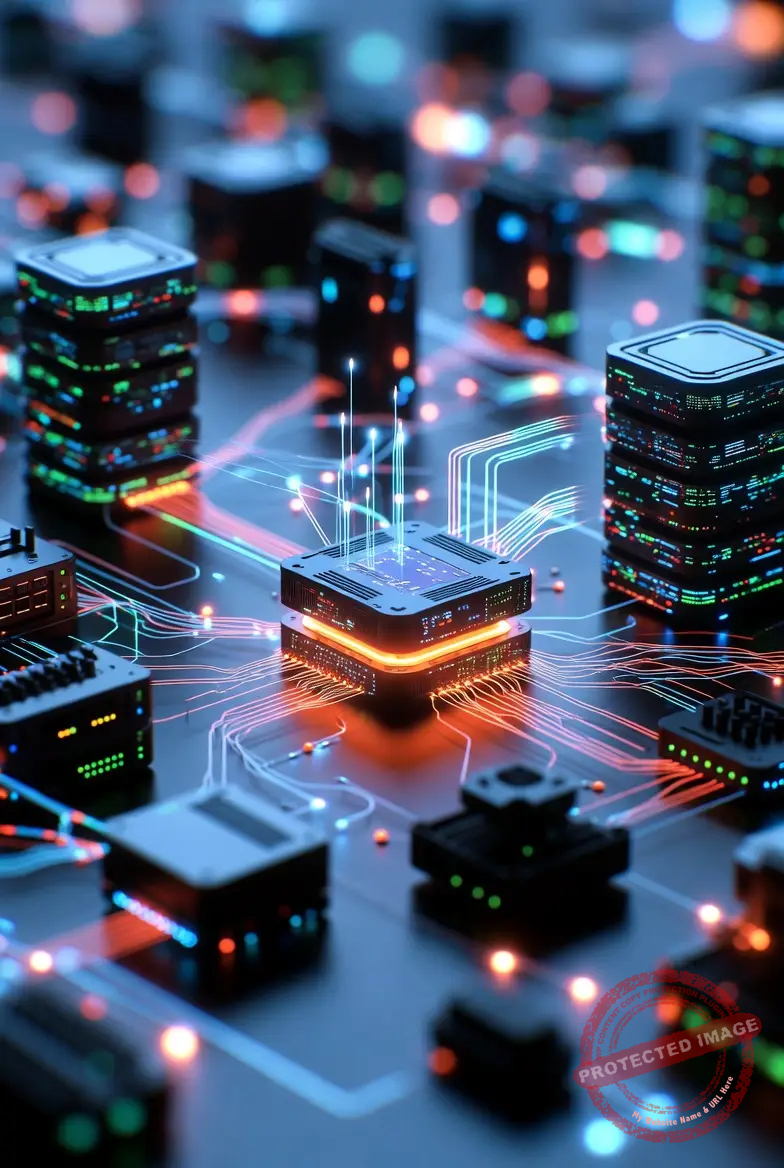
In 2026, computing power is no longer concentrated only in centralized clouds, as enterprises push intelligence and processing closer to users, machines, and data sources to meet performance, cost, and regulatory realities.
The quiet redistribution of compute
For more than a decade, the dominant narrative in enterprise IT revolved around centralization. Applications moved from on-premises data centers into large regional cloud facilities, and computing power followed them. By 2026, that story has become incomplete. While hyperscale cloud remains foundational, a significant share of new computing power is being deployed at the edge: inside factories, hospitals, retail locations, vehicles, and telecommunications networks. This shift is not driven by novelty but by necessity, as organizations confront latency limits, bandwidth costs, resilience requirements, and data governance constraints.
Edge computing in 2026 is less about experimental pilots and more about operational scale. Enterprises are no longer asking whether edge architectures work, but where they make economic and technical sense compared to centralized compute. The answers are reshaping infrastructure strategies across industries.
Latency becomes a business constraint
The most immediate driver of edge computing adoption is latency. As AI-enabled applications move into real-time decision-making, milliseconds matter. Centralized compute introduces unavoidable delays when data must travel long distances for processing. By 2026, this is no longer acceptable for use cases such as industrial automation, autonomous systems, fraud detection at point of sale, or augmented reality interfaces.
Organizations are discovering that performance improvements translate directly into measurable outcomes. Faster response times improve safety margins in industrial settings, reduce transaction abandonment in digital commerce, and enhance user trust in AI-assisted services. Edge computing places processing closer to where events occur, turning latency from a constraint into a controllable variable.
Bandwidth economics and data gravity
Beyond latency, bandwidth costs are forcing a re-evaluation of compute placement. AI systems generate and consume enormous volumes of data. Streaming raw sensor data or video feeds to centralized clouds is expensive and, in many cases, unnecessary. By 2026, enterprises increasingly preprocess and analyze data locally, sending only relevant insights upstream.
This approach aligns with the concept of data gravity, where data attracts applications and compute to its location. Edge deployments acknowledge that some data is most valuable when acted upon immediately and locally. This reduces network congestion and creates more predictable operating costs, an important consideration as CFOs scrutinize AI spending.
AI inference moves outward
While large-scale AI training remains centralized, inference workloads are rapidly moving to the edge in 2026. Models are being optimized to run on smaller, energy-efficient hardware embedded in edge devices. This allows organizations to deploy intelligence at scale without overwhelming central infrastructure.
Retailers, for example, run computer vision models in stores to monitor inventory and customer behavior in real time. Manufacturers deploy predictive maintenance models directly on equipment to detect anomalies instantly. These deployments depend on sufficient local computing power, carefully balanced against energy and cost constraints.
Resilience and operational continuity
Edge computing also addresses resilience concerns that became more visible over the past decade. Centralized outages, network disruptions, or cloud service degradation can halt operations across wide areas. By distributing compute, enterprises reduce single points of failure.
In 2026, resilience is not an abstract concept but a planning requirement. Organizations design systems that continue operating locally even when connectivity to central systems is degraded. This is particularly important in healthcare, energy, and transportation, where downtime has immediate real-world consequences. Edge computing enables a tiered approach to continuity, combining local autonomy with centralized coordination.
Regulatory pressure and data locality
Regulation is another force pushing compute outward. Data protection laws increasingly specify where data can be processed and stored. For multinational organizations, this creates a complex matrix of compliance requirements. Edge computing allows sensitive data to be processed locally, reducing cross-border data transfers.
By 2026, compliance teams are closely involved in infrastructure decisions. Edge architectures are designed not only for performance but for regulatory alignment. This adds complexity but also clarity, as organizations can demonstrate that data remains within required jurisdictions while still benefiting from advanced analytics.
Managing complexity at scale
Distributing computing power introduces operational challenges. Instead of managing a few large data centers or cloud regions, organizations must oversee thousands of smaller compute nodes. Monitoring, patching, security, and lifecycle management become more complex.
In response, enterprises invest in standardized platforms and automation. Edge environments in 2026 are managed through centralized control planes that provide visibility and policy enforcement across distributed assets. This operational maturity distinguishes scalable edge deployments from earlier fragmented experiments.
Security at the edge
Security concerns loom large as computing power moves closer to physical environments. Edge devices are often deployed in locations with limited physical protection, increasing exposure to tampering. By 2026, security architectures assume that edge environments are hostile by default.
Organizations implement layered defenses, including hardware-based security features, encrypted communications, and continuous monitoring. Importantly, security teams treat edge compute as part of the broader enterprise attack surface, integrating it into threat models and incident response plans. The goal is not absolute protection but rapid detection and containment.
Energy efficiency and constrained environments
Edge computing operates under tighter energy and space constraints than centralized facilities. This forces careful consideration of hardware selection and workload design. By 2026, energy efficiency is a primary criterion for edge deployments, influencing procurement and architecture decisions.
Organizations experiment with lightweight models, event-driven processing, and adaptive workloads that scale compute usage based on real-time needs. These practices not only reduce energy consumption but also extend the viability of edge deployments in remote or resource-constrained locations.
The public sector and smart infrastructure
Public sector organizations are significant adopters of edge computing in 2026. Smart city initiatives, transportation systems, and public safety applications rely on local processing to function effectively. Governments deploy edge compute to manage traffic flows, monitor infrastructure health, and support emergency response.
These deployments highlight a broader trend: computing power is becoming embedded in physical infrastructure. For enterprises partnering with public sector entities, understanding edge architectures is increasingly important for collaboration and compliance.
Measuring success beyond scale
In a centralized model, success was often measured by scale and utilization. Edge computing requires different metrics. By 2026, organizations evaluate edge deployments based on responsiveness, reliability, and localized impact. The question is not how much compute is deployed, but whether it delivers timely and actionable intelligence where it matters most.
This shift encourages more nuanced investment decisions. Enterprises selectively deploy edge compute where it delivers clear value, rather than pursuing blanket rollouts. The result is a hybrid landscape where centralized and edge computing coexist, each serving distinct roles.
Closing Thoughts and Looking Forward
As 2026 approaches, edge computing is redefining how and where computing power is applied. The movement is not a rejection of the cloud but a recognition that centralized models alone cannot meet emerging demands. Organizations that thoughtfully integrate edge compute into their architectures will gain performance, resilience, and regulatory advantages. Looking forward, the challenge lies in managing complexity without losing control, ensuring that distributed computing power remains an enabler rather than an operational burden.
References
Edge Computing: The Next Phase of Cloud Strategy. Gartner. https://www.gartner.com/en/articles/edge-computing-next-phase
Why Latency Is the New Currency of Digital Business. Harvard Business Review. https://hbr.org/2024/07/latency-digital-business
The Economics of Edge AI. MIT Technology Review. https://www.technologyreview.com/2024/08/edge-ai-economics/
Data Locality and the Future of Distributed Computing. World Economic Forum. https://www.weforum.org/reports/data-locality-distributed-computing
Securing the Edge in a Distributed World. SANS Institute. https://www.sans.org/white-papers/securing-the-edge/
Dan Ray, Co-Editor, Montreal, Quebec.
Peter Jonathan Wilcheck, Co-Editor, Miami, Florida.
#EdgeComputing, #ComputingPower, #EnterpriseIT, #AIInference, #DistributedSystems, #DigitalInfrastructure, #TechStrategy, #Latency, #DataGovernance, #2026Technology
Post Disclaimer
The information provided in our posts or blogs are for educational and informative purposes only. We do not guarantee the accuracy, completeness or suitability of the information. We do not provide financial or investment advice. Readers should always seek professional advice before making any financial or investment decisions based on the information provided in our content. We will not be held responsible for any losses, damages or consequences that may arise from relying on the information provided in our content.
 AAPL
AAPL AMD
AMD CIS.HA
 DELL
DELL IBM
IBM INTC
INTC MSFT
MSFT GOOG
GOOG HPE
HPE NVDA
NVDA TSLA
TSLA TMC
TMC MSI
MSI NOK
NOK ECDH26.CME
 OPEAZZX