


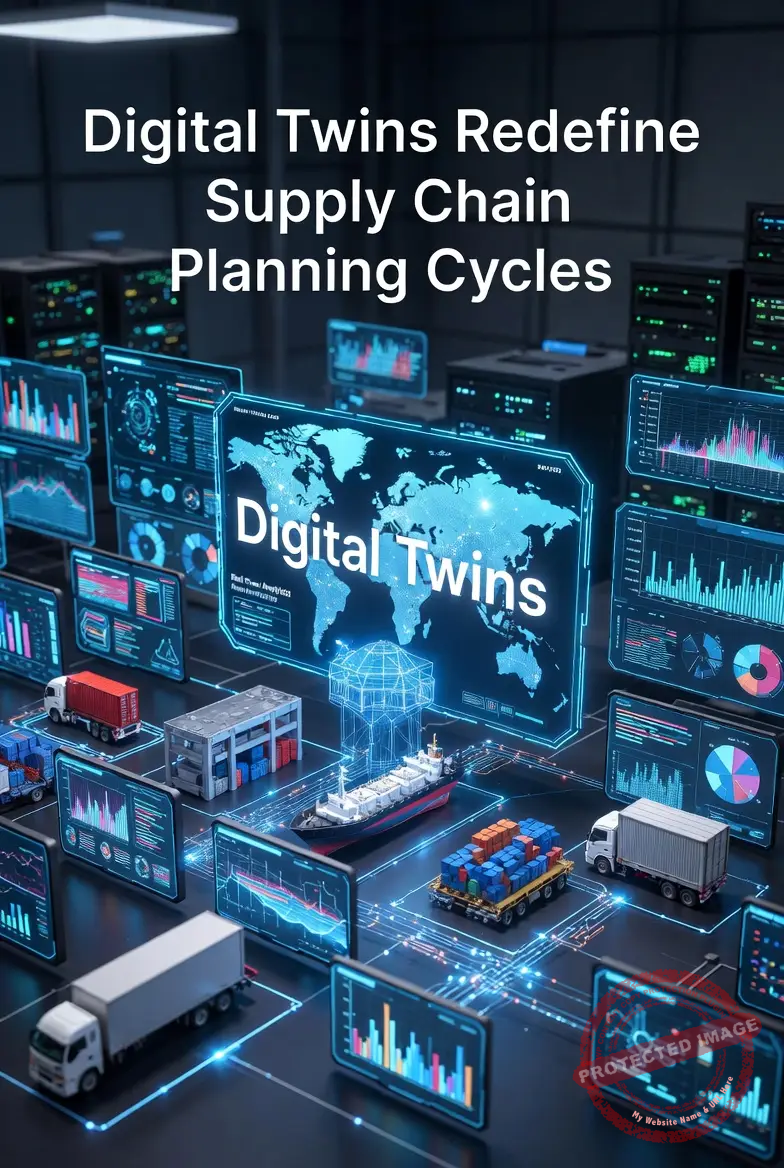
By 2026, digital twins are shifting from experimental simulations to operational planning instruments that help enterprises stress-test supply chain decisions before disruptions force costly real-world corrections.
From static models to living systems
For years, supply chain planning relied on static models built around historical averages and linear assumptions. These approaches struggled to keep pace with increasingly volatile demand patterns, transportation bottlenecks, and regulatory shifts. As organizations enter 2026, digital twins are emerging as a practical alternative, offering dynamic representations of supply networks that evolve as conditions change. Unlike traditional planning tools, digital twins ingest continuous data from production systems, logistics partners, and external signals, allowing planners to explore scenarios that reflect current realities rather than outdated forecasts. This transition marks a significant shift in how enterprises understand and manage complexity across global operations.
Why digital twins matter in the 2026 context
The renewed interest in digital twins is not driven by novelty but by necessity. By 2026, supply chain leaders are under pressure to shorten planning cycles while improving decision quality. Economic uncertainty, tighter inventory strategies, and heightened customer expectations leave little room for trial-and-error execution. Digital twins provide a controlled environment where organizations can evaluate trade-offs, such as balancing cost against service levels or resilience against sustainability goals, without committing resources prematurely. This capability is particularly valuable as enterprises face more frequent disruptions that demand rapid, coordinated responses across multiple functions.
Integration with enterprise planning processes
In practical terms, digital twins in 2026 are being integrated into existing planning workflows rather than replacing them outright. They augment sales and operations planning, integrated business planning, and network design exercises by offering a sandbox for experimentation. Planners can test the impact of supplier changes, capacity constraints, or transportation delays on downstream performance before adjusting live plans. This integration requires tight coupling with core systems to ensure that simulations reflect actual constraints and capabilities. Organizations that succeed treat digital twins as extensions of their planning environment, not isolated analytics projects.
Budget discipline and phased deployment
Budget realities shape how digital twins are deployed in 2026. Few organizations can justify large, multi-year transformations without clear milestones. As a result, many initiatives start with narrowly defined use cases, such as optimizing a single distribution network or evaluating inventory strategies for a critical product line. These pilots are designed to demonstrate value quickly, often within a single planning cycle, before broader expansion. This phased approach helps secure executive support while limiting exposure if assumptions prove incorrect. It also encourages teams to focus on data quality and governance early, reducing rework later.
Data challenges and model fidelity
The effectiveness of a digital twin depends heavily on the quality and timeliness of the data it consumes. In 2026, data fragmentation remains a persistent challenge, particularly in extended supply networks involving multiple partners. Incomplete or delayed data can lead to simulations that appear precise but mask underlying inaccuracies. Leading organizations address this risk by prioritizing transparency over complexity. Rather than modeling every possible variable, they focus on those with the greatest impact on outcomes and clearly communicate assumptions to stakeholders. This discipline helps maintain trust in the model and prevents overreliance on simulated results.
Supporting decision-making under uncertainty
One of the most valuable contributions of digital twins in 2026 is their ability to support decision-making under uncertainty. Instead of producing single-point forecasts, digital twins enable planners to explore ranges of outcomes across multiple scenarios. This probabilistic view aligns better with the realities of modern supply chains, where certainty is rare and adaptability is essential. By visualizing how decisions perform across different conditions, organizations can identify strategies that are robust rather than merely optimal in ideal circumstances. This shift in mindset represents a cultural as well as a technological change.
Public sector and infrastructure applications
Digital twins are also gaining traction in public sector supply chains, particularly those tied to critical infrastructure and public services. In 2026, governments are using digital twins to plan maintenance schedules, manage spare parts inventories, and coordinate logistics for emergency response. These applications emphasize transparency and accountability, as decisions often involve public funds and safety considerations. While regulatory requirements may limit the use of autonomous execution, digital twins provide valuable insights that inform policy and operational planning. The ability to simulate the impact of funding changes or regulatory adjustments before implementation is especially attractive in constrained fiscal environments.
Cybersecurity and operational risk
As digital twins become more integrated into planning and execution, they introduce new cybersecurity considerations. In 2026, supply chain data remains a prime target for cyberattacks due to its strategic value. Digital twins aggregate detailed information about capacities, routes, and dependencies, making them sensitive assets. Organizations must ensure that access controls, encryption, and monitoring extend to simulation environments as well as production systems. Failure to do so could expose vulnerabilities that undermine both operational resilience and competitive positioning.
Talent and organizational readiness
The adoption of digital twins highlights ongoing talent challenges within supply chain organizations. Building and maintaining effective twins requires a blend of operational knowledge, data engineering, and analytical skills that are still in short supply. In 2026, enterprises are investing in training programs and cross-functional teams to bridge these gaps. Equally important is change management. Digital twins can alter established planning roles and decision rights, requiring clear communication about how insights are generated and used. Organizations that neglect these human factors risk underutilizing sophisticated tools or facing resistance from experienced planners.
Measuring success beyond simulation accuracy
Evaluating the success of digital twin initiatives in 2026 goes beyond assessing model accuracy. While alignment between simulated and actual outcomes is important, the broader measure is whether digital twins improve decision quality and organizational agility. Metrics such as reduced planning cycle times, faster response to disruptions, and improved alignment between functions provide a more holistic view of value. These outcomes are often incremental and context-specific, reinforcing the need for realistic expectations and continuous refinement rather than one-time deployments.
Market maturity and future trajectory
Market signals indicate that digital twins are moving steadily toward mainstream adoption in supply chain management, but their evolution remains uneven. Some organizations are advancing toward near real-time twins that support operational decisions, while others remain focused on strategic planning use cases. In 2026, this diversity reflects differing levels of data maturity, risk tolerance, and strategic priorities. What unites these efforts is a growing recognition that simulation and planning must keep pace with the speed of change. Digital twins are not a cure-all, but they offer a structured way to confront complexity with greater confidence.
Closing Thoughts and Looking Forward
As enterprises navigate 2026, digital twins are redefining how supply chain decisions are evaluated and executed. By providing a living representation of supply networks, they enable organizations to test assumptions, anticipate consequences, and adapt plans before disruptions escalate. The most successful implementations balance technical sophistication with organizational readiness, focusing on practical use cases and measurable outcomes. Looking ahead, the lessons learned from digital twin deployments in 2026 will inform broader efforts to integrate AI-driven planning with execution, shaping more resilient and responsive supply chains in the years to come.
References
Digital Twin Technology: Trends and Applications. MIT Sloan Management Review. https://sloanreview.mit.edu/article/digital-twin-technology-trends-and-applications/
Digital Twins in Supply Chain Planning. Deloitte Insights. https://www2.deloitte.com/us/en/insights/focus/industry-4-0/digital-twins-in-supply-chain.html
Supply Chain Planning in a Volatile World. Harvard Business Review. https://hbr.org/2020/03/supply-chain-planning-in-a-volatile-world
The Role of Simulation in Modern Supply Chains. McKinsey & Company. https://www.mckinsey.com/capabilities/operations/our-insights/the-role-of-simulation-in-modern-supply-chains
Cyber Risk in Digital Supply Networks. World Economic Forum. https://www.weforum.org/reports/cyber-risk-in-digital-supply-networks
Dan Ray, Co-Editor, Montreal, Quebec.
Peter Jonathan Wilcheck, Co-Editor, Miami, Florida.
#DigitalTwins, #SupplyChainPlanning, #SupplyChain2026, #AIInOperations, #EnterprisePlanning, #ResilientSupplyChains, #SimulationTechnology, #FutureOfSupplyChain, #OperationalAI, #SupplyChainInnovation
Post Disclaimer
The information provided in our posts or blogs are for educational and informative purposes only. We do not guarantee the accuracy, completeness or suitability of the information. We do not provide financial or investment advice. Readers should always seek professional advice before making any financial or investment decisions based on the information provided in our content. We will not be held responsible for any losses, damages or consequences that may arise from relying on the information provided in our content.

 AAPL
AAPL AMD
AMD CIS.HA
 DELL
DELL IBM
IBM INTC
INTC MSFT
MSFT GOOG
GOOG HPE
HPE NVDA
NVDA TSLA
TSLA TMC
TMC MSI
MSI NOK
NOK ECDH26.CME
 OPEAZZX