


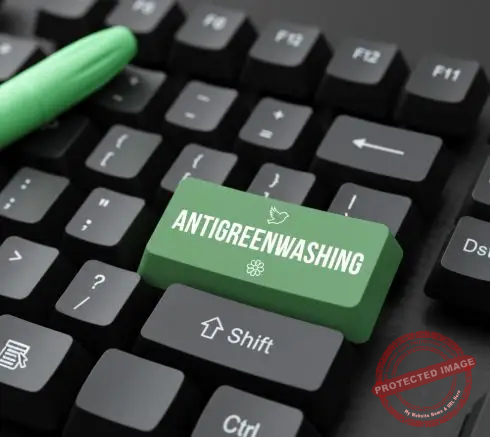
Regulators, investors, and algorithms are all testing whether climate and ESG promises are real or just very expensive marketing.
Green Is No Longer Just a Color, It’s a Claim You Have to Prove
For a long time, “green” was a vibe. A leaf icon on the packaging, a vague carbon pledge on the website, maybe a glossy sustainability report. In 2026, that era is ending.
From Brussels to London to Washington, regulators and courts are treating environmental claims the way securities regulators treat earnings guidance: as statements that must be grounded in evidence, properly qualified, and not misleading.
The United Nations describes greenwashing as deceptive marketing that overstates or falsifies environmental benefits, undermining trust and slowing real climate action. United Nations The European Commission similarly defines it as giving a false impression of a product’s environmental impact, while consulting firms now talk about an “anti-greenwashing backlash” as consumers and watchdogs start to push back. Plan A
This new wave of scrutiny is not abstract. Deutsche Bank’s asset-management arm DWS has already paid a €25 million fine in Germany, on top of a prior US$19 million settlement with the US Securities and Exchange Commission (SEC), after authorities found its ESG marketing and documentation overstated how “sustainable” certain funds really were. Financial Times+5Reuters+5dandodiary.com In the United States, the SEC has brought cases against firms like WisdomTree and Keurig Dr Pepper for ESG-related misstatements, and class-action lawyers are steadily targeting environmental branding that does not match underlying practices. esgdive.com+2regulatoryandcompliance.com
Anti-greenwashing is no longer just a talking point in sustainability conferences. It is becoming a hard-edged compliance discipline that touches marketing, product design, data systems, and board oversight.
Europe’s Green Claims Crackdown: Ambition Meets Political Headwinds
The European Union has been ground zero for attempts to regulate green claims. The European Commission’s “Green Claims” initiative set out to ensure that environmental labels and statements are reliable, comparable, and backed by evidence, with the explicit goal of protecting consumers and rewarding genuinely more sustainable products. Environment
The proposed Green Claims Directive would have required companies to substantiate generic green phrases, use recognized methodologies for life-cycle assessment, and submit many claims to third-party verification. It was designed to stop companies from advertising vague concepts like “eco-friendly” or “climate neutral” without disclosing what those terms actually mean and how they were calculated. greenly.earth. Then politics intervened.
In June 2025, the Commission signalled it was prepared to withdraw the proposal, citing the burden it could place on micro-enterprises, which make up the overwhelming majority of EU businesses. Legal briefings from Latham & Watkins and Hogan Lovells describe how the draft law became entangled in broader backlash against Green Deal regulation, farm protests, and rising far-right influence in the European Parliament. lw.com+2www.hoganlovells.com
The suspension of negotiations is a significant setback for those who wanted a single, harmonized anti-greenwashing regime across the bloc. But it does not mean greenwashing is suddenly safe. Other EU consumer-protection measures, such as the Empowering Consumers for the Green Transition Directive and national advertising rules, continue to restrict misleading environmental claims, and member states are pressing ahead with their own implementations of anti-greenwashing and environmental claim requirements. lw.com
In other words, the regulatory tide is still moving toward more substantiation and more liability—just in a messier, less centralized way than originally planned.
The UK’s Anti-Greenwashing Rule: A Clear, Simple Test with Real Teeth
While the EU wrestles with politics, the UK’s financial regulator has moved decisively. The Financial Conduct Authority’s (FCA) anti-greenwashing rule came into force on 31 May 2024 and now applies to all FCA-authorised firms whenever they make sustainability-related references about products or services to UK clients. www.hoganlovells.com+3FCA+3FCA
The rule sounds deceptively simple: sustainability claims must be fair, clear, and not misleading, and must be proportionate to the actual sustainability profile of whatever is being sold. But the FCA’s finalised guidance (FG24/3) and its broader Sustainability Disclosure Requirements and investment labelling regime add real substance. FCA+2FCA
Firms are expected to ensure that environmental statements are grounded in robust data, that caveats are prominent rather than buried in footnotes, and that marketing does not cherry-pick positive aspects while hiding material negative impacts. KPMG’s summary of the guidance emphasises that claims should be factual, transparent, and cover the whole product or clearly state if they relate only to a limited part of its life cycle. KPMG
For asset managers, this sits alongside a new labelling system for sustainable investment products. Labels like “Sustainable Focus” or “Sustainable Impact” can only be used if funds meet defined criteria, and anti-greenwashing applies to all marketing regardless of whether a label is used. FCA+2Dentons
In practice, the UK regime is becoming a template others are watching: a blend of high-level clarity with detailed guidance, underpinned by the threat of supervision, enforcement, and reputational damage.
The US: Enforcement by SEC, States, and Class-Action Lawyers
The United States does not have a single “anti-greenwashing rule,” but the enforcement landscape has become significantly more aggressive.
At the federal level, the SEC has leaned on its existing antifraud and disclosure powers to target ESG misstatements. Its climate and ESG enforcement trackers note actions against DWS’s US arm, BNY Mellon, and others for marketing funds as integrating ESG factors more comprehensively than internal processes actually did. Alston & Bird+2JD Supra
In October 2024, the SEC fined WisdomTree Asset Management US$4 million after finding that certain funds marketed as using ESG screens did not consistently apply the advertised criteria. esgdive.com In 2024 it also brought a case against Keurig Dr Pepper over allegedly misleading environmental statements in its annual reports relating to packaging and recycling claims. regulatoryandcompliance.com
Even as the SEC has withdrawn or slowed some broader ESG rulemakings under political and legal pressure, law-firm analyses stress that this “back to basics” approach does not change the agency’s willingness to scrutinise sustainability-related disclosures under core securities-law principles. JD Supra
Meanwhile, state attorneys-general are joining the fray from multiple directions. Some, such as Tennessee’s action against BlackRock over how it communicated ESG strategy to investors, frame their cases as protecting consumers or pension beneficiaries from allegedly misleading or politicised ESG messaging. New York Post Others, particularly in blue states, are targeting fossil-fuel companies and large emitters over climate-related claims, with California’s new climate accountability laws already prompting high-profile litigation from companies like Exxon that argue mandated emission disclosures amount to compelled speech. The Guardian
Layered on top is a growing stack of private class actions alleging that companies’ green branding, carbon-neutral claims, or recycling promises misled purchasers. Baker McKenzie’s 2024 litigation review notes a steady rise in such suits, often piggybacking on regulatory investigations or NGO campaigns. Global Litigation News
For global brands, the net effect is clear: environmental statements can trigger securities scrutiny, consumer-protection enforcement, and civil litigation, even if no dedicated anti-greenwashing statute exists.
Global Convergence: Different Rules, Same Direction
Outside the big transatlantic markets, anti-greenwashing rules are proliferating.
A recent global legal update from Compliance & Risks describes how authorities in jurisdictions from Australia to South Korea are tightening guidance on environmental marketing, requiring clearer substantiation and threatening higher penalties for misleading claims. Compliance and Risks
Competition and consumer-protection agencies, such as the UK’s Competition and Markets Authority and counterparts in the EU, have refined their own guidance on environmental claims, emphasising that generic phrases like “eco-friendly” or “sustainable” are likely to be misleading unless supported by precise, verifiable information. Plan A
The common denominator is the idea that climate and sustainability claims should be treated like any other high-stakes representation to consumers or investors: specific, evidence-based, and open to challenge.
Tech’s Role: From ESG Slideware to Measurable, Machine-Readable Proof
Behind the legal shifts is a technology story. The only way to survive anti-greenwashing scrutiny at scale is to have data and systems that can back up what the marketing team says.
Sustainability platforms are racing to offer end-to-end tracking of emissions, energy use, and supply-chain impacts, feeding dashboards that link product-level footprints to enterprise-wide targets. Specialist tools for life-cycle assessment, carbon accounting, and environmental footprinting are becoming as integral as ERP and CRM in sustainability-intensive industries.
Verification is becoming more digital too. Some companies are experimenting with blockchain or other distributed ledgers to record origin, certifications, and emissions data across supply chains, hoping to give regulators and customers tamper-resistant evidence that a “deforestation-free” or “low-carbon” claim is real. Others are using AI to scan their own websites, campaigns, and product literature for unsubstantiated environmental phrasing before regulators or activists do.
But technology cuts both ways. Regulators and litigators now have powerful tools for their own investigations. They can scrape years of marketing content, cross-reference it with internal documents obtained in discovery, and run analytics on what was promised versus what was delivered. In that context, sloppy claims are no longer just awkward—they can be material evidence.
Anti-Greenwashing in the Age of AI and Autonomous Marketing
Generative AI adds another wrinkle.
Marketers are increasingly using AI systems to draft copy, brainstorm slogans, and personalize content at scale. Without guardrails, those same systems can easily fabricate or exaggerate environmental credentials, especially if they are trained on existing marketing language that already contains vague or inflated green terms.
Regulators have not yet created AI-specific anti-greenwashing rules, but their expectations are clear: if an AI tool generates misleading claims, the company deploying it is still accountable. Guidance on the EU AI Act, the NIST AI Risk Management Framework, and emerging AI governance regimes all stress the need for human oversight of high-impact outputs, transparent documentation, and robust testing in sensitive areas like consumer marketing and financial promotions. Reuters+2lw.com
That means anti-greenwashing programs will need to encompass not just what is printed on packaging or posted on a website, but also how AI systems are configured, monitored, and constrained. “Sustainability by prompt” will not impress a regulator who asks for evidence.
Closing Thoughts: From Slogan to Standard of Proof
Anti-greenwashing is often framed as a threat to corporate storytelling. In reality, it is a sign that climate and sustainability have become too important to leave to vague language.
The DWS case in Germany, SEC actions in the US, the FCA’s anti-greenwashing rule in the UK, and the EU’s fitful Green Claims saga all point in the same direction: if you want to sell on the basis of environmental performance, you need to be able to show your work. AP News+6Reuters+6dandodiary.com
For technology and data leaders, this is not just a legal problem. It is an architectural one. Systems must be able to track emissions and impacts, link them to specific products and claims, and produce audit-ready evidence on demand. AI and analytics can help, but they must be governed carefully to avoid turning small errors into systemic misstatements.
In 2026, the companies most likely to thrive are not the ones with the brightest green logos, but the ones with the cleanest sustainability data pipelines, the clearest documentation, and the most disciplined alignment between what the brand promises and what the balance sheet, factory floor, and supply chain can prove.
“Green” is still a powerful story. The difference now is that regulators, investors, and increasingly consumers want to see the receipts.
References
-
“Green Claims” – Environment
European Commission
https://environment.ec.europa.eu/topics/circular-economy-topics/green-claims_en -
“What the Green Claims Directive Means for Companies – An Overview”
KPMG Law Germany
https://kpmg-law.de/en/what-the-green-claims-directive-means-for-companies-an-overview/ -
“FG24/3: Finalised Non-Handbook Guidance on the Anti-Greenwashing Rule”
UK Financial Conduct Authority
https://www.fca.org.uk/publications/finalised-guidance/fg24-3-finalised-non-handbook-guidance-anti-greenwashing-rule -
“SEC Slaps $4M Fine on WisdomTree Over Greenwashing”
ESG Dive
https://www.esgdive.com/news/sec-slaps-4m-fine-on-wisdomtree-over-greenwashing/730944/ -
“Anti-Greenwashing Regulations: Environmental Claims and Legal Liabilities – A Deep Dive”
Compliance & Risks
https://www.complianceandrisks.com/webinar/environmental-claims-and-legal-liabilities-a-deep-dive-into-anti-greenwashing-regulations/
Author: Serge Boudreaux – AI Hardware Technologies, Montreal, Quebec
Co-Editor: Peter Jonathan Wilcheck – Miami, Florida
; greenwashing enforcement 2026; EU Green Claims Directive; FCA anti-greenwashing rule; SEC ESG enforcement; DWS greenwashing fine; sustainability disclosure requirements; ESG marketing compliance; verified climate claims; corporate sustainability transparency
Post Disclaimer
The information provided in our posts or blogs are for educational and informative purposes only. We do not guarantee the accuracy, completeness or suitability of the information. We do not provide financial or investment advice. Readers should always seek professional advice before making any financial or investment decisions based on the information provided in our content. We will not be held responsible for any losses, damages or consequences that may arise from relying on the information provided in our content.

 AAPL
AAPL MSFT
MSFT GOOG
GOOG TSLA
TSLA AMD
AMD IBM
IBM TMC
TMC IE
IE INTC
INTC MSI
MSI NOK
NOK DELL
DELL ECDH26.CME