


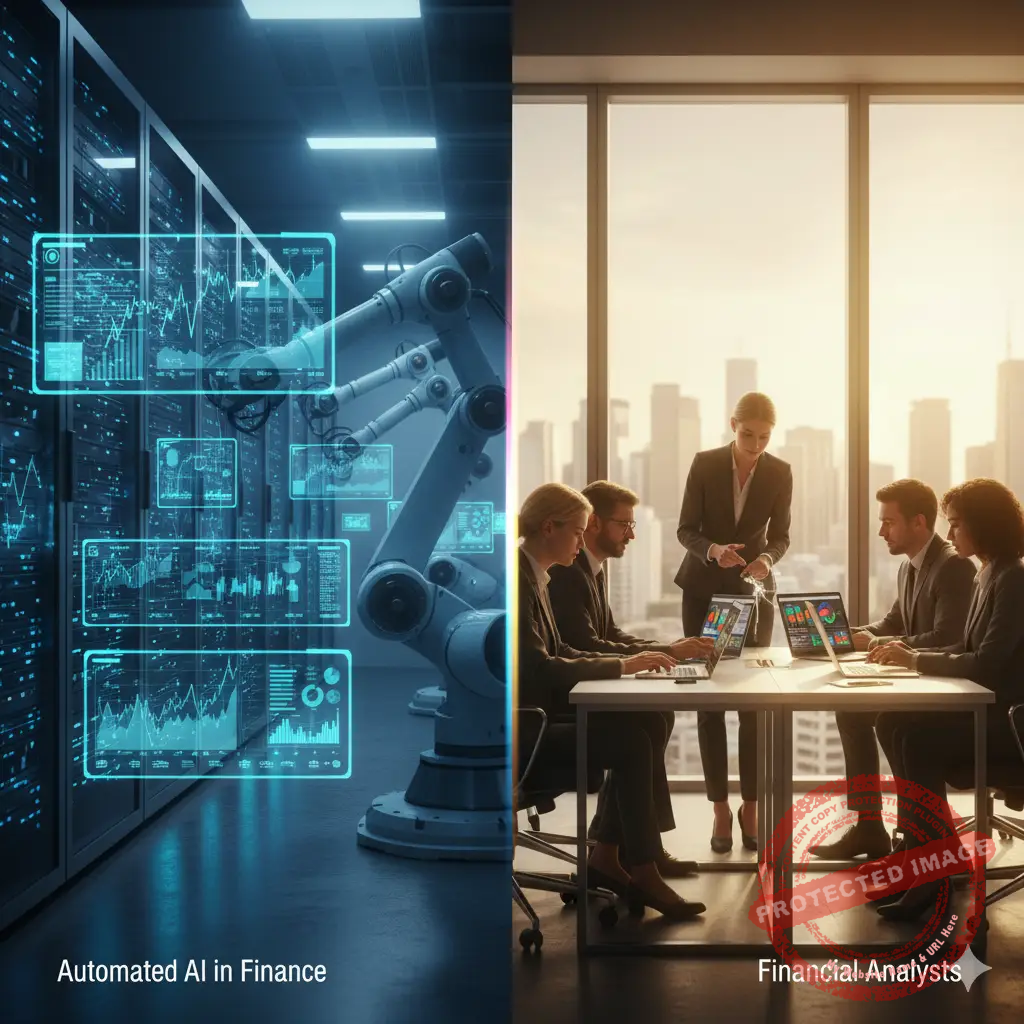
Productivity is rising, tasks are reshuffling, and new middle-skill roles are emerging—if we design for them.
What the Evidence Says So Far
A decade of automation studies suggested job polarization; the generative era adds something new: broad cognitive assistance. The peer-reviewed evidence base is growing. In a staggered rollout across 5,000+ support agents, access to a generative assistant increased issues resolved per hour by roughly 14–15% on average, with the largest gains among new hires—suggesting AI narrows skill gaps by codifying best practices in suggestions. Large enterprises also report measurable churn reduction when models predict intent and route calls more accurately.
Where Firms Are Actually Using AI
In 2026, adoption skews toward customer operations, software development, finance, HR, marketing, and analytics. Early wins cluster in high-volume, repetitive tasks: drafting and quality-checking emails; writing or reviewing code; triaging tickets; generating variants of ads; reconciling transactions; transcribing and summarizing meetings. The “what” is shifting from answers to actions as agents read screens, call tools, and complete steps when APIs are missing.
The Macro View: Displacement and Creation
Zooming out, forecasts suggest churn rather than collapse. The World Economic Forum’s 2025 outlook anticipates significant job movement this decade—tens of millions of roles displaced by technology and the green transition, but a larger number created in data, AI, cybersecurity, and sustainability. The OECD finds that countries still posted net employment growth despite automation pressures, though growth was slower in jobs at high automation risk. The IMF projects advanced economies will feel the shift sooner, given their concentration of cognitive work.
A New Middle: Human-in-the-Loop Work
The interesting story for 2026 is the return of a “middle” that uses AI tools to extend judgment, speed learning, and scale craft. Think claims examiners who supervise agents, sales reps who let copilots draft and log while they negotiate, or maintenance technicians who ask multimodal copilots to recognize parts and propose fixes from manuals. When designed well, these workflows upgrade early-career roles without four-year degrees, reopening rungs lost in the last automation wave.
Where the Risks Are
Risks concentrate where incentives are misaligned or data is poor: biased models in hiring or lending; misleading content in education or politics; confidential data leakage; brittle automations that break silently. U.S. regulators are responding with overlapping rails: NIST risk profiles, sectoral proposals from the SEC, state accountability statutes, and privacy agency rules for automated decision-making. Expect more documentation, testing, and human appeal pathways in the systems that matter.
Wages and Inequality: Early Signals
Early signals are mixed. Studies suggest AI often compresses performance gaps—lifting the bottom of the distribution—yet wage effects depend on bargaining and redeployment. Regions with strong training systems and internal mobility see smoother transitions; places that treat AI solely as headcount reduction risk wider inequality. Policy and procurement nudge toward the former via requirements for human appeal, transparency, and impact assessments, which also incentivize careful task redesign.
Skills, Training, and the New Employment Contract
Training math and writing helps—but the durable edge is meta-skills: problem framing, decomposition, verification, and collaboration. Those are the muscles that let people design good prompts today and good agent workflows tomorrow. Companies that codify “how we work with AI” see faster learning curves and fewer errors. Workers are negotiating for access to tools, better data, and time to experiment—not just pay.
Playbook for Leaders in 2026
• Start at the task level. Decompose roles into tasks; automate where AI is strong and keep humans over judgment and accountability.
• Invest in the floor, not just stars. Studies show the biggest productivity uplift among less-experienced workers; target training and tooling there first.
• Measure skills, not just seats. Track adoption, error rates, and business outcomes; tie incentives to quality and safety, not raw volume.
• Redesign jobs with progression. Make entry roles “apprentice with AI,” with pay and promotion tied to verified skill growth.
• Plan for mobility. Use internal marketplaces to redeploy people from shrinking tasks to growth projects; fund short, stackable training programs.
What to Watch in 2026
• Agentic work becomes normal. As vendors ship safer “computer use,” office jobs absorb more end-to-end automations—still supervised, but with steps handled by machines.
• Long-context models change knowledge work. Passing an entire code repo, policy library, or hours of transcripts to one run reduces glue code and speeds teams.
• Hybrid runtimes. Sensitive tasks run on device or in private environments; heavy jobs burst to cloud.
• Measurement culture. Expect more teams to publish internal “AI impact” scorecards tying savings and growth to specific workflows.
Closing Thoughts
The workforce story in 2026 is neither utopia nor doom. It’s a design challenge. Evidence points to meaningful productivity gains and new middle-skill paths if leaders re-architect work, measure outcomes, and keep humans accountable for decisions. Do that—and AI becomes an upgrade rather than a narrow cost-cutting tool for most teams.
References
-
Stanford Digital Economy Lab — “Generative AI at Work” — https://digitaleconomy.stanford.edu/publications/generative-ai-at-work/
-
NBER Digest — “Measuring the Productivity Impact of Generative AI” — https://www.nber.org/digest/20236/measuring-productivity-impact-generative-ai
-
World Economic Forum — “The Future of Jobs Report 2025” — https://www.weforum.org/publications/the-future-of-jobs-report-2025/digest/
-
OECD — “Job Creation and Local Economic Development 2024” — https://www.oecd.org/en/publications/job-creation-and-local-economic-development-2024_83325127-en.html
-
IMF — “Gen-AI: Artificial Intelligence and the Future of Work” — https://www.imf.org/en/Publications/Staff-Discussion-Notes/Issues/2024/01/14/Gen-AI-Artificial-Intelligence-and-the-Future-of-Work-542379
Authors
Serge Boudreaux – AI Hardware Technologies
Montreal, Quebec
Peter Jonathan Wilcheck – Co-Editor
Miami, Florida
Post Disclaimer
The information provided in our posts or blogs are for educational and informative purposes only. We do not guarantee the accuracy, completeness or suitability of the information. We do not provide financial or investment advice. Readers should always seek professional advice before making any financial or investment decisions based on the information provided in our content. We will not be held responsible for any losses, damages or consequences that may arise from relying on the information provided in our content.

 AAPL
AAPL MSFT
MSFT GOOG
GOOG TSLA
TSLA AMD
AMD IBM
IBM TMC
TMC IE
IE INTC
INTC MSI
MSI NOK
NOK DELL
DELL ECDH26.CME