


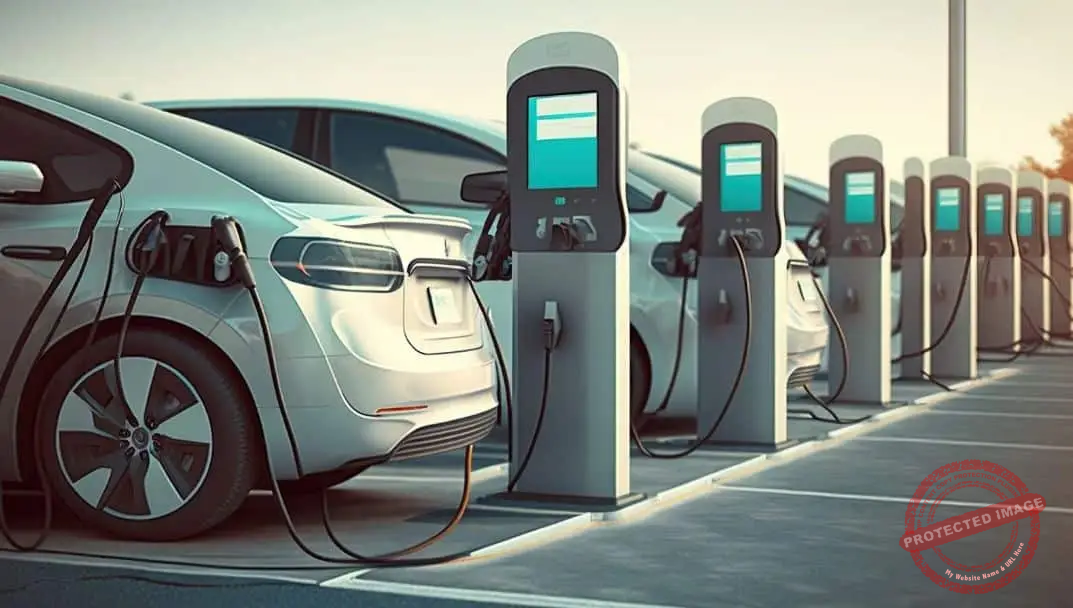
Highway shoulders, bus lanes, and freight corridors are slowly turning into power lines. Dynamic EV charging, where vehicles top up while in motion, is shifting from a science project to a serious planning topic for 2026. By embedding power into the road itself, countries hope to cut range anxiety, shrink battery sizes, and make long-haul electric trucks practical. The question is no longer whether it works, but where and when it makes economic sense.
From static plugs to moving power lanes
Conventional charging assumes vehicles must stop and plug in. Dynamic charging flips that logic. In this model, vehicles draw smaller amounts of energy more often, from electrified road segments that deliver power as they drive. Instead of carrying a huge “just in case” battery, a truck or bus can run on a more modest pack, topping up each time it traverses a powered section.
Dynamic systems can be built in several ways. Some use overhead catenary wires and pantographs, similar to electric trains. Others embed conductive rails or inductive coils into the pavement, enabling energy transfer via physical contact or wireless magnetic fields. Sweden’s long-running electric road program evaluated multiple architectures, from overhead wires delivering around 650 kW per truck to in-road rails and inductive coils providing 150–200 kW per receiver, with potential to scale higher. Wikipedia
In all cases, the goal is the same: treat the road like a moving charging station, so that the vehicle’s range is defined less by the battery and more by the network.
Inside the technology: rails, wires, and wireless coils
Dynamic wireless charging builds on the same electromagnetic induction used in static pads. Coils embedded under the lane are energized as a compatible vehicle approaches; a receiver under the car or truck picks up the alternating magnetic field and converts it into DC power for the battery. A recent technical guide on dynamic wireless charging describes lanes with energized coil segments, vehicle-mounted receivers, and control systems that switch on segments only when needed, thereby limiting stray fields and improving efficiency. The Wallet
Other systems use conductive rails at road level or recessed slightly below the surface. Pickup shoes on the vehicle make direct contact with the rail through a guided arm, transferring higher power levels with minimal losses, while mechanical shielding helps manage safety and weather. Overhead systems, which suspend catenary wires above dedicated truck lanes, resemble existing electric freight rail infrastructure and can supply hundreds of kilowatts continuously.
Each approach involves trade-offs. Inductive systems avoid exposed live parts and can work for both cars and trucks, but coils and associated electronics are expensive to install over long distances. Conductive systems are cheaper per kilometer and more power-dense, but require moving parts on vehicles and careful design to avoid hazards to other road users. The right choice depends on traffic mix, climate, safety regulations and long-term maintenance models. Wikipedia
Global pilots: from Gotland to Detroit and Indiana
Around the world, pilots are moving from lab benches onto real asphalt. In Sweden, the Smartroad Gotland project created the world’s first public wireless inductive electric road for heavy-duty vehicles on the island of Gotland. An Electreon system embedded coils in a public road, charging an electric truck and bus as they drove and demonstrating that dynamic inductive charging can work in mixed traffic. Electreon
In the United States, the Michigan Department of Transportation switched on the nation’s first wireless-charging public roadway in November 2023, a stretch of street in Detroit’s Michigan Central innovation district designed to charge EVs while they drive or queue at low speeds. Michigan The project is a test bed for how to integrate dynamic wireless charging into urban environments, from routing power cables and control electronics to setting rules for which vehicles can use the lane.
Further south, researchers at Purdue University and the Indiana Department of Transportation are building a highway test segment that can charge electric vehicles “big and small” at highway speeds. Construction on the test bed began in 2024, to develop and validate a pavement-embedded wireless charging system rugged enough for heavy trucks and high-speed traffic. Purdue University
These projects are small in physical scale—often just a few hundred meters—but large in ambition. They address not only engineering questions, such as coil durability and energy transfer at speed, but also policy issues such as how to meter energy, how to handle liability and how to manage access.
Why dynamic charging matters for heavy-duty transport
Dynamic charging’s strongest use case lies in heavy-duty transport. Battery-electric long-haul trucks face a daunting math problem: to achieve 800–1,000 kilometers of range, they may need battery packs in the 600–900 kWh range, adding weight, cost and charging challenges. Dynamic corridors allow trucks to recharge as they drive, enabling smaller onboard batteries to cover long distances.
Analyses associated with Sweden’s electric road program suggested that electric roads delivering around 200–300 kW per truck could significantly cut fuel costs and emissions for logistics operators along key corridors, provided infrastructure costs and maintenance are managed. Wikipedia Dynamic charging also aligns well with predictable freight routes, where trucks repeatedly traverse the same road sections each day.
Urban buses and shuttle fleets are another prime candidate. Instead of returning to depots for long charging sessions, buses can sip power at selected stations, intersections or dedicated lanes, using dynamic segments to trim peak loads at depots and spread energy consumption more evenly across the day.
The economic and policy puzzle
If dynamic charging is so promising, why is it not already widespread? The answer is cost and complexity. Installing electrified infrastructure in existing roads is expensive. Trafikverket, Sweden’s transport administration, estimated capital costs for various electric road technologies in the millions of dollars per kilometer, with inductive systems among the most costly options. Later assessments suggested earlier vendor-based estimates were too optimistic. That real-world costs could be at least double initial projections, prompting Sweden to pause plans for a large national rollout in 2024. Wikipedia
Beyond construction, agencies must decide who pays and who gets access. If public money funds an electric road, should all EVs be able to use it, or only vehicles that subscribe to a service? How do you bill a passing truck for the energy you receive while overtaking? And how do you coordinate dynamic corridors with conventional charging networks to avoid redundant investments?
Regulatory frameworks are still forming. Some pilots treat dynamic segments as extensions of public charging infrastructure, while others frame them more like toll lanes, requiring specialized equipment and data connections. These choices will shape whether dynamic charging becomes a common public good or a niche service for specific fleets.
Cybersecurity, safety, and operations
Electrified roads are as much digital systems as physical ones. They rely on roadside controllers, vehicle communication units, and back-end platforms that decide which segments to energize and when. That opens questions of cybersecurity, data privacy, and operational resilience.
Safety is equally critical. Inductive systems need to ensure that stray electromagnetic fields remain within strict exposure limits for pedestrians and nearby residents. Conductive systems must guarantee that rails or connectors are de-energized when non-equipped vehicles or people are nearby. Maintenance operations—snowplowing, resurfacing, lane markings—must be adapted to avoid damaging embedded hardware. Dynamic charging will only scale if drivers, road workers and regulators trust that the systems are as safe and predictable as conventional pavement. The Wallet
Closing thoughts and looking forward
By 2026, dynamic EV charging will still be in its pilot phase, but those pilots will be bigger, more varied, and more closely tied to real freight and transit operations. The most likely path forward is not a fully electrified highway network, but strategic corridors and nodes where dynamic charging solves specific problems: keeping trucks within emissions zones, supporting high-frequency bus routes or powering autonomous shuttles in dense districts.
As costs fall and standards mature, dynamic segments could be deployed in tandem with ultra-fast hubs and depot chargers, forming a layered ecosystem. EVs would no longer rely solely on large stationary batteries, but on a combination of static and moving energy sources. For policymakers, the near-term task is to learn from current projects, define clear roles for public and private investment, and ensure that this new layer of infrastructure is interoperable, safe, and future-proof.
If those pieces come together, the most powerful EV charger of the late 2020s may not be a cabinet in a parking lot, but a quiet stretch of road that drivers barely notice as it keeps their batteries topped up, kilometer after kilometer.
Gut Azzit, Co-Editor EV Charging, Montreal, Quebec.
Peter Jonathan Wilcheck, Co-Editor, Miami, Florida.
References
Reference 1) “Dynamic Wireless Charging of Electric Vehicles Explained,” The Wallet, https://thewallet.com.pk/dynamic-wireless-charging-of-electric-vehicles-12948/ The Wallet
Reference 2) “Swedish Transport Administration electric road program,” Swedish Transport Administration / Wikipedia, https://en.wikipedia.org/wiki/Swedish_Transport_Administration_electric_road_program Wikipedia
Reference 3) “Findings from the World’s First Public Wireless Electric Road,” Electreon, https://electreon.com/articles/worlds-first-public-wireless-electric-road Electreon
Reference 4) “Wireless Charging Roadway,” Michigan Department of Transportation, https://www.michigan.gov/mdot/travel/mobility/initiatives/wireless-charging-roadway Michigan
Reference 5) “Building the first highway segment in the U.S. that can charge electric vehicles big and small as they drive,” Purdue University News, https://www.purdue.edu/newsroom/2024/Q2/building-the-first-highway-segment-in-the-u-s-that-can-charge-electric-vehicles-big-and-small-as-they-drive Purdue University
#EVCharging #DynamicCharging #ElectricRoads #WirelessChargingRoad #EVTrucks #BusElectrification #SmartInfrastructure #EVCorridors #SustainableTransport #GridIntegration
Post Disclaimer
The information provided in our posts or blogs are for educational and informative purposes only. We do not guarantee the accuracy, completeness or suitability of the information. We do not provide financial or investment advice. Readers should always seek professional advice before making any financial or investment decisions based on the information provided in our content. We will not be held responsible for any losses, damages or consequences that may arise from relying on the information provided in our content.

 AAPL
AAPL MSFT
MSFT GOOG
GOOG TSLA
TSLA AMD
AMD IBM
IBM TMC
TMC IE
IE INTC
INTC MSI
MSI NOK
NOK DELL
DELL ECDH26.CME