


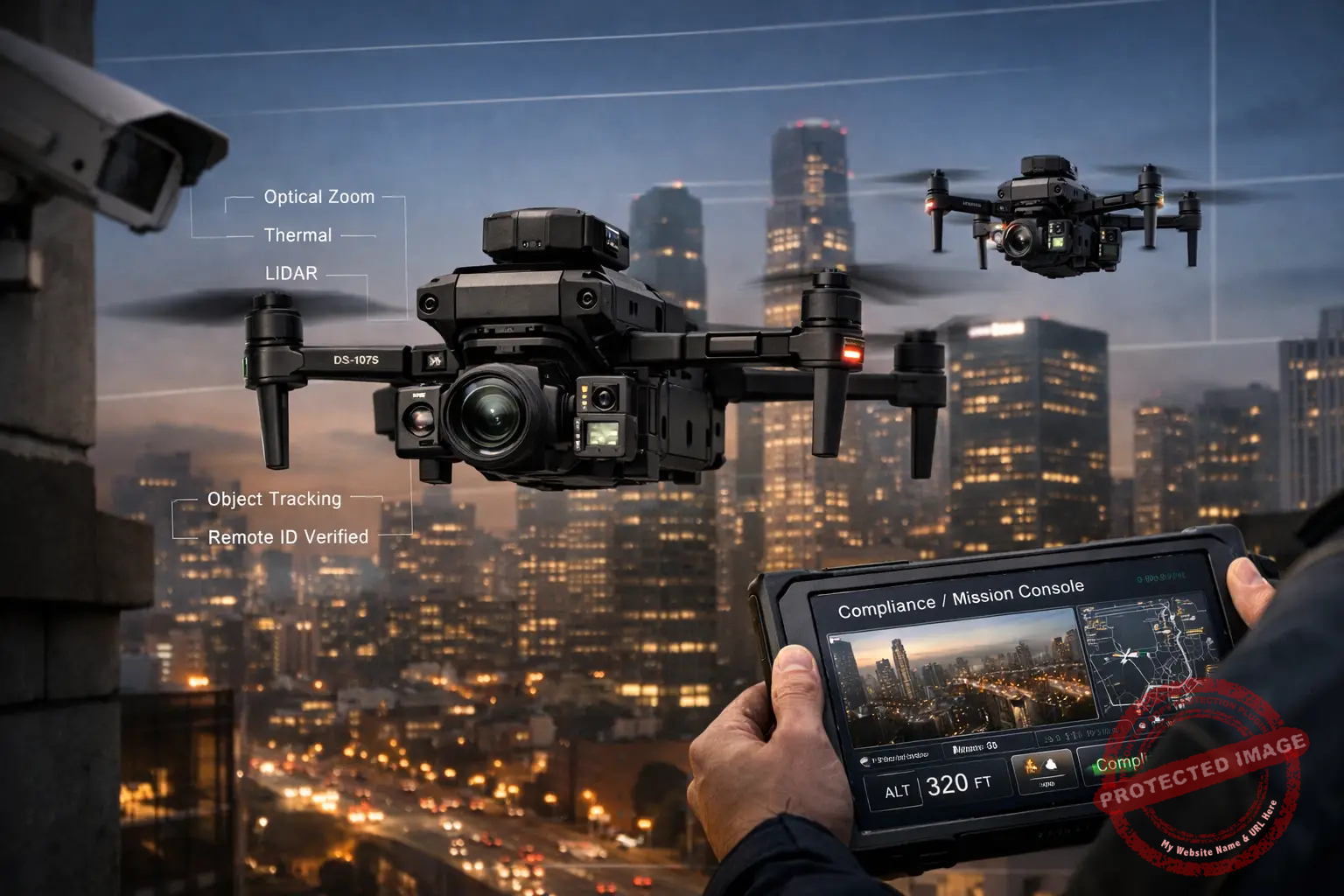
Technological advancements in drone surveillance
Advancements in technology have significantly enhanced the capabilities of commercial drones, making them more efficient, effective, and versatile in surveillance operations. The integration of artificial intelligence, autonomous systems, and sophisticated data analytics has paved the way for groundbreaking developments.
Machine Vision
Machine vision technology revolutionizes the way drones perceive and interpret their environment. By enabling drones to analyze visual data in real-time, machine vision facilitates object detection, recognition, and tracking with remarkable precision. This capability is particularly valuable in surveillance, where drones need to identify and monitor moving objects or individuals. Machine vision systems employ advanced algorithms that process images for specific patterns or anomalies, thereby enhancing situational awareness and decision-making.
Swarm Coordination
Swarm coordination introduces an innovative approach to optimize the functionality and deployment of multiple drones. By leveraging interconnected networks, drones can operate in swarms to conduct intricate surveillance missions that would overwhelm a single unit. This collective operation allows for efficient coverage of large areas and enables dynamic response to real-time events. The ability to share information and collaborate on tasks exponentially increases the effectiveness of surveillance, whether in urban environments or expansive terrains.
Predictive Maintenance
Predictive maintenance is vital in ensuring the reliability and longevity of drone fleets, reducing the risk of operational failure during critical surveillance missions. By harnessing data analytics, drone systems can predict and address maintenance issues before they lead to malfunctions. Sensors embedded within drones collect data on various performance metrics, which are then analyzed to identify wear and tear patterns. This proactive approach minimizes downtime and optimizes the operational readiness of the drones.
Autonomous Navigation
Autonomous navigation represents a significant leap forward in drone technology, allowing these devices to operate without human intervention. Utilizing AI-driven algorithms, drones can plot routes, avoid obstacles, and adapt to changing environmental conditions in real-time. This capacity is crucial in surveillance scenarios where time-sensitive analysis and situational adaptability are required. Autonomous navigation not only improves the safety and efficiency of drone operations but also extends their operational boundaries, making them indispensable tools in modern surveillance strategies.
regulatory challenges and responses
In the realm of commercial drones, the regulatory landscape plays a critical role in shaping the evolution of surveillance capabilities and their deployment across industries. As we approach 2026, several market and regulatory trends are influencing drone adoption, particularly in how enterprises incorporate these technologies into their operations.
One of the most significant trends is the increasingly complex web of global regulations that commercial drones must navigate. Different countries are establishing more comprehensive frameworks to ensure the safe and responsible use of drones for surveillance. This includes airspace management, safety protocols, and data protection measures. The challenge for enterprises lies in maintaining compliance across multiple jurisdictions, each with its own set of standards and requirements. For instance, the European Union has implemented the U-space regulatory framework, aiming to enable drone operations in dense urban areas and integrate them safely with manned aviation.
Industry standards are also evolving to support the broader adoption of drone technologies. Organizations such as ASTM International and ISO are working on establishing guidelines that address various aspects of drone operation, from maintenance practices to data security in aerial intelligence. These standardized practices are crucial for ensuring that the commercial drone industry adheres to safety and privacy expectations, which, in turn, helps build public trust.
Compliance challenges are further compounded by the rapid pace of technological advancements in drone capabilities. As drones become more sophisticated, equipped with enhanced sensors, machine vision, and AI capabilities, regulatory bodies are faced with the task of updating existing policies to keep pace with innovation. This dynamic creates an environment where real-world use cases can highlight regulatory gaps. For example, in agricultural monitoring and infrastructure inspection, drones have shown remarkable efficiency and accuracy, prompting regulatory bodies to consider streamlined approval processes for such applications.
Enterprise deployment of drones for surveillance purposes is increasingly seen in sectors like real estate, insurance, and logistics. Each sector presents unique compliance challenges that must be addressed. In real estate, drones are used for property assessments in areas with varying local regulations. Insurers deploy drones for damage assessments, requiring adherence to strict privacy guidelines to avoid capturing unauthorized personal data. Logistics companies utilize drone deliveries, necessitating constant communication with aviation authorities to ensure flight paths are secure.
The global push towards integrating commercial drones in national airspace systems calls for collaboration between private sector stakeholders and regulatory bodies. By fostering partnerships, stakeholders can proactively address emerging issues and drive innovation, all while ensuring safe and ethical drone use. As enterprise reliance on aerial intelligence grows, establishing clear and cohesive policies will be paramount in overcoming the challenges of this rapidly developing field.
In conclusion, the market and regulatory aspects influencing commercial drone adoption are multifaceted and ever-changing. Enterprises must remain vigilant and adaptive in the face of these challenges, leveraging real-world insights to guide their strategies and ensure compliance. As regulations evolve in response to technological advancements, the opportunity for drones to revolutionize surveillance across industries remains promising.
ethical considerations and privacy concerns
In examining the integration of operational and human factors within the realm of commercial drones and surveillance, the transformation of the workforce emerges as a significant focus. The introduction of drones into various industries is not just a technological shift but a fundamental change in how tasks are performed and jobs are defined. This evolution necessitates re-skilling and up-skilling programs to equip workers with the necessary competencies to operate and manage drones effectively. Positions such as drone pilots, maintenance technicians, and data analysts are becoming increasingly important. These roles require an understanding of robotics and AI, alongside traditional skills, to harness the full potential of drone technology.
Ethical implications are another crucial aspect of employing technology-driven surveillance systems. Drones, particularly those equipped with advanced data collection capabilities, present new frontiers in terms of privacy concerns. The possibility of constant surveillance and data collection without consent raises questions about individual privacy and the potential for misuse. It’s imperative to establish robust ethical guidelines and transparent operational protocols that govern how data is collected, stored, and utilized, ensuring individuals’ rights are respected while maintaining the operational efficacy of aerial intelligence.
Airspace safety remains a paramount concern, particularly as the skies above become increasingly populated with unmanned aerial vehicles. The responsibility of integrating drones safely into this space requires the development of sophisticated air traffic management systems. Collaborative efforts between national regulatory bodies, drone manufacturers, and technology companies are essential to create comprehensive frameworks that ensure collision avoidance, flight path planning, and emergency response measures are in place. Emerging innovations, such as geofencing and real-time communication systems, play a pivotal role in enhancing airspace safety and reducing the risk of accidents.
The collaboration between AI systems and human operators in drone operations exemplifies the future trajectory of surveillance technologies. By leveraging AI, drones can perform complex tasks autonomously, such as detailed mapping and pattern analysis, which significantly improves operational efficiency. However, human oversight remains indispensable, providing the critical decision-making and ethical judgment that AI cannot replicate. This symbiotic relationship between AI and human operators is integral to developing safe, reliable, and ethical aerial intelligence systems as we move towards 2026.
Innovations aimed at improving safety and efficiency in drone operations continue to evolve. Advances such as AI-driven obstacle avoidance, enhanced battery life for extended flight times, and the integration of blockchain for secure data transmission are transforming how drones are utilized in surveillance. These technological improvements not only bolster the operational capabilities of drones but also address several safety and privacy concerns that have historically hindered their widespread adoption.
As industries integrate commercial drones into their operations, addressing these operational and human factors becomes crucial for ensuring sustainable and responsible growth. By fostering an environment where technological advancements and human expertise coexist, the future of surveillance and aerial intelligence appears poised to achieve unprecedented levels of innovation and effectiveness.
The future of surveillance with drones
As we advance into 2026, the landscape of surveillance is witnessing a transformative shift, primarily driven by the proliferation of commercial drones. The adoption of drones in surveillance roles is shaping new paradigms in both urban and rural settings. This evolution is marked by the integration of sophisticated sensor technologies and AI-driven analytics, enhancing the ability of drones to collect and process vast amounts of data accurately and efficiently.
In urban environments, drones are increasingly being deployed for real-time surveillance to assist law enforcement and public safety agencies. Their capacity to monitor large crowd gatherings, traffic patterns, and emergency situations offers an unparalleled level of situational awareness. By leveraging high-resolution imaging and machine learning algorithms, drones can identify potential threats and anomalous behaviors with greater precision, enabling rapid response interventions.
The role of drones in rural and industrial applications is equally impactful. In agriculture, for instance, drones equipped with multispectral sensors deliver valuable insights into crop health and soil conditions, optimizing resource allocation and maximizing yield. Similarly, in sectors such as energy and infrastructure, drones conduct inspections of power lines, pipelines, and other critical assets, ensuring maintenance activities are timely and effective, thereby reducing downtime and operational risks.
Looking ahead, the scalability of AI in drone operations is a critical focal point for sustained innovation. The development of advanced neural networks capable of autonomous decision-making and learning from vast datasets presents opportunities to enhance drone functionalities. However, this necessitates robust frameworks to manage AI ethics and accountability, ensuring that AI-driven decisions align with societal norms and regulatory standards.
Sustainability is another key consideration as the industry looks to minimize the environmental impact of expanding drone activities. Innovations in energy-efficient propulsion systems and the adoption of renewable power sources are integral to achieving greener operations, aligning with global sustainability goals. As battery technology advances, drones will likely see enhanced flight durations and performance, reducing the need for frequent recharging and thereby decreasing their ecological footprint.
As we approach the next decade, expectations for commercial drones and their role in surveillance continue to grow. The convergence of drone capability improvements, AI advancements, and sustainable practices forecasts a dynamic future where drones play an increasingly indispensable role in collecting and analyzing aerial intelligence. As this ecosystem matures, it will undoubtedly bring about new challenges and opportunities, requiring continuous adaptation and strategic foresight from industry stakeholders.
References
“Integrating Drones into Urban Airspaces: Regulatory and Safety Challenges.” International Journal of Aviation Management. Available at https://www.indjaavmanag.com/integrate-drones-airspace-2026
“Drone Surveillance Technologies: A Marketplace Review.” REACH Aerospace News. Available at https://www.reachaerospace.com/drone-surveillance-market-review
“AI in the Skies: Enhancements in Drone Intelligence.” AI Technology Review. Available at https://www.aitr2026.com/ai-drone-intelligence-enhancements
“Sustainability and Commercial Drones: The Path Forward.” Environmental Impacts Journal. Available at https://www.eijournal.org/sustainability-commercial-drones-2026
“The Future of Urban Surveillance with Drones.” TechOnlineNews. Available at https://www.techonlinenews.com/future-urban-surveillance-drones
Contributing Editors
Benoit Leduc, Co-Editor, Montreal, Quebec.
Peter Jonathan Wilcheck, Co-Editor, Miami, Florida.
SEO Hashtags
#commercialdrones #dronesurveillance #AIflightsystems #automation2026 #droneinnovation #regulatorycompliance #enterprisetechnology #aerialintelligence #droneethics #sustainability #futuretech #surveillancesolutions #urbanmonitoring #droneAI #renewablepropulsion
Post Disclaimer
The information provided in our posts or blogs are for educational and informative purposes only. We do not guarantee the accuracy, completeness or suitability of the information. We do not provide financial or investment advice. Readers should always seek professional advice before making any financial or investment decisions based on the information provided in our content. We will not be held responsible for any losses, damages or consequences that may arise from relying on the information provided in our content.

 AAPL
AAPL MSFT
MSFT GOOG
GOOG TSLA
TSLA AMD
AMD IBM
IBM TMC
TMC IE
IE INTC
INTC MSI
MSI NOK
NOK DELL
DELL ECDH26.CME