


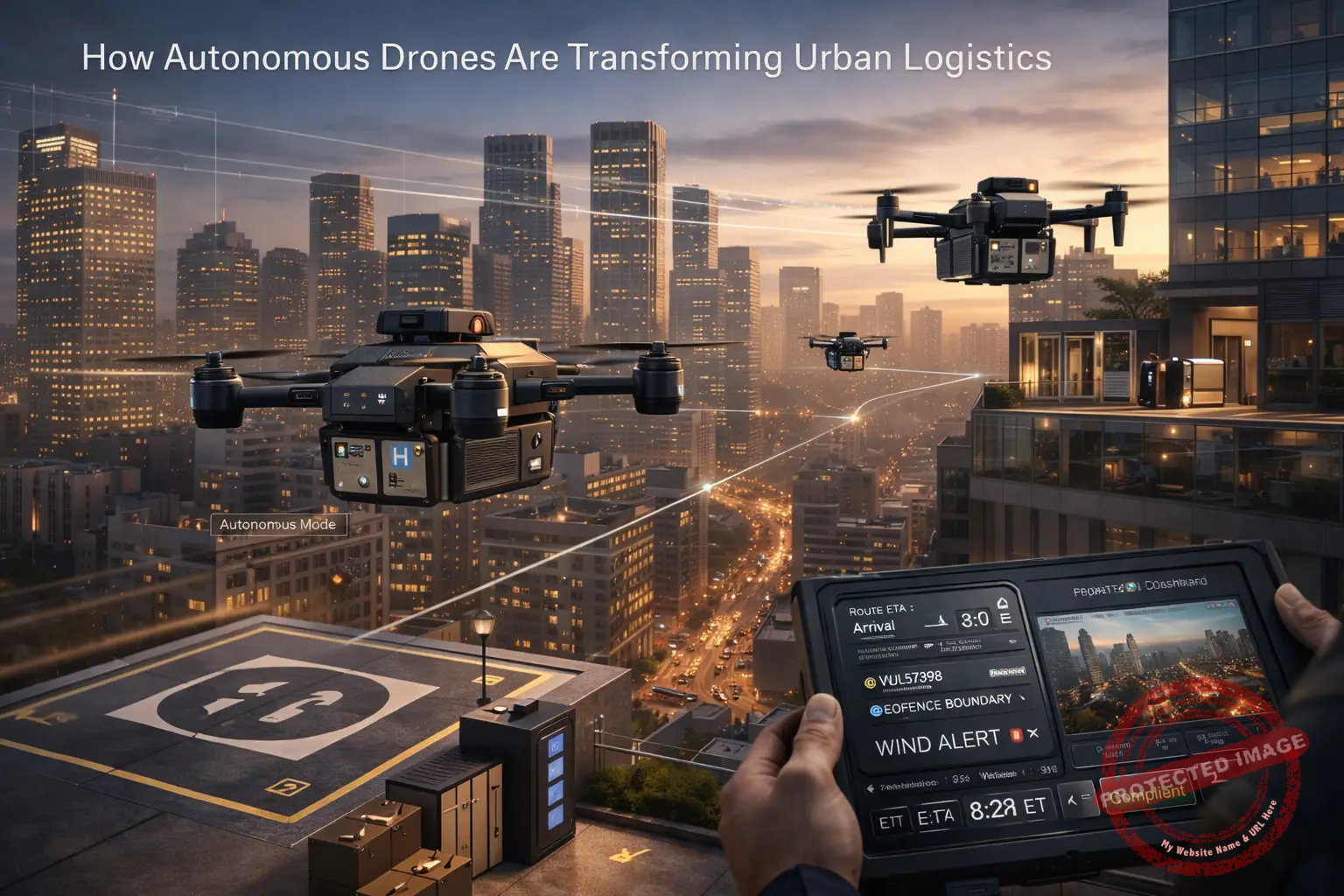
Autonomous drones are at the forefront of a transformational shift in urban logistics, promising to revolutionize package delivery and reshape the dynamics of modern commerce. By 2026, the commercial drone industry is projected to integrate more deeply with the logistics sector, reflecting advances in technology, regulatory frameworks, and business models. The increasing demand for faster and more efficient delivery solutions is propelling the adoption of unmanned aerial systems as viable alternatives to traditional modes of transport. As e-commerce continues its upward trajectory, the role of drones in last-mile delivery is becoming an integral component of the logistics value chain.
The introduction of autonomous drones into urban airspace is set to redefine package delivery. Unlike conventional delivery methods reliant on ground vehicles, drones offer the distinct advantage of bypassing road traffic, thus reducing delivery times significantly. The implications for urban centers, where congestion is a significant bottleneck, are profound. Companies like Amazon, UPS, and Alphabet’s Wing have already begun to pilot drone delivery services, indicating a substantial shift from theoretical possibility to practical deployment.
As the commercial drone industry advances, it is the convergence of technology and logistics that holds the greatest promise. Drones equipped with sophisticated AI algorithms can navigate complex urban environments autonomously. These systems are designed to optimize delivery routes, enhancing efficiency and reducing operational costs. By 2026, the widespread use of such drones will streamline logistics operations, enabling companies to fulfill customer orders with unprecedented speed and accuracy.
The benefits of drone package delivery extend beyond speed. Environmental considerations are driving the adoption across cities where reducing carbon footprints is a priority. Drones, powered by electric batteries, emit zero direct emissions, making them environmentally friendly alternatives to traditional delivery vans. This aspect aligns with broader corporate sustainability goals and appeals to environmentally conscious consumers and stakeholders.
Economic factors also play a crucial role in the widespread adoption of autonomous drones. The operational costs associated with drone deliveries are poised to decrease significantly, as economies of scale are realized and technological efficiencies are optimized. This is especially pertinent in the wake of a global shift towards digital economies, where businesses must leverage cutting-edge solutions to remain competitive. By 2026, the cost efficiencies gained through drone usage are expected to contribute to competitive pricing strategies and enhance market presence.
Beyond the logistical and economic advantages, the regulatory landscape is evolving to accommodate this burgeoning aspect of commercial operations. Regulatory bodies are crafting frameworks that prioritize safety while fostering innovation. The Federal Aviation Administration (FAA) in the United States, along with similar agencies worldwide, is working to establish coherent regulations that address airspace management, vehicle certification, and operator training. These measures aim to ensure drones can operate safely and harmoniously in urban environments, protecting citizens and infrastructure.
As commercial drones become further incorporated into package delivery systems, strategic partnerships are expected to emerge across various industry sectors. Logistics companies, drone manufacturers, and technology providers are likely to collaborate to create integrated solutions that leverage each stakeholder’s core competencies. By 2026, these partnerships will play a pivotal role in driving the maturity and growth of the commercial drone industry, facilitating seamless interoperability across different platforms and systems.
The capability of autonomous drones to transform urban logistics is not solely an opportunity but a necessity in light of rising urban populations and the consequent strain on existing infrastructure. As cities continue to expand, the challenges associated with delivering goods efficiently will increase. Drones offer a scalable solution that can adapt to varying urban densities, providing flexible support that supplements traditional logistics infrastructures.
While the potential of drones to revolutionize package delivery is significant, the journey toward integration is not without challenges. Technical limitations regarding payload capacity and battery life remain areas of active research and development. Innovators in the drone industry are continuously working to extend the operational range and carrying capability of drones, which will further enhance their viability for a broader scope of delivery tasks.
Autonomous drones’ ability to revolutionize package delivery is underscored by their capacity to navigate the complexities of urban logistics. By navigating these challenges and leveraging technological advancements, the commercial drone industry is set to become a cornerstone of future logistics, enhancing efficiencies and contributing to more sustainable urban environments. As stakeholders continue to collaborate and innovative solutions evolve, the prospect of seeing drones as a common sight in urban skies by 2026 becomes increasingly feasible, heralding a new era for logistics across the globe.
Enhancing efficiency and speed
In the dynamic realm of logistics, enhancing efficiency and speed is paramount, and autonomous drones are at the heart of this evolution. The integration of advanced technologies such as artificial intelligence (AI), autonomy, and data analytics is transforming commercial drone systems into highly efficient delivery conduits. These innovations are not only optimizing efficiency but also reshaping the operational models of logistics, ensuring drones are ready to meet contemporary demands.
Machine Vision
At the core of these advancements is machine vision, which empowers drones with the ability to perceive and interpret their environments. Utilizing high-resolution cameras and deep learning algorithms, drones can detect and recognize objects, navigate complex urban settings, and identify landing zones with precision. By processing real-time visual data, drones are equipped to make informed decisions in dynamic environments, thereby minimizing delays and enhancing delivery speeds. This capability is crucial for urban logistics, where unpredictable challenges such as construction or pedestrian traffic can impede operations.
Swarm Coordination
Swarm coordination is another groundbreaking technology propelling the efficiency of autonomous drones. By emulating the collaborative behaviors observed in natural swarms, such as flocks of birds or schools of fish, drones can execute coordinated delivery operations. Through decentralized control systems and communication protocols, multiple drones can work in unison to deliver packages simultaneously to different locations. This not only increases delivery capacity but also reduces the time taken for packages to reach their destinations. The ability to operate as a cohesive unit enhances scalability and supports high-volume delivery operations, making drones an ideal solution for dynamic urban environments.
Predictive Maintenance
An often-overlooked aspect of drone logistics is the role of predictive maintenance in ensuring efficiency and minimizing downtime. By leveraging data analytics and machine learning, operators can anticipate maintenance needs before technical issues arise. Sensors embedded within drones continuously monitor performance metrics such as motor vibrations, battery health, and environmental conditions. These data points are analyzed to predict potential failures, allowing for proactive maintenance scheduling and reducing unforeseen disruptions. This approach not only extends the operational lifespan of drones but also ensures consistent and reliable delivery services, critical for maintaining customer satisfaction.
Autonomous Navigation
Autonomous navigation systems are the linchpin of drone efficiency, enabling seamless operation without direct human control. Utilizing a combination of GPS, inertial measurement units (IMUs), and AI-driven software, drones can chart optimal flight paths, avoid obstacles, and adapt to changing conditions in real-time. Advances in this domain are paving the way for the execution of beyond-visual-line-of-sight (BVLOS) operations, expanding the geographical reach of drone deliveries. Autonomous navigation not only expedites delivery times but also enhances the safety and reliability of operations by minimizing human error and optimizing route efficiency.
As these technological innovations continue to evolve, the capabilities of autonomous drones in urban logistics will expand further. By integrating machine vision, swarm coordination, predictive maintenance, and autonomous navigation, drones are poised to revolutionize the speed and efficiency of goods transportation in urban landscapes, driving the future of logistics toward unprecedented levels of proficiency.
navigating urban environments
Navigating urban environments poses unique challenges for the deployment of autonomous drones in logistics. The intricate fabric of cityscapes, characterized by high-density buildings, dynamic elements like traffic and weather, and stringent regulations, requires a sophisticated approach to drone operations. Autonomous drones, equipped with advanced navigation systems, are proving adept at overcoming these obstacles through innovative technologies and strategic planning.
One of the core technologies enabling effective navigation in urban settings is advanced sensor integration. Drones utilize a combination of LiDAR, radar, and optical sensors to create detailed 3D maps of their surroundings. These maps facilitate precise navigation, enabling drones to avoid obstacles such as buildings, power lines, and trees. In busy urban areas, this capability is crucial for ensuring safe and reliable operations, allowing drones to follow complex routes without human intervention.
The use of AI-driven data analytics plays a critical role in supporting drone navigation. By processing vast amounts of real-time data, drones can dynamically adjust their flight paths to accommodate changes in the urban environment. Factors such as real-time weather conditions, temporary airspace restrictions, or unexpected obstacles like cranes or construction sites are analyzed, and contingency plans are executed seamlessly. This adaptability ensures that drones can maintain efficiency and punctuality, meeting the demands of urban logistics.
Infrastructure is also adapting to support the widespread use of drones in cities. Urban planners are exploring the concept of drone corridors or air highways—designated airspaces that allow drones to operate safely above ground traffic. These corridors are strategically placed to maximize safety and efficiency while minimizing interference with established aviation routes. The development of dedicated landing zones, known as vertiports, is another critical advancement, offering secure areas for drones to take off and land, particularly in cluttered urban areas.
Real-world examples underscore the adaptability of drones to urban landscapes. In China, where smart city initiatives are integrating drone technology, drones are being used for everything from medical supply delivery to traffic monitoring. These projects highlight the potential of drones to enhance urban living through efficient goods transportation while simultaneously tackling logistical challenges that cities face.
Navigating urban environments also entails compliance with stringent regulations that govern airspace use and safety standards. Regulatory bodies like the FAA are working in collaboration with tech companies to establish rules that accommodate the safe integration of drones into urban airspaces. This includes establishing regulations for drone identification and tracking, altitude limitations, and operational guidelines to mitigate risks associated with collisions and privacy concerns.
However, the regulatory landscape is complex and varies significantly across regions. Urban centers around the world are developing unique frameworks to manage drone operations. For instance, European countries are collectively aligning with the European Union Aviation Safety Agency (EASA) regulations, which provide comprehensive guidelines for drone operations, including specific rules for urban environments.
In conclusion, the prospect of autonomous drones operating seamlessly within urban environments is becoming increasingly achievable through technological advancement, thoughtful infrastructure planning, and forward-thinking regulatory frameworks. As these elements converge, we move closer to a future where drones are an integral part of the urban logistics network, capable of navigating the bustling, complex streets of modern cities with ease and precision.
Addressing safety and privacy concerns
Within the rapidly evolving landscape of urban logistics, operational and human factors must be addressed to ensure the safe and efficient integration of autonomous drones. Central to this is the transformation of the workforce, which will undergo significant shifts as human operators transition from manual control to supervisory roles. This transition is facilitated by the growing capabilities of AI systems that allow drones to operate autonomously while still requiring human oversight for strategic decision-making and exceptional situations. This synergy between AI and human operators not only enhances operational efficiency but also opens new avenues for workforce development, emphasizing skills in AI management and data interpretation.
Alongside workforce transformation, ethical implications emerge, particularly regarding job displacement and data privacy. While drones promise efficiency and speed, they may also replace traditional delivery roles, necessitating retraining and upskilling programs to equip workers for new technology-driven careers. Data privacy concerns are paramount, as drones collect vast amounts of data during operations. Ensuring this data is managed ethically, with robust privacy protections, is crucial to maintaining public trust.
Airspace safety is another critical consideration. As drones proliferate, maintaining safe airspace requires innovation and collaboration. Implementing traffic management systems that coordinate drone and traditional aircraft movements is essential. Such systems, supported by real-time data processing and predictive analytics, enhance airspace safety by preventing collisions and ensuring smooth traffic flow. Moreover, innovations like geofencing software prevent drones from straying into restricted areas, while fail-safe mechanisms ensure drones can safely navigate mechanical or environmental disruptions.
The collaboration between AI systems and human operators is key to enhancing safety and efficiency. AI-driven systems enable real-time monitoring and adaptive problem-solving, while human operators provide oversight and critical judgment for complex scenarios. This partnership ensures that while drones operate autonomously, they benefit from human expertise where needed, striking a balance between machine efficiency and human intuition.
Advancements in drone technology continue to bolster safety and efficiency. Innovations such as enhanced machine learning algorithms improve object recognition and navigation precision, while advanced battery technologies extend operational range and reduce downtime. These developments, alongside the integration of AI and human oversight, are refining the capabilities of drones and solidifying their role in transforming urban logistics.
As urban logistics evolve, addressing these operational and human factors is imperative. By focusing on workforce transitions, ethical practices, airspace safety, and the collaboration between AI and human operators, the industry can support a future where drones operate seamlessly and safely within urban environments, delivering goods with unparalleled efficiency.
Looking toward the future of logistics
The next decade holds promise for urban logistics, significantly shaped by the growing role of autonomous drones. As we converge upon 2026, drones are set to spearhead innovations in delivery solutions, enticing industries across the globe to integrate aerial technologies. The logistics sector, continuously challenged by burgeoning urban populations and the demand for swift, sustainable solutions, will find in drones an answer that synergizes operational scalability with environmental responsibility.
A crucial element driving this evolution is the refinement of AI systems tailored for drone operations. With ongoing advancements in machine learning and data analytics, AI is enhancing the precision and autonomy of drones, allowing them to execute complex navigational tasks with minimal human intervention. This leap in AI capability produces not only a drastic increase in operational efficiency but also lays the groundwork for scaling drone deployments across a broader range of urban applications.
Another significant vein of progress lies in the ecological stride toward sustainability. As electric-powered drones dominate the skies, they offer a compelling alternative to fossil fuel-dependent delivery vehicles, marking a pivotal shift in reducing the carbon footprint of logistics operations. The focus on sustainable energy solutions aligns with global aims of curbing climate change, presenting drones as an environmentally benign option for urban logistics. This commitment to sustainability is expected to garner broader support from consumers and policymakers alike.
By 2026, regulatory frameworks will be more defined, accommodating the integration of drones into urban airspaces while ensuring public safety and privacy. These legal structures will likely promote innovation and standardize best practices across the industry. Furthermore, the conceptualization of drone ports and corridors indicates a future where infrastructures are adapted to complement drone operations, facilitating seamless integration into existing urban frameworks.
Looking beyond 2026, the expectations of embedding drones within the logistics network extend to the next decade. We anticipate unprecedented strides not only in AI and sustainable design but also in public perception, allowing drones to become a familiar component of cityscapes worldwide. Enhanced investment in drone technologies, complemented by strategic partnerships across tech and logistics sectors, will pave the way for continuous improvements in service delivery, safety standards, and environmental impact.
References
“How Drones Are Revolutionizing the Delivery Industry,” Harvard Business Review, https://hbr.org/2021/02/how-drones-are-revolutionizing-the-delivery-industry.
“The Future of Sustainable Urban Logistics,” The Economist, https://www.economist.com/future-sustainable-urban-logistics.
“Governance of Airspace and Unmanned Aircraft Systems,” Federal Aviation Administration, https://www.faa.gov/uas/governance-airspace-unmanned-systems.
“AI and the Transformation of Urban Logistics,” MIT Technology Review, https://www.technologyreview.com/2021/05/ai-urban-logistics-transformation.
“The Green Promise of Drones,” Nature Climate Change, https://www.nature.com/articles/s41558-022-0112-3.
Contributing Editors
Benoit Leduc, Co-Editor, Montreal, Quebec.
Peter Jonathan Wilcheck, Co-Editor, Miami, Florida.
#CommercialDrones #AIDroneSystems #UrbanLogistics2026 #DroneRegulations #EnterpriseDrones #DroneAutomation #SustainableDrones #FutureofLogistics #DroneNavigation #LastMileDelivery #ECommerceDrones #AirspaceIntegration #TechInUrbanLogistics #DroneInnovation #SmartCityDrones.
Post Disclaimer
The information provided in our posts or blogs are for educational and informative purposes only. We do not guarantee the accuracy, completeness or suitability of the information. We do not provide financial or investment advice. Readers should always seek professional advice before making any financial or investment decisions based on the information provided in our content. We will not be held responsible for any losses, damages or consequences that may arise from relying on the information provided in our content.

 AAPL
AAPL MSFT
MSFT GOOG
GOOG TSLA
TSLA AMD
AMD IBM
IBM TMC
TMC IE
IE INTC
INTC MSI
MSI NOK
NOK DELL
DELL ECDH26.CME