


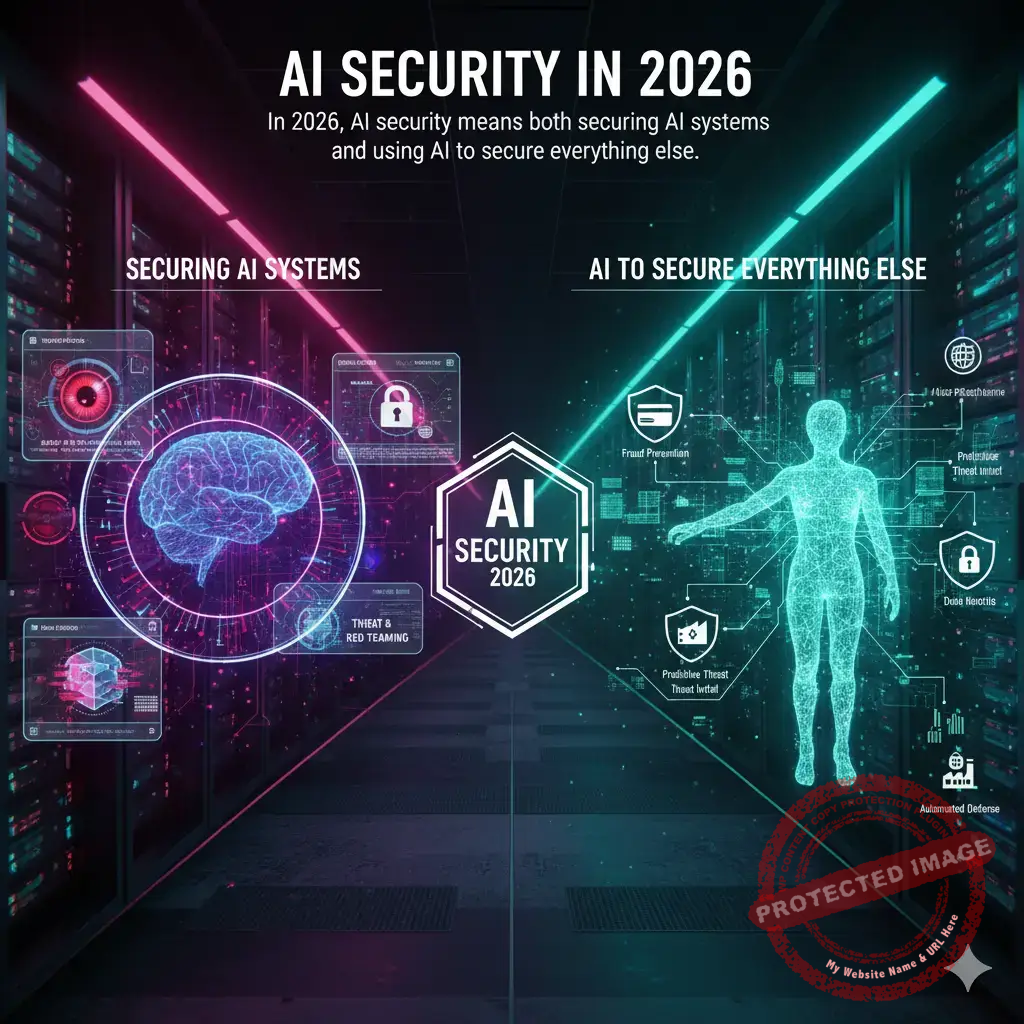
Securing the New Digital Frontier: How Identity and Access Management Evolves to Protect Billions of Devices and Autonomous Systems.
The Rise of Non-Human Identities
In the past decade, the digital landscape has expanded beyond imagination. No longer is identity management limited to people—it now includes machines, bots, applications, and artificial intelligence (AI) agents.
From smart thermostats and industrial robots to automated customer service chatbots and cloud-based AI systems, each device and process represents a non-human identity that interacts, transacts, and often makes decisions autonomously.
As the Internet of Things (IoT) and AI ecosystems grow, securing non-human entities has become one of the most urgent frontiers in cybersecurity and Identity and Access Management (IAM).
The Identity Explosion
Analysts estimate that by 2030, there will be over 125 billion connected devices worldwide. Each of these requires secure identity credentials, lifecycle management, and defined access privileges.
The problem? Many of these devices lack the computing resources or storage capacity to support traditional security models such as certificates, complex encryption keys, or multi-factor authentication.
This rapid proliferation has created a massive attack surface, where a single compromised IoT sensor or vulnerable AI agent can serve as an entry point for large-scale network infiltration.
Defining the Non-Human Identity Lifecycle
The concept of “identity” for machines extends far beyond registration. A non-human identity must be created, authenticated, authorized, monitored, and eventually decommissioned—just like human users.
The identity lifecycle for these entities includes:
-
Provisioning: Securely enrolling the device or agent with verified credentials.
-
Authentication: Ensuring that communication between devices and systems is trusted.
-
Authorization: Assigning precise permissions to prevent privilege escalation.
-
Deprovisioning: Removing credentials when the device is retired or replaced.
Modern IAM platforms are evolving to automate these steps at scale, using AI-driven orchestration and policy-based governance to manage thousands or even millions of non-human identities simultaneously.
IoT Security: The Ground-Level Challenge
IoT devices are particularly vulnerable because they often operate with minimal firmware protection and limited patching capabilities. A smart camera, industrial sensor, or medical device may lack the processing power to handle cryptographic verification.
To address this, companies are deploying lightweight identity protocols such as OAuth 2.0 Device Flow and X.509-based certificates optimized for constrained devices.
Cloud providers like AWS and Azure now offer IoT Identity Services, allowing devices to establish trust-based communication channels automatically—ensuring that only authenticated machines can exchange data or execute actions.
AI Agents and Autonomous Systems: Identity Beyond Code
AI agents present a unique challenge: they are not just devices—they are decision-makers. These autonomous systems can perform tasks such as approving transactions, executing code, or interacting with customers, all without direct human oversight.
To secure AI agents, organizations are implementing machine identity management frameworks that assign unique cryptographic keys and behavioral baselines to each AI entity.
This allows IAM systems to recognize when an AI agent begins operating outside of its intended scope—potentially signaling compromise or misalignment.
Zero Trust for Non-Human Entities
The Zero Trust model extends seamlessly into the world of machines and AI. Every request—whether from a human or device—must be authenticated, authorized, and encrypted.
Non-human identities operate under the same principle: “Never trust, always verify.” Access decisions are continuously evaluated based on contextual telemetry such as device health, connection origin, and behavioral integrity.
This continuous validation framework ensures that even trusted machines are constantly re-evaluated, reducing the risk of hidden vulnerabilities or hijacked automation.
Automation and Governance at Scale
Manually managing millions of device identities is impossible. Enterprises are now turning to AI-driven governance systems that monitor machine identities, analyze anomalies, and automatically enforce compliance with security policies.
These solutions employ behavioral analytics, graph-based identity mapping, and policy-as-code architectures to dynamically manage entitlements across entire ecosystems.
As organizations integrate non-human identities into hybrid and multi-cloud infrastructures, this automation is essential to prevent operational bottlenecks and security blind spots.
The Ethical and Regulatory Landscape
As machine autonomy increases, so does the ethical complexity of accountability. When an AI agent acts on its own—who is responsible for its actions?
Governments and regulatory bodies are now exploring frameworks that define AI identity accountability, ensuring transparent tracking of digital agents and their decisions. Privacy standards like GDPR and AI-specific laws such as the EU AI Act will shape how machine identities are verified and monitored across industries.
Closing Thoughts and Looking Forward
The digital world no longer revolves solely around human users—it now depends on the trustworthiness of machines. Managing non-human identities is no longer a niche technical concern; it’s a global cybersecurity priority.
As IoT networks expand and AI agents evolve, identity governance must adapt to safeguard both autonomy and accountability. The next frontier in IAM will not simply authenticate humans—it will establish digital trust between intelligent systems operating at machine speed.
In this new age of interconnected intelligence, securing every identity—human or not—is the foundation of digital survival.
References
-
“Machine Identity Management: The Next Security Frontier” – Gartner Research
https://www.gartner.com/en/documents/machine-identity-management-the-next-security-frontier -
“The State of IoT Security 2024” – McKinsey & Company
https://www.mckinsey.com/capabilities/mckinsey-digital/our-insights/the-state-of-iot-security-2024 -
“How to Secure AI Agents in the Enterprise” – CSO Online
https://www.csoonline.com/article/578244/how-to-secure-ai-agents-in-the-enterprise.html -
“Managing Non-Human Identities in Hybrid Cloud Environments” – TechTarget Security
https://www.techtarget.com/searchsecurity/feature/managing-non-human-identities-in-hybrid-cloud-environments -
“Zero Trust for Machines: A Practical Framework” – Security Boulevard
https://securityboulevard.com/2024/04/zero-trust-for-machines-a-practical-framework/
Author: Serge Boudreaux – AI Hardware Technologies, Montreal, Quebec
Co-Editor: Peter Jonathan Wilcheck – Miami, Florida
Post Disclaimer
The information provided in our posts or blogs are for educational and informative purposes only. We do not guarantee the accuracy, completeness or suitability of the information. We do not provide financial or investment advice. Readers should always seek professional advice before making any financial or investment decisions based on the information provided in our content. We will not be held responsible for any losses, damages or consequences that may arise from relying on the information provided in our content.
 AAPL
AAPL MSFT
MSFT GOOG
GOOG TSLA
TSLA AMD
AMD IBM
IBM TMC
TMC IE
IE INTC
INTC MSI
MSI NOK
NOK DELL
DELL ECDH26.CME