


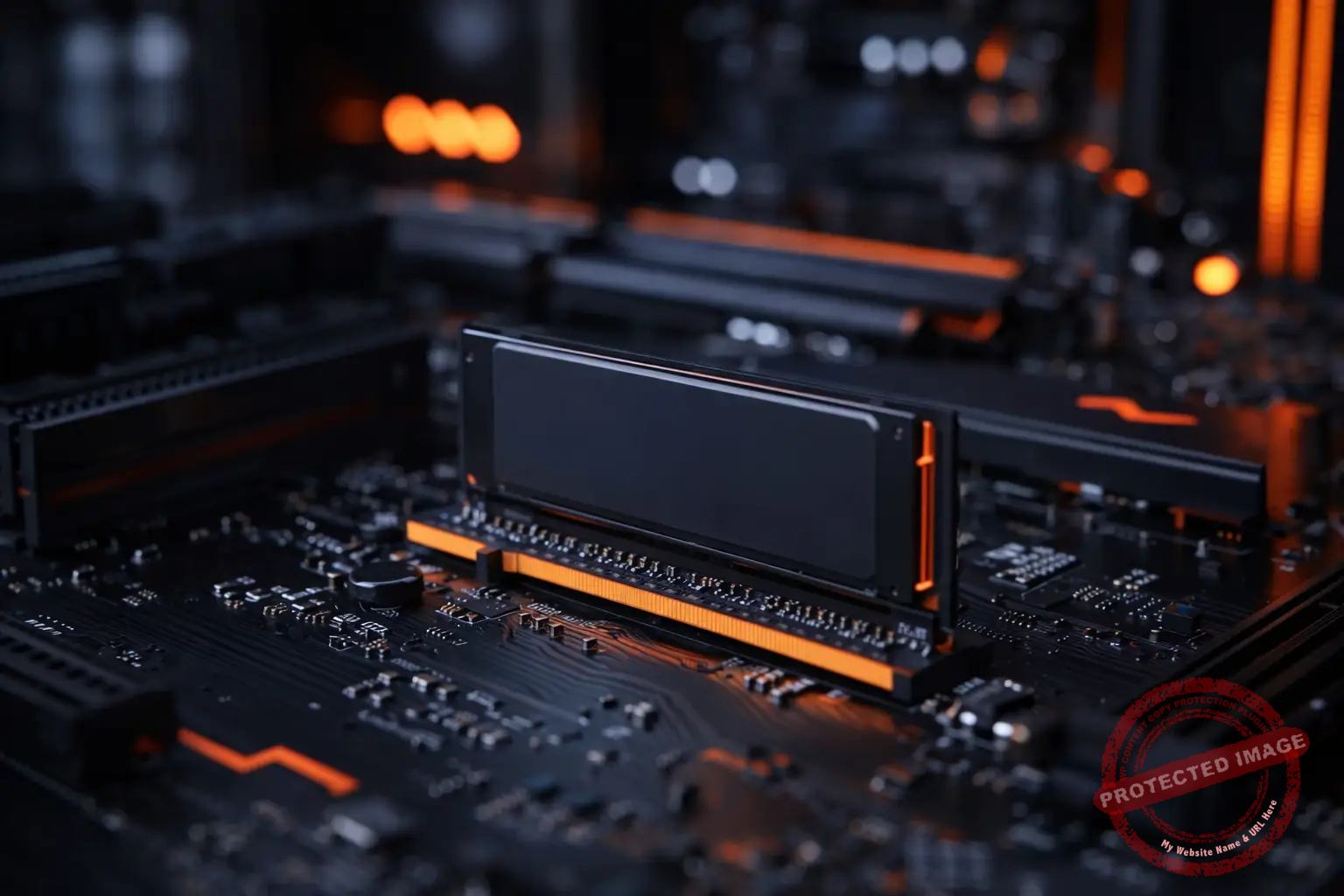
In 2026, NVMe storage has moved from premium differentiation to baseline expectation in web hosting, reshaping performance ceilings, application design, and cost-performance trade-offs across cloud and managed platforms.
Storage Performance Moves to the Foreground
For years, storage was treated as a secondary concern in hosting decisions, overshadowed by CPU counts and memory allocations. That hierarchy no longer holds in 2026. As applications become more data-intensive and latency-sensitive, storage performance increasingly defines end-user experience, system responsiveness, and operational efficiency.
NVMe, designed to exploit parallelism and reduce protocol overhead, aligns with these demands. Its adoption reflects a broader recognition that storage is no longer merely a repository but an active participant in application execution. In modern hosting environments, storage latency directly affects transaction processing, content delivery, analytics, and AI-assisted workloads.
For technology leaders, the implication is clear. In 2026, storage choice is a strategic decision that influences architecture, scalability, and competitive positioning, not a commodity afterthought.
Why NVMe Displaces Legacy Storage Models
Traditional storage interfaces were developed for spinning disks and later adapted for solid-state media. These designs imposed bottlenecks that limited the benefits of faster hardware. NVMe was engineered specifically for non-volatile memory, enabling direct communication paths and massively parallel I/O operations.
In hosting environments, these characteristics translate into lower latency, higher throughput, and more predictable performance under load. Applications experience faster startup times, databases handle more concurrent transactions, and content delivery pipelines process requests with less variability.
By 2026, these benefits are no longer marginal. They define baseline expectations. Hosting platforms that continue to rely on legacy storage interfaces struggle to meet performance requirements, particularly as workloads grow more interactive and data-driven.
NVMe as an Enabler of Modern Application Architectures
The rise of NVMe storage aligns with broader architectural trends. Containerized applications, microservices, and serverless functions all benefit from fast, consistent storage access. Short-lived workloads depend on rapid initialization and teardown, while distributed systems require predictable I/O behavior to maintain stability.
In 2026, NVMe storage supports these patterns by reducing I/O contention and smoothing performance spikes. This predictability simplifies capacity planning and improves reliability. Hosting providers integrate NVMe into their platforms not only for raw speed, but to enable architectural patterns that would otherwise be constrained by storage latency.
For developers, this evolution reduces the need for complex caching strategies designed to compensate for slow storage. While caching remains important, NVMe raises the baseline, allowing teams to focus optimization efforts where they deliver the most value.
Performance Consistency and Multi-Tenancy
One of the less visible but most important impacts of NVMe adoption in 2026 is improved performance consistency in multi-tenant environments. Shared hosting and cloud platforms have long grappled with noisy neighbor effects, where one workload’s I/O activity degrades performance for others.
NVMe’s parallelism and queue depth capabilities mitigate these effects when combined with intelligent scheduling and isolation. Hosting platforms can allocate I/O resources more granularly, maintaining service levels even under heavy aggregate load.
This consistency has contractual and operational implications. Performance guarantees become more credible, and service-level objectives are easier to meet. For customers, predictable storage behavior reduces the risk of sudden degradation during peak demand.
Cost-Performance Trade-Offs in 2026
As NVMe adoption accelerates, its cost profile evolves. Early implementations carried significant premiums, limiting adoption to high-end use cases. By 2026, economies of scale and manufacturing advances have narrowed the gap between NVMe and older solid-state technologies.
However, NVMe remains more expensive than legacy options on a per-unit basis. Hosting providers address this through tiered storage offerings that align performance with workload requirements. Customers select NVMe-backed storage for latency-sensitive applications while using lower-cost tiers for archival or infrequently accessed data.
This tiered approach reinforces a broader trend in hosting economics. Rather than optimizing for lowest cost, organizations optimize for cost-effectiveness, allocating premium resources where they deliver measurable business impact.
NVMe and the Rise of Data-Intensive Workloads
Data-intensive workloads are a defining feature of hosting in 2026. Analytics pipelines, real-time personalization, and AI-assisted services generate high I/O demands that strain traditional storage. NVMe’s ability to sustain high throughput under concurrent access makes it a foundational technology for these applications.
Hosting platforms increasingly integrate NVMe with advanced data services, enabling faster query execution and more responsive analytics. This capability supports near-real-time insights, which in turn drive competitive advantage in sectors ranging from commerce to public services.
Despite these benefits, NVMe does not eliminate the need for careful data architecture. Poorly designed schemas, inefficient queries, and uncontrolled data growth can still undermine performance. In 2026, NVMe amplifies good design choices but cannot compensate for structural inefficiencies.
Reliability, Endurance, and Operational Considerations
Performance gains must be balanced against reliability and endurance considerations. NVMe devices, like all solid-state storage, have finite write endurance. In 2026, hosting providers manage this through wear-leveling, monitoring, and proactive replacement strategies.
Operational maturity distinguishes credible platforms from marketing claims. Customers increasingly ask how providers manage lifecycle, failure modes, and data protection for NVMe-backed storage. Transparent practices and clear documentation build trust in environments where storage performance is mission-critical.
For organizations running stateful workloads, understanding these operational practices is as important as benchmarking raw performance.
Integration with Distributed and Edge Architectures
NVMe’s influence extends beyond centralized data centers. In 2026, edge computing deployments increasingly incorporate NVMe storage to support low-latency processing close to users. This combination enables faster content delivery, real-time analytics, and responsive applications at the network edge.
However, deploying NVMe at the edge introduces logistical and cost challenges. Smaller facilities and distributed nodes must balance performance benefits against power, cooling, and maintenance constraints. Hosting platforms address these challenges through selective deployment, focusing NVMe where its impact is greatest.
Limitations and Future Evolution
Despite its prominence, NVMe is not a universal solution. Network latency, application design, and external dependencies still shape overall performance. In 2026, organizations recognize that NVMe raises the floor but does not remove the need for holistic optimization.
Looking forward, integration with emerging memory technologies and advances in interconnects promise further evolution. Hosting platforms prepare for this future by designing storage layers that can incorporate new technologies without disrupting customers.
Closing Thoughts and Looking Forward
By 2026, NVMe storage has become a defining characteristic of modern web hosting, setting new expectations for performance, consistency, and application design. Its adoption reflects a broader shift toward infrastructure that supports data-intensive, latency-sensitive workloads as a norm rather than an exception. Organizations that align storage strategy with application needs gain measurable advantages in responsiveness and reliability. As hosting continues to evolve, NVMe stands not as a transient upgrade, but as a foundational element of the digital infrastructure landscape.
References
What Is NVMe and Why It Matters
Publication: SNIA
https://www.snia.org/education/what-is-nvme
NVMe Adoption in Data Centers
Publication: Uptime Institute
https://uptimeinstitute.com/resources/research-and-reports/nvme-adoption
Storage Performance and Modern Applications
Publication: Red Hat
https://www.redhat.com/en/blog/storage-performance-modern-applications
Solid-State Storage Endurance Explained
Publication: Intel
https://www.intel.com/content/www/us/en/products/docs/memory-storage/ssd/ssd-endurance-explained.html
Edge Computing Storage Requirements
Publication: MIT Technology Review
https://www.technologyreview.com/2024/03/edge-computing-storage/
Co-Editors
Dan Ray, Co-Editor, Montreal, Quebec.
Peter Jonathan Wilcheck, Co-Editor, Miami, Florida.
SEO Hashtags
#NVMe, #WebHosting2026, #HighPerformanceStorage, #CloudInfrastructure, #DataIntensiveApps, #EnterpriseHosting, #StorageTechnology, #LowLatency, #HostingPerformance, #FutureOfHosting
Post Disclaimer
The information provided in our posts or blogs are for educational and informative purposes only. We do not guarantee the accuracy, completeness or suitability of the information. We do not provide financial or investment advice. Readers should always seek professional advice before making any financial or investment decisions based on the information provided in our content. We will not be held responsible for any losses, damages or consequences that may arise from relying on the information provided in our content.
 AAPL
AAPL MSFT
MSFT GOOG
GOOG TSLA
TSLA AMD
AMD IBM
IBM TMC
TMC IE
IE INTC
INTC MSI
MSI NOK
NOK DELL
DELL ECDH26.CME