


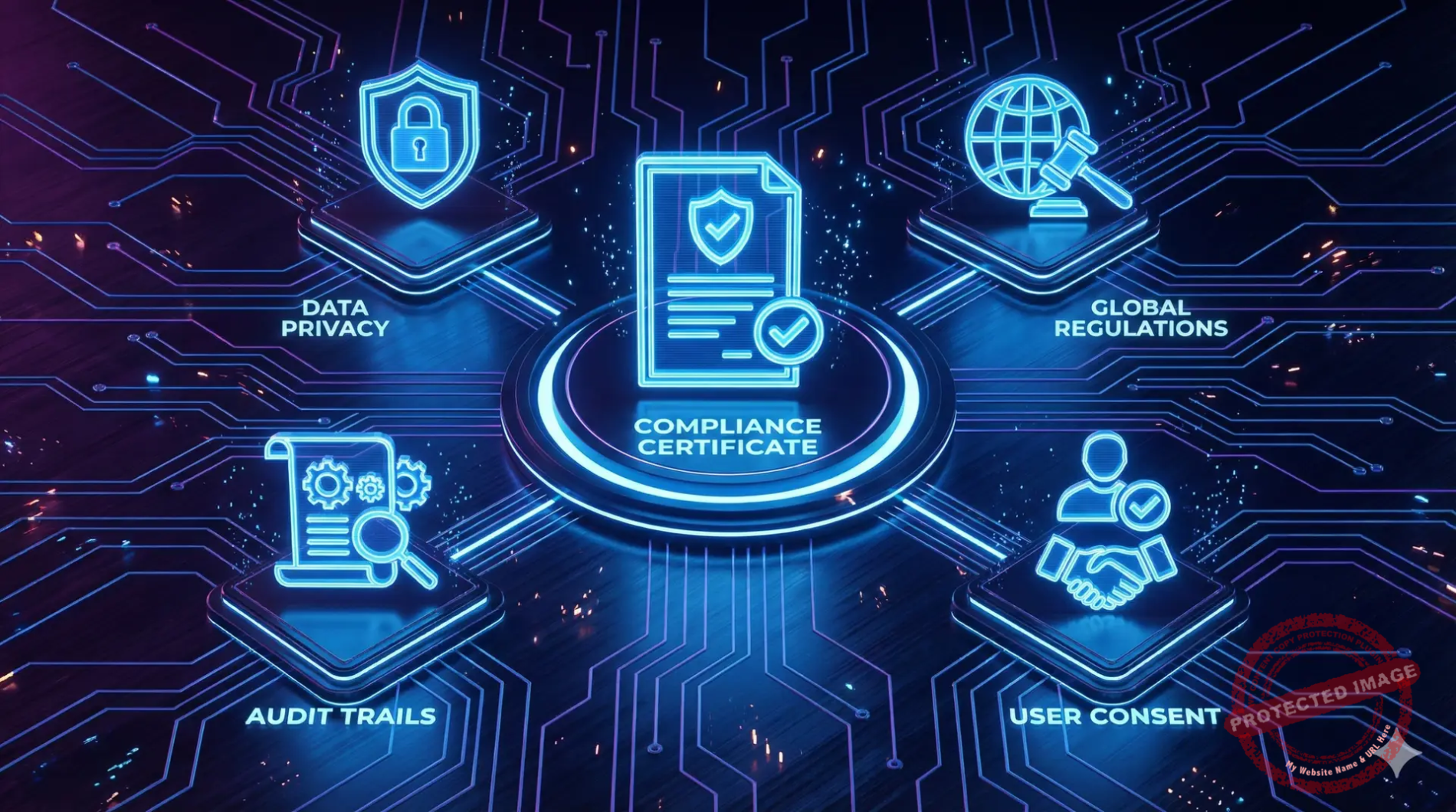
By 2026, regulatory compliance and data protection are no longer peripheral concerns in web hosting but primary design constraints that influence architecture, geography, governance, and provider selection across industries.
Compliance Moves to the Center of Hosting Strategy
For much of the digital economy’s growth, regulatory compliance lagged behind innovation. Organizations often treated data protection as a legal requirement to be addressed after systems were built. By 2026, this posture is no longer viable. Data privacy laws, sector-specific regulations, and contractual obligations now shape hosting decisions from the earliest planning stages.
This shift reflects both regulatory expansion and enforcement maturity. Governments have clarified expectations around data handling, cross-border transfers, breach notification, and accountability. Penalties for noncompliance are substantial enough to affect financial performance and executive liability. As a result, hosting platforms are increasingly evaluated as compliance enablers rather than neutral infrastructure.
For CIOs, CISOs, and legal teams, hosting strategy in 2026 is inseparable from regulatory posture. Infrastructure choices directly influence an organization’s ability to meet obligations and demonstrate due diligence.
Data Protection Becomes an Architectural Constraint
In 2026, data protection requirements influence how applications are designed and deployed. Regulations governing personal data, sensitive records, and critical systems impose constraints on storage location, access controls, and processing workflows. Hosting platforms must support these constraints without undermining performance or scalability.
Data classification becomes a foundational practice. Organizations segment workloads based on sensitivity, applying different hosting patterns to each category. Highly regulated data may be confined to specific regions or environments, while less sensitive workloads leverage broader cloud elasticity. Hosting providers respond by offering granular controls over data residency, encryption, and access policies.
These architectural decisions introduce complexity. Maintaining consistency across distributed environments while honoring regulatory boundaries requires careful orchestration. In 2026, compliance-aware hosting platforms abstract much of this complexity, enabling organizations to enforce policies without bespoke engineering for every workload.
Data Localization and Geographic Accountability
Data localization requirements are among the most consequential regulatory developments affecting hosting in 2026. Many jurisdictions mandate that certain data types remain within national or regional boundaries. These rules affect not only storage but also processing and backup practices.
Hosting platforms increasingly provide region-specific environments designed to meet local legal standards. Customers can select where data resides and how it is replicated, aligning infrastructure with regulatory expectations. This capability is particularly important for multinational enterprises and public-sector organizations operating across diverse legal regimes.
However, localization introduces trade-offs. Restricting data movement can limit redundancy options and complicate disaster recovery planning. Organizations must balance compliance with resilience, often adopting hybrid strategies that combine localized processing with carefully controlled cross-border synchronization.
Encryption, Identity, and Access as Compliance Foundations
By 2026, encryption is assumed across hosting environments, but its implementation varies in sophistication. Regulations increasingly expect encryption not only at rest and in transit, but also robust key management and access governance. Hosting platforms respond by integrating identity-centric security models that align with compliance requirements.
Access controls are enforced through identity verification, role-based permissions, and continuous monitoring. These mechanisms support principles of least privilege and traceability, which are central to regulatory compliance. Audit logs capture who accessed what data, when, and under what conditions, enabling post-hoc analysis and regulatory reporting.
Despite widespread adoption, misconfiguration remains a leading compliance risk. In 2026, organizations recognize that technology alone is insufficient. Governance processes, training, and regular validation are necessary to ensure that controls function as intended.
Continuous Compliance and Audit Readiness
Traditional compliance models relied on periodic audits and static documentation. By 2026, this approach is increasingly outdated. Regulators and customers expect continuous assurance that controls are in place and effective. Hosting platforms facilitate this shift through automated monitoring and reporting.
Continuous compliance capabilities track configuration drift, policy violations, and anomalous activity in real time. When deviations occur, systems alert operators and, in some cases, initiate remediation automatically. This reduces the gap between issue emergence and detection, lowering risk exposure.
For organizations, continuous compliance changes internal workflows. Audit preparation becomes an ongoing process rather than a disruptive event. However, it also generates significant data volumes. In 2026, teams must manage signal-to-noise ratios carefully to avoid alert fatigue and maintain focus on material risks.
Sector-Specific Hosting Requirements
Regulatory pressure varies significantly by industry. In 2026, hosting platforms increasingly offer sector-aligned configurations that address common compliance needs in healthcare, finance, education, and public administration. These offerings incorporate predefined controls, documentation templates, and reporting features tailored to industry norms.
While sector-specific hosting simplifies compliance, it does not eliminate responsibility. Organizations must still interpret regulations, configure applications appropriately, and ensure operational practices align with legal expectations. Hosting platforms provide frameworks, but accountability remains with data controllers and operators.
This dynamic underscores the importance of collaboration between technical and non-technical stakeholders. Compliance in 2026 is as much an organizational capability as a technical one.
Third-Party Risk and Shared Responsibility
As hosting platforms become integral to compliance, third-party risk management takes on greater importance. Organizations must assess not only their own practices but also those of their hosting providers and downstream vendors. In 2026, regulators increasingly scrutinize supply chains, holding organizations accountable for partner failures.
Shared responsibility models clarify roles, but misunderstandings persist. Hosting providers secure infrastructure layers, while customers manage application logic and data usage. Gaps in understanding can lead to compliance failures despite technically robust platforms.
To mitigate this risk, organizations demand greater transparency from hosting providers. Detailed documentation, independent certifications, and clear incident communication are critical factors in provider selection. Trust is built through evidence, not assurances.
The Cost and Complexity of Compliance
Compliance-driven hosting introduces cost considerations that extend beyond infrastructure pricing. Specialized environments, reporting requirements, and governance overhead increase operational expense. In 2026, organizations explicitly account for these costs in business cases rather than treating them as overhead.
At the same time, compliance investments can deliver indirect benefits. Improved data governance enhances security, resilience, and customer trust. Organizations that integrate compliance into hosting strategy often experience fewer incidents and smoother regulatory interactions.
However, resource constraints remain a challenge, particularly for mid-sized organizations. Managed compliance services embedded in hosting platforms gain traction as a way to access expertise and tooling without building large internal teams.
Uncertainty and the Regulatory Horizon
Despite greater clarity, regulatory uncertainty persists in 2026. Laws evolve, interpretations shift, and enforcement priorities change. Hosting platforms must adapt continuously, updating controls and guidance as requirements evolve.
Organizations that succeed adopt flexible strategies. Rather than optimizing narrowly for current rules, they invest in adaptable architectures and governance models that can accommodate change. Hosting providers that emphasize configurability and transparency are better positioned to support customers through regulatory transitions.
Closing Thoughts and Looking Forward
By 2026, regulatory compliance and data protection are defining forces in web hosting strategy. They influence where data lives, how applications are built, and which providers are viable partners. Organizations that treat compliance as a foundational design principle rather than a reactive obligation gain resilience and credibility in an environment of heightened scrutiny. As regulations continue to evolve, hosting platforms that embed compliance into infrastructure while enabling flexibility will play a central role in sustaining digital growth under increasingly complex legal expectations.
References
General Data Protection Regulation Overview
Publication: European Commission
https://commission.europa.eu/law/law-topic/data-protection/eu-data-protection-rules_en
NIST Privacy Framework
Publication: National Institute of Standards and Technology
https://www.nist.gov/privacy-framework
Data Localization Laws Worldwide
Publication: International Association of Privacy Professionals
https://iapp.org/resources/article/data-localization-laws/
Continuous Compliance in Cloud Environments
Publication: Gartner
https://www.gartner.com/en/articles/continuous-compliance-cloud
Third-Party Risk Management and Regulation
Publication: World Economic Forum
https://www.weforum.org/agenda/2024/02/third-party-risk-regulation/
Co-Editors
Dan Ray, Co-Editor, Montreal, Quebec.
Peter Jonathan Wilcheck, Co-Editor, Miami, Florida.
#HostingCompliance, #DataProtection, #WebHosting2026, #DataPrivacy, #RegulatoryIT, #CloudGovernance, #EnterpriseRisk, #DigitalCompliance, #HostingStrategy, #FutureOfHosting
Post Disclaimer
The information provided in our posts or blogs are for educational and informative purposes only. We do not guarantee the accuracy, completeness or suitability of the information. We do not provide financial or investment advice. Readers should always seek professional advice before making any financial or investment decisions based on the information provided in our content. We will not be held responsible for any losses, damages or consequences that may arise from relying on the information provided in our content.

 AAPL
AAPL MSFT
MSFT GOOG
GOOG TSLA
TSLA AMD
AMD IBM
IBM TMC
TMC IE
IE INTC
INTC MSI
MSI NOK
NOK DELL
DELL ECDH26.CME