


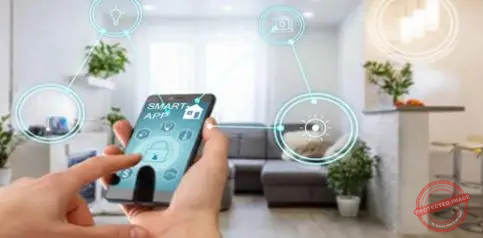
From Connected Devices to Connected Intelligence—How Seamless Interoperability Is Creating Environments That Think for Themselves.
From Smart Devices to Smart Ecosystems
The first generation of smart devices operated in isolation—each app, gadget, or sensor performing its task independently. But the next great leap in digital evolution is no longer about individual intelligence—it’s about collective intelligence.
We are entering the age of ambient intelligence (AmI): environments where devices, sensors, and systems work together, automatically coordinating to understand human needs, adapt to context, and anticipate action.
This new paradigm transforms connected devices from tools into cooperative digital ecosystems, delivering unified, personalized, and context-aware experiences across homes, offices, cities, and industries.
The Power of Interoperability
The key to realizing ambient intelligence is interoperability—the ability of devices and platforms from different manufacturers to communicate seamlessly.
Historically, fragmentation has hindered progress: smart devices often rely on proprietary standards, locking users into isolated ecosystems. Initiatives like Matter, Open Connectivity Foundation (OCF), and Bluetooth LE Mesh are breaking those barriers, enabling cross-brand integration and consistent performance across networks.
With true interoperability, a smart home’s lighting, thermostat, appliances, and security systems can collaborate intuitively—creating a unified experience that feels invisible yet intelligent.
Ambient Intelligence: The Next Evolutionary Step
Ambient intelligence represents the convergence of AI, IoT, edge computing, and cloud orchestration. It’s an ecosystem where technology fades into the background, becoming proactive rather than reactive.
In such environments:
-
Sensors continuously monitor conditions and behavior.
-
AI interprets context and intent.
-
Devices act autonomously, adjusting the environment to user preferences.
Imagine walking into a room that automatically adjusts lighting, temperature, and music based on your mood, schedule, and biometric signals. That’s ambient intelligence in action—a world that senses and responds naturally.
The Role of Edge and Cloud Synergy
Behind every intelligent environment lies a hybrid infrastructure combining the immediacy of edge computing with the scalability of the cloud.
-
Edge Computing enables ultra-fast local responses to sensory data—crucial for automation, robotics, and safety applications.
-
Cloud Platforms provide global analytics, storage, and long-term learning.
Together, they create a continuum of intelligence—where insights travel seamlessly between local devices and global systems, ensuring real-time adaptability and continuous improvement.
Applications Across Industries
The ambient intelligence ecosystem is emerging across multiple sectors:
-
Smart Homes: Context-aware systems personalize comfort and security for each resident.
-
Healthcare: Connected sensors monitor vital signs, predicting health events before they occur.
-
Manufacturing: Machines collaborate autonomously to optimize production and maintenance schedules.
-
Retail: Stores adapt layouts, lighting, and promotions based on real-time customer behavior.
-
Smart Cities: Integrated infrastructure manages energy, waste, and transportation dynamically.
These examples illustrate how interconnected intelligence enhances efficiency, safety, and sustainability across every domain.
Ethics, Privacy, and Digital Trust
The rise of ambient intelligence brings powerful capabilities—but also ethical responsibility.
When devices continuously observe and interpret human behavior, privacy, consent, and control become critical. Users must have transparency into what data is collected and the ability to manage it.
Global frameworks such as Privacy by Design (PbD) and AI Governance Principles are guiding manufacturers to ensure that autonomy never comes at the expense of accountability.
Trust will be the foundation of adoption—without it, even the most advanced ecosystem will fail to thrive.
Designing for the Invisible Future
In the coming decade, the most successful technology won’t be the most visible—it will be the most intuitive. Smart ecosystems will evolve beyond apps and interfaces into environmental intelligence, where technology simply “happens” around the user.
Developers, designers, and policymakers must collaborate to ensure this new world remains inclusive, ethical, and human-centered. The goal is not to replace human decision-making—but to enhance it through subtle, intelligent augmentation.
Closing Thoughts and Looking Forward
The era of ambient intelligence represents the culmination of the smart device revolution. Connectivity, AI, and interoperability are merging to create environments that sense, understand, and respond without command.
In this world, technology becomes an extension of human intuition—a silent partner that empowers daily life.
As ecosystems mature, success will depend not on how many devices connect—but on how seamlessly they collaborate. The future isn’t just smart—it’s aware.
References
-
“The Rise of Ambient Intelligence” – World Economic Forum
https://www.weforum.org/agenda/2024/08/the-rise-of-ambient-intelligence -
“Matter and the Future of Smart Home Interoperability” – The Verge
https://www.theverge.com/2024/06/matter-standard-smart-home-interoperability -
“Ambient Intelligence in Industry 5.0” – Deloitte Insights
https://www.deloitte.com/insights/ambient-intelligence-in-industry-5-0 -
“Privacy and Ethics in the Age of Smart Environments” – MIT Technology Review
https://www.technologyreview.com/2024/10/19/privacy-and-ethics-in-the-age-of-smart-environments -
“The Role of Edge and Cloud in Ambient Computing” – McKinsey & Company
https://www.mckinsey.com/industries/technology/our-insights/the-role-of-edge-and-cloud-in-ambient-computing
Author: Serge Boudreaux – AI Hardware Technologies, Montreal, Quebec
Co-Editor: Peter Jonathan Wilcheck – Miami, Florida
Post Disclaimer
The information provided in our posts or blogs are for educational and informative purposes only. We do not guarantee the accuracy, completeness or suitability of the information. We do not provide financial or investment advice. Readers should always seek professional advice before making any financial or investment decisions based on the information provided in our content. We will not be held responsible for any losses, damages or consequences that may arise from relying on the information provided in our content.
 AAPL
AAPL MSFT
MSFT GOOG
GOOG TSLA
TSLA AMD
AMD IBM
IBM TMC
TMC IE
IE INTC
INTC MSI
MSI NOK
NOK DELL
DELL ECDH26.CME