


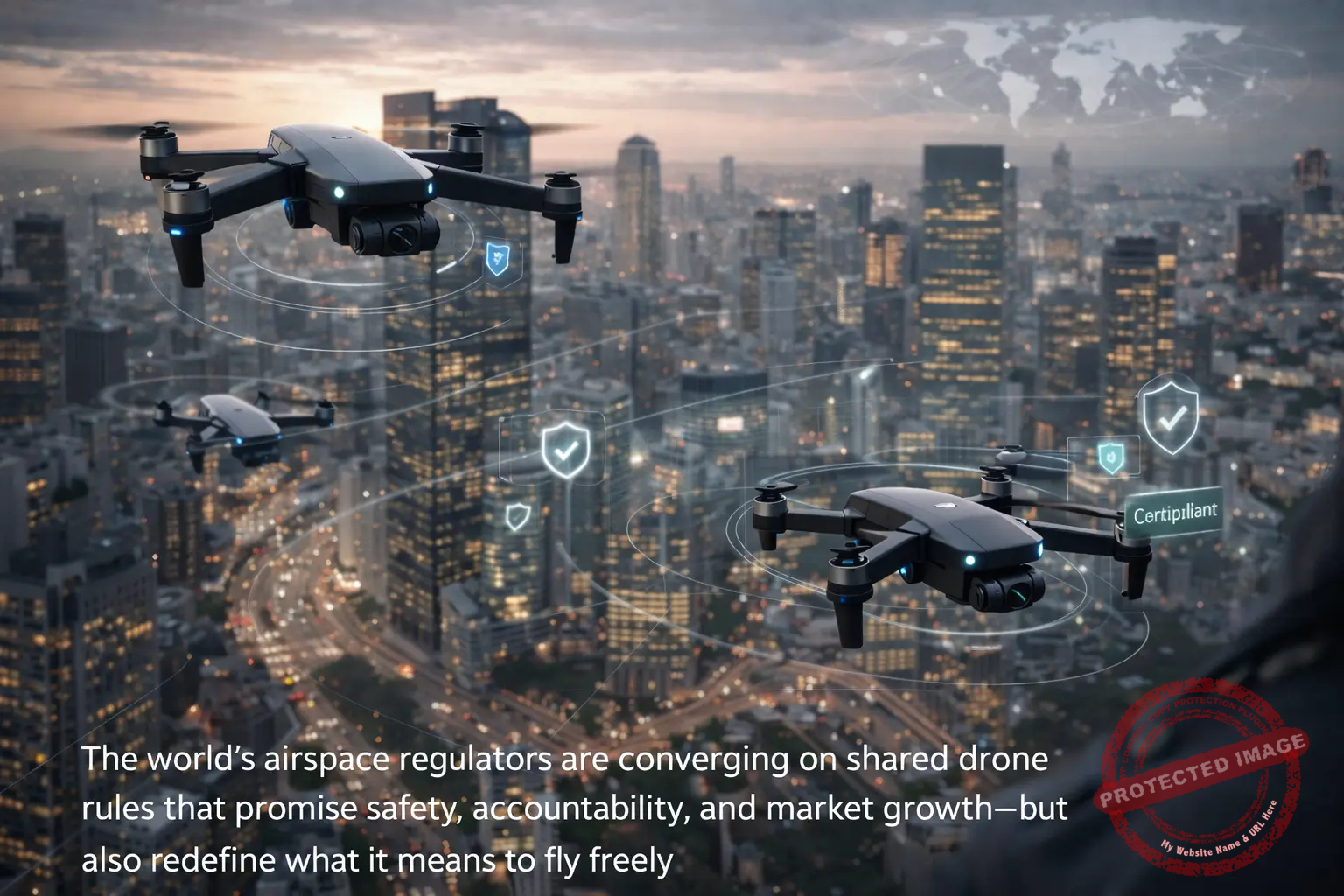
By 2026, the world’s airspace regulators are converging on shared drone rules that promise safety, accountability, and market growth—but also redefine what it means to fly freely.
The regulatory landscape surrounding Remote ID has evolved significantly by 2026, driven by the need for safety, accountability, and interoperability among drone operations across national boundaries. As countries recognize the importance of a unified approach to airspace management, the adoption of Remote ID standards has become a focal point for regulators, manufacturers, and operators alike. The introduction of Remote ID is not merely a compliance measure; it represents a foundational shift in how drones are integrated into the broader aviation ecosystem. By 2026, nearly all jurisdictions, including major markets such as the United States, Europe, and Asia-Pacific, have established regulatory frameworks that mandate Remote ID for consumer drones, ensuring that they can be tracked and identified in real-time.
The implications of these regulations extend beyond mere compliance. With the enforcement of Remote ID, the traditional concerns surrounding privacy and safety are being addressed through more robust data-sharing protocols. Operators are now required to equip their drones with Remote ID systems that broadcast identification and location information, which can be received by law enforcement agencies and other authorized personnel. This transparency is crucial for enhancing public trust in drone technology, as it mitigates the risks associated with unauthorized flights and enhances situational awareness in crowded airspaces. Furthermore, the integration of Remote ID technology enables regulators to define and enforce no-fly zones more effectively, a critical factor for urban operations and areas with high-density populations.
By 2026, the costs associated with compliance have become more manageable for operators. As Remote ID technology has matured, the market has seen a significant reduction in the prices of compliant drones and retrofit kits. This shift has made it easier for smaller operators and hobbyists to enter the market, fostering innovation and competition. Moreover, as manufacturers increasingly adopt standardized Remote ID protocols, economies of scale have driven down costs, allowing for widespread adoption without compromising safety or functionality.
The convergence on Remote ID regulations has also prompted international cooperation among regulatory bodies. Countries are beginning to harmonize their rules to facilitate cross-border drone operations, which is essential for the growing global drone delivery market. By 2026, international agreements have been established that outline shared standards for Remote ID, ensuring that drones can operate seamlessly across different jurisdictions. This harmonization is vital for sectors such as e-commerce and logistics, where time-sensitive deliveries often require rapid traversal of national borders.
However, the path to regulatory harmonization is fraught with challenges. While many regions have made significant strides in implementing Remote ID, discrepancies remain in how these regulations are enforced. Variations in compliance timelines, technical specifications, and penalties for non-compliance can create confusion and operational inefficiencies for drone operators who wish to operate internationally. Additionally, privacy concerns continue to be a point of contention, as stakeholders debate the balance between public safety and individual privacy rights. As regulators strive to address these concerns, ongoing dialogue among industry participants, civil liberties groups, and government agencies will be essential to shaping a regulatory landscape that fosters innovation while protecting public interests.
As we look ahead to the remainder of 2026, the regulatory landscape for Remote ID will continue to evolve. Ongoing developments in technology, such as enhanced tracking capabilities, will likely lead to more sophisticated regulatory frameworks that adapt to emerging challenges. The need for compliance will remain a top priority for operators, who must navigate an increasingly intricate web of regulations as they seek to leverage the benefits of Remote ID in their operations. Overall, the evolution of Remote ID regulations is set to shape the future of drone operations, creating a more secure and efficient airspace for all stakeholders involved.
Closing Thoughts and Looking Forward
With the global adoption of Remote ID and the harmonization of drone regulations, 2026 promises to be a pivotal year for the consumer drone industry. The landscape is marked by an increased focus on safety, operational accountability, and the integration of drones into the airspace. As regulatory frameworks solidify and technology advances, the potential for market growth is substantial, positioning the drone sector for innovative solutions that meet the demands of various industries. Stakeholders must remain vigilant and engaged to navigate the challenges that lie ahead while capitalizing on the opportunities presented by a more regulated and secure operational environment.
References:
FAA. (2023). Remote Identification of Unmanned Aircraft. Retrieved from https://www.faa.gov/uas/getting_started/remote_id
European Union Aviation Safety Agency. (2023). U-Space: Regulatory Framework for Drone Operations. Retrieved from https://www.easa.europa.eu/uas/u-space
International Civil Aviation Organization. (2023). The Future of Drones: Global Perspectives. Retrieved from https://www.icao.int/Drone-Conference
Drone Industry Insights. (2023). Market Analysis: Remote ID Implementation Worldwide. Retrieved from https://www.droneii.com/remote-id-market-analysis
Skylogic Research. (2023). The Impact of Remote ID on Drone Operations. Retrieved from https://www.skylogicresearch.com/remote-id-impact-analysis
Benoit Leduc, Co-Editor, Montreal, Quebec.
Peter Jonathan Wilcheck, Co-Editor, Miami, Florida.
#ConsumerDrones2026 #RemoteID #DroneRegulation #DroneTechnology #AviationPolicy #BVLOS #Uspace #DronePrivacy #GlobalHarmonization #DroneSafety
Post Disclaimer
The information provided in our posts or blogs are for educational and informative purposes only. We do not guarantee the accuracy, completeness or suitability of the information. We do not provide financial or investment advice. Readers should always seek professional advice before making any financial or investment decisions based on the information provided in our content. We will not be held responsible for any losses, damages or consequences that may arise from relying on the information provided in our content.

 AAPL
AAPL AMD
AMD CIS.HA
 DELL
DELL IBM
IBM INTC
INTC MSFT
MSFT GOOG
GOOG HPE
HPE NVDA
NVDA TSLA
TSLA TMC
TMC MSI
MSI NOK
NOK ECDH26.CME
 OPEAZZX