


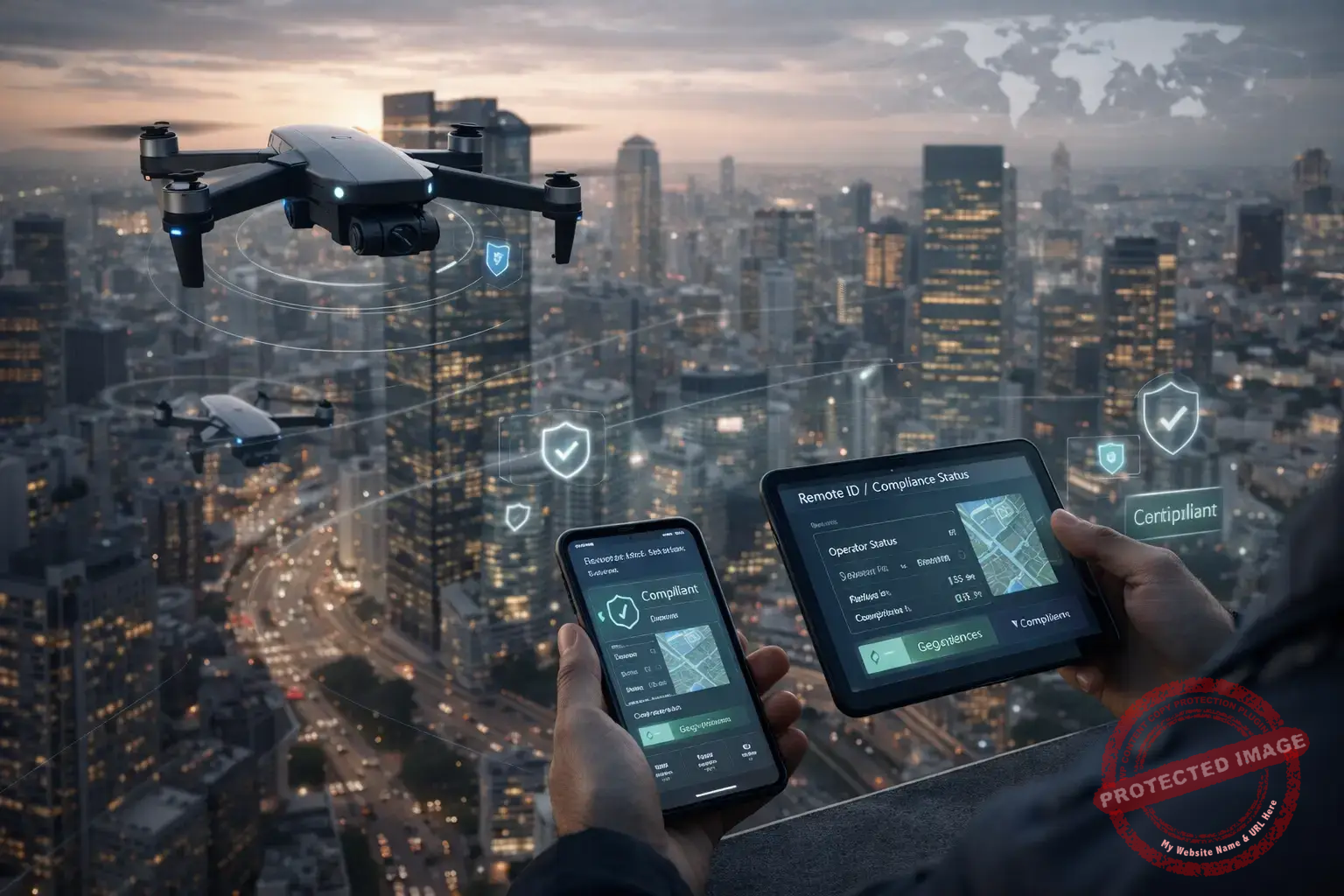
The landscape of consumer drones is rapidly evolving, driven by advancements in sensing technologies that are redefining their capabilities and applications. As these technologies become more accessible, prosumer drones are transforming from simple aerial platforms into sophisticated tools equipped for a variety of tasks. This evolution is largely due to the integration of advanced sensors that enhance the drones’ ability to interpret and interact with their environments.
Key among these technologies are LiDAR, multispectral imaging, and thermal imaging systems. Each of these sensing modalities offers unique advantages, enabling users to gather data in ways that were previously not possible with traditional imaging techniques. For instance, LiDAR technology utilizes laser pulses to create highly accurate 3D maps of the terrain below, allowing for detailed topographical analysis, vegetation mapping, and even archaeological site documentation. This precision makes LiDAR an invaluable asset for professionals in fields such as construction, agriculture, and environmental monitoring.
Multispectral imaging, on the other hand, captures data at different wavelengths beyond the visible spectrum. This capability allows for the assessment of plant health, soil conditions, and water quality, making it an essential tool in precision agriculture and environmental science. By analyzing the reflected light from crops, farmers can make informed decisions regarding irrigation, fertilization, and pest control, ultimately leading to increased yields and reduced environmental impact.
Thermal imaging adds another layer of insight by detecting heat signatures and temperature variations in the environment. This technology is particularly useful for applications such as building inspections, wildlife monitoring, and search and rescue operations. By identifying heat loss in buildings or locating individuals in distress, thermal imaging enhances situational awareness and decision-making in various scenarios.
The integration of these advanced sensing technologies into drone design is not merely additive; it represents a paradigm shift in how drones can be utilized. Modern prosumer drones are increasingly being designed with modularity in mind, allowing users to customize their systems with the specific sensors needed for their tasks. This flexibility not only enhances the functionality of the drones but also broadens the scope of their applications, empowering users across diverse industries.
As we move forward, the trends in prosumer drone imaging solutions will likely emphasize enhanced integration of these sensing technologies, improved data processing capabilities, and user-friendly interfaces that make sophisticated analysis accessible to a broader audience. The combination of advanced sensors with intuitive operation will further democratize drone usage, allowing hobbyists, professionals, and researchers alike to harness the power of aerial data in innovative ways.
LiDAR: Revolutionizing Prosumer Drone Capabilities
LiDAR technology has emerged as a game-changer for prosumer drones, elevating their capabilities beyond mere aerial photography to sophisticated data collection tools. This advancement is primarily due to LiDAR’s ability to provide high-resolution, three-dimensional spatial data, which is crucial for various applications across multiple industries. By emitting laser pulses and measuring the time it takes for them to return, drones equipped with LiDAR sensors can create detailed topographical maps with unparalleled accuracy. This is particularly beneficial for professionals in fields such as construction, forestry, and environmental monitoring, where precise measurements are essential.
In construction, for example, LiDAR-equipped drones streamline the surveying process, allowing for rapid site assessments and monitoring throughout the project lifecycle. The ability to generate accurate 3D models facilitates better planning and decision-making, reducing delays and costs associated with traditional surveying methods. Similarly, in forestry, LiDAR’s capacity to penetrate tree canopies provides a means to assess vegetation density and biomass, enabling better resource management and conservation efforts.
Moreover, the integration of LiDAR technology into prosumer drones enhances their usability for agricultural applications. Farmers can utilize LiDAR to analyze crop health, assess irrigation needs, and optimize field management practices. By capturing detailed elevation data, they can identify areas prone to flooding or erosion, allowing for timely interventions that protect their investments and improve overall yield.
The rise of affordable LiDAR systems has made this technology more accessible to the prosumer market, leading to a democratization of advanced mapping capabilities. As manufacturers continue to innovate and reduce costs, we can expect more drones to come equipped with integrated LiDAR sensors, further expanding their appeal and functionality. This trend is likely to accelerate as educational resources improve, enabling more users to leverage LiDAR data effectively.
In addition to its practical applications, LiDAR technology also opens up new avenues for research and exploration. Academics and scientists can deploy prosumer drones equipped with LiDAR to gather data in remote or challenging environments, such as dense forests or rugged terrain, without the need for extensive ground surveys. This capability not only enhances data collection efficiency but also enables researchers to conduct studies that were previously logistically unfeasible.
The future of prosumer drones equipped with LiDAR is poised for growth, particularly as integration with other sensing technologies becomes more prevalent. The synergy between LiDAR, multispectral imaging, and thermal sensors will enable comprehensive environmental assessments and facilitate data-driven decision-making for various sectors. As these technologies converge, users will benefit from richer datasets and improved analytical tools, making the prospect of data collection and analysis more intuitive and efficient.
Overall, the revolution brought about by LiDAR in the prosumer drone space is not merely a technical advancement but a transformative shift that empowers users to engage with their environments in innovative ways. As the technology continues to evolve, the potential applications will expand, fostering a new era of aerial data utilization that is both impactful and sustainable.
Multispectral Imaging: Expanding Application Horizons
Multispectral imaging technology has emerged as a transformative tool for prosumer drones, greatly expanding their application horizons across various fields. Unlike conventional cameras that capture images solely in the visible spectrum, multispectral sensors collect data across multiple wavelengths, including near-infrared and ultraviolet. This enhanced capability allows for a deeper understanding of the environment, revealing insights that are invisible to the naked eye.
In agriculture, multispectral imaging is revolutionizing precision farming by enabling farmers to monitor crop health and optimize yields. By analyzing the spectral reflectance of plants, farmers can identify stress indicators, nutrient deficiencies, and pest infestations long before they become visible symptoms. This early detection allows for timely interventions, such as targeted fertilization or pest control, ultimately leading to improved crop management and reduced chemical usage. The ability to assess large areas quickly and accurately makes multispectral drones an indispensable asset for modern agriculture.
Environmental monitoring is another domain where multispectral imaging is making significant strides. Researchers can utilize drones equipped with these sensors to assess vegetation health, monitor water quality, and track changes in land use. For instance, multispectral imagery can be employed to measure chlorophyll levels in plants, providing insights into ecosystem health and biodiversity. Furthermore, it plays a crucial role in habitat mapping and conservation efforts by allowing scientists to monitor the effects of climate change on various habitats over time.
The integration of multispectral imaging technology in prosumer drones is also enhancing the capabilities of urban planners and civil engineers. By capturing data on surface materials and vegetation cover, professionals can make more informed decisions regarding land use and infrastructure development. This data can inform urban heat island studies, where planners assess how different surfaces absorb and retain heat, ultimately leading to more sustainable city designs.
Additionally, multispectral imaging supports the assessment of environmental impacts from various projects and activities. For instance, construction companies can monitor the ecological effects of their operations by analyzing changes in land cover and vegetation health. This proactive approach not only ensures compliance with environmental regulations but also fosters corporate social responsibility.
The accessibility of multispectral imaging technology is increasing, thanks to advancements in sensor miniaturization and cost reduction. As more prosumer drones incorporate these capabilities, a broader range of users—from hobbyists to professionals—will be able to harness the power of multispectral data for diverse applications. The ability to easily process and visualize this data through user-friendly software platforms further democratizes access, allowing individuals without extensive technical backgrounds to engage in advanced analysis.
In the coming years, we can expect to see further integration of multispectral imaging with other sensing technologies, such as thermal and LiDAR systems. This multifaceted approach will enable comprehensive data collection and analysis, providing users with a holistic view of their environments. As these technologies converge, the potential for innovative applications will expand, fostering new opportunities for research, environmental stewardship, and resource management.
Overall, the advancements in multispectral imaging are not just enhancing the capabilities of prosumer drones; they are reshaping how industries approach data collection and analysis. As users become increasingly adept at interpreting multispectral data, the impact on agriculture, environmental science, urban planning, and beyond will be profound, paving the way for smarter, more sustainable practices across various sectors.
Thermal Imaging: Enhancing Environmental Awareness
Thermal imaging technology is rapidly becoming a key feature in the prosumer drone market, significantly enhancing environmental awareness and monitoring capabilities. By detecting infrared radiation, thermal cameras can visualize temperature variations in the environment. This ability to see heat signatures provides valuable insights across a wide array of applications, from building inspections to wildlife monitoring and even search and rescue operations.
In building inspections, thermal imaging allows professionals to identify areas of heat loss in structures, which is critical for energy efficiency assessments. By revealing where insulation may be lacking or where leaks exist, thermal drones can help homeowners and contractors make informed decisions about repairs and improvements. This not only enhances comfort and energy savings but also contributes to sustainability by reducing the overall energy consumption of buildings.
In agriculture, thermal imaging is proving to be invaluable for irrigation management. By capturing temperature data across fields, farmers can pinpoint areas that are over or under-watered. This capability allows for precise irrigation practices that conserve water while ensuring optimal crop health. Additionally, farmers can use thermal imaging to monitor livestock health, as changes in body temperature can indicate illness or stress, enabling timely interventions that improve animal welfare.
Thermal imaging also plays a crucial role in wildlife monitoring and conservation efforts. Drones equipped with thermal cameras can survey large areas of habitat, identifying animals that may be difficult to spot using traditional visual methods, particularly in dense vegetation or at night. This capability has significant implications for tracking endangered species, studying migration patterns, and assessing the health of ecosystems. Conservationists can gather critical data without disturbing wildlife, thus promoting more effective management strategies.
Moreover, in emergency response scenarios, thermal imaging drones are becoming essential tools for search and rescue operations. The ability to locate individuals based on their heat signatures, even in challenging conditions such as darkness or dense fog, can be life-saving. First responders can deploy drones equipped with thermal cameras to quickly assess large areas, dramatically increasing the efficiency of rescue efforts.
The integration of thermal imaging with other sensing technologies, such as LiDAR and multispectral imaging, is creating a more comprehensive approach to data collection and analysis. This combination allows users to gain a multifaceted understanding of environments, facilitating better decision-making and resource management. For instance, by overlaying thermal data with LiDAR-generated topographical maps, professionals can analyze how terrain features influence heat distribution, leading to more effective environmental planning.
As thermal imaging technology becomes more affordable and accessible, we can anticipate a surge in its adoption among prosumer drone users. Manufacturers are increasingly incorporating thermal cameras into their drone offerings, making it easier for a broader range of users—from hobbyists to professionals—to leverage this technology. User-friendly software platforms that simplify data processing and visualization will further enhance the appeal of thermal imaging, encouraging more individuals to engage with this powerful tool.
Looking ahead, the future of thermal imaging in prosumer drones is bright. As technology continues to evolve, we can expect advancements in sensor resolution, data processing capabilities, and integration with artificial intelligence, which will enable even more sophisticated analysis and applications. The ability to gather and interpret thermal data in real-time will empower users to address complex environmental challenges, paving the way for more informed and sustainable practices across various sectors.
Integration of Sensing Systems in Drone Design
The integration of advanced sensing systems into drone design is revolutionizing the capabilities and versatility of prosumer drones. As these technologies become increasingly sophisticated, manufacturers are rethinking the architecture of drones to accommodate a range of sensors, including LiDAR, multispectral, and thermal imaging systems. This modularity not only enhances the functionality of drones but also allows users to tailor their equipment to specific tasks, promoting a more efficient and effective use of aerial data.
In modern drone design, the emphasis on modularity means that users can easily swap out sensors as needed, depending on the requirements of their projects. For instance, a drone equipped with a multispectral sensor for agricultural monitoring can be quickly outfitted with a thermal camera for building inspections or wildlife tracking. This flexibility significantly broadens the applications of drones, enabling them to serve multiple roles without the need for separate units. As a result, professionals in agriculture, environmental science, and construction can optimize their workflows and reduce costs associated with purchasing multiple specialized drones.
The integration of these sensing technologies is also supported by advancements in data processing capabilities. Modern drones are equipped with powerful onboard processors that can handle large datasets in real time, allowing users to receive immediate feedback and insights during their flights. This capability is particularly beneficial in dynamic environments where timely decision-making is crucial. For example, farmers can analyze crop health indicators as they fly over their fields, making adjustments to irrigation or fertilization strategies on the spot.
Moreover, user-friendly interfaces and software applications are being developed to simplify the operation of these complex systems. Intuitive controls allow users with varying levels of expertise to operate drones equipped with advanced sensors effectively. By lowering the barrier to entry, more individuals and organizations can leverage sophisticated aerial data for their purposes, fostering innovation across sectors.
Collaboration between manufacturers and software developers is essential for maximizing the potential of these integrated sensing systems. As drones become more interconnected with cloud-based platforms, users will benefit from enhanced data analytics capabilities. This integration enables the aggregation of data from multiple flights and sensors, allowing for comprehensive analysis and reporting that can drive better decision-making. For instance, combining data from thermal imaging and LiDAR can provide a more holistic view of an environment, revealing insights that would be difficult to obtain from a single data source.
Looking toward the future, the trend of integrating advanced sensing technologies into drone design is expected to accelerate. As costs decrease and technology improves, we will likely see even more capabilities being added to prosumer drones, including artificial intelligence for automated data interpretation and machine learning algorithms that can enhance flight planning and sensor deployment. Additionally, as regulatory frameworks evolve to accommodate these innovations, the potential for widespread adoption of advanced sensing drones across various industries will expand.
Ultimately, the integration of advanced sensing systems is not just enhancing the performance of prosumer drones; it is fundamentally changing how users engage with their environments. By providing access to sophisticated data collection and analysis tools, drones are empowering a new generation of users to explore, monitor, and manage their surroundings in ways that were previously unimaginable. This evolution is paving the way for a future where drones are indispensable tools in a wide range of applications, driving efficiency, sustainability, and innovation across numerous fields.
Future Trends in Prosumer Drone Imaging Solutions
The future of prosumer drone imaging solutions is on the brink of significant transformation, driven by rapid advancements in sensor technology and data processing capabilities. As consumers and professionals alike seek more intuitive and efficient ways to collect and analyze aerial data, the integration of advanced sensing systems will become increasingly prevalent.
One prominent trend is the continued miniaturization and enhancement of sensors, allowing drones to carry multiple advanced imaging modalities simultaneously. This capability will enable users to conduct comprehensive assessments in a single flight, combining LiDAR, multispectral, and thermal imaging data to gain a more holistic view of their environments. For instance, agricultural practitioners could analyze crop health using multispectral imagery while simultaneously assessing soil moisture levels with thermal sensors, resulting in more informed decisions that optimize resource use and boost productivity.
Additionally, the development of artificial intelligence and machine learning algorithms will play a crucial role in transforming how data is processed and interpreted. As drones become equipped with smart capabilities, they will be able to analyze data in real time, identifying patterns and anomalies that might otherwise go unnoticed. This level of automation will not only streamline workflows but also empower users to make timely and impactful decisions based on actionable insights derived from complex datasets.
User-friendly interfaces will also evolve, making sophisticated data analysis accessible to a broader audience. Enhanced software platforms will allow users to visualize and manipulate data intuitively, integrating various datasets into coherent reports that highlight key findings. The democratization of this technology means that even those with little to no technical background will be able to leverage advanced imaging solutions for their specific needs, whether in environmental monitoring, urban planning, or disaster response.
Moreover, collaboration between drone manufacturers and software developers is expected to flourish, yielding innovative applications that transcend traditional boundaries. Interoperability among different sensing systems will allow for seamless data sharing and integration, leading to richer datasets that can be used for multi-faceted analyses. For example, combining thermal data with LiDAR information could help urban planners better understand heat distribution in cities, informing strategies for climate resilience and energy efficiency.
The rise of cloud computing will further enhance the capabilities of prosumer drones. By utilizing cloud-based platforms for data storage and processing, users can access their data from anywhere, facilitating collaboration and enabling real-time insights that enhance operational efficiency. This shift towards interconnected systems will also support the development of large-scale, data-driven applications, such as environmental monitoring networks that provide critical information on ecosystem health and climate change.
As we look to the future, the proliferation of advanced sensing technologies in prosumer drones will likely lead to new applications and use cases that we have yet to fully explore. Industries will continue to adapt and innovate, utilizing drones not just as tools for capturing data, but as integral components of broader technological ecosystems that enhance the way we understand and interact with our world. The convergence of these trends will ultimately pave the way for smarter, more sustainable practices across various sectors, reinforcing the role of drones as essential instruments for modern data collection and analysis.
Co-Editors
Dan Ray, Co-Editor, Montreal, Quebec.
Peter Jonathan Wilcheck, Co-Editor, Miami, Florida.
#ConsumerDrones2026 #DroneTechnology #AIFlight #AviationInnovation #RemoteID #BatteryTech #DroneRegulation #AutonomousSystems #SmartFlight #AerospaceAI
Post Disclaimer
The information provided in our posts or blogs are for educational and informative purposes only. We do not guarantee the accuracy, completeness or suitability of the information. We do not provide financial or investment advice. Readers should always seek professional advice before making any financial or investment decisions based on the information provided in our content. We will not be held responsible for any losses, damages or consequences that may arise from relying on the information provided in our content.

 AAPL
AAPL MSFT
MSFT GOOG
GOOG TSLA
TSLA AMD
AMD IBM
IBM TMC
TMC IE
IE INTC
INTC MSI
MSI NOK
NOK DELL
DELL ECDH26.CME