


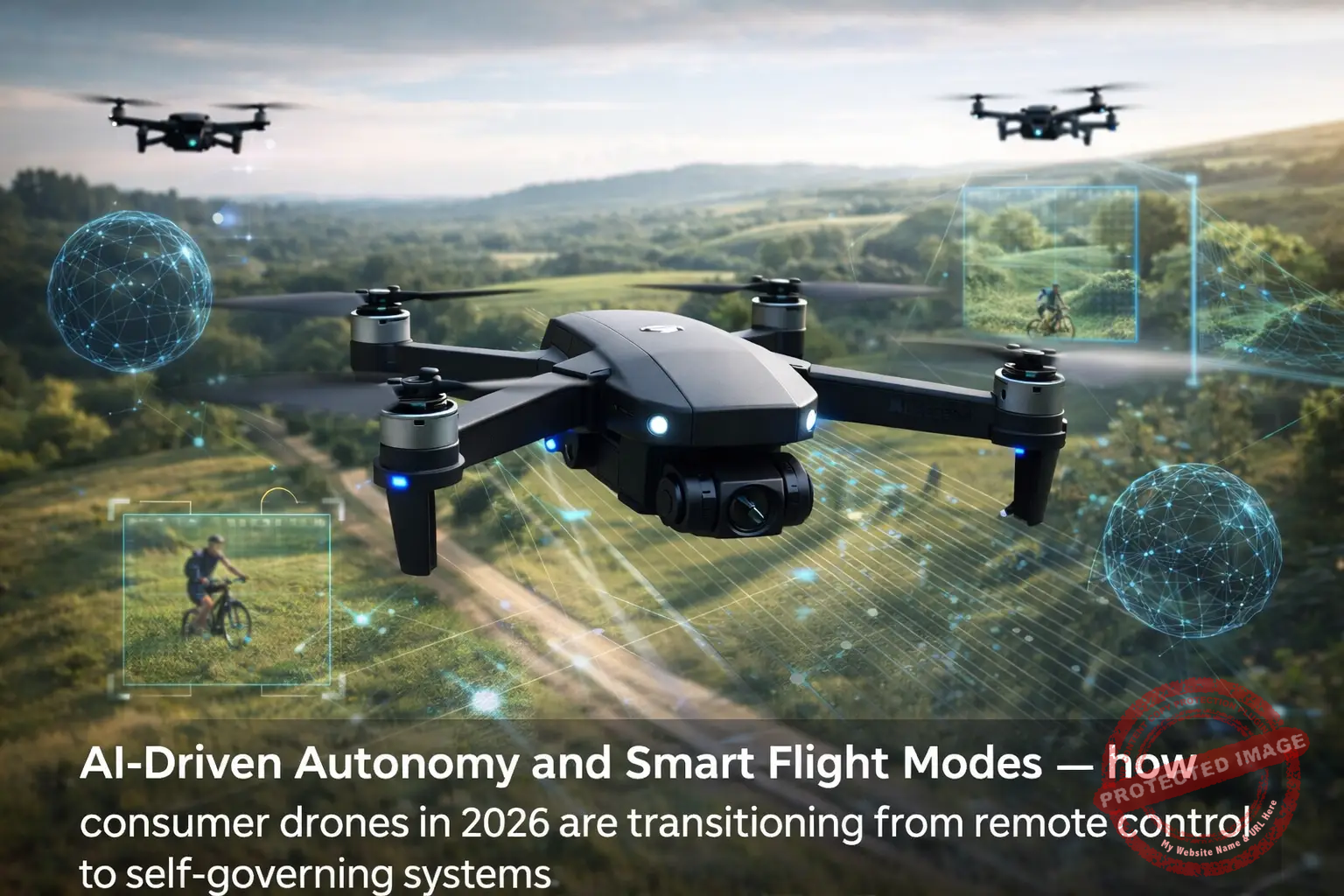
The integration of AI-driven autonomy in consumer drones marks a pivotal shift in how these devices operate. By 2026, drones are increasingly equipped with sophisticated algorithms that enable them to make real-time decisions based on environmental data. This autonomy is powered by advancements in artificial intelligence, allowing drones to navigate complex environments without constant human input.
Machine learning algorithms analyze vast amounts of data from onboard sensors, enabling drones to identify obstacles, assess flight paths, and adapt to changing conditions dynamically. For example, a drone equipped with AI can recognize and avoid trees, buildings, and other aerial vehicles, significantly enhancing safety during operations. This capability is not just about avoiding collisions; it also allows drones to optimize their flight paths for efficiency, reducing energy consumption and extending flight times.
In addition, AI-driven autonomy facilitates advanced mission planning. Drones can autonomously collect data for various applications, from agricultural monitoring to infrastructure inspection. By leveraging AI, these systems can prioritize tasks, allocate resources effectively, and even collaborate with other drones in a fleet for complex operations. This collaborative autonomy paves the way for collective data gathering and analysis, enhancing the overall effectiveness of drone missions.
The ability to process and analyze data onboard in real time is another critical aspect of AI-driven autonomy. Drones can now perform tasks such as image recognition and terrain mapping without needing to transmit vast amounts of data back to a central server. This efficiency reduces latency, allowing for quicker decision-making and immediate responses to environmental changes.
Furthermore, the evolution of AI-driven autonomy is leading to increased personalization in consumer drones. Users can configure their drones with specific preferences, and the AI adapts the drone’s behavior accordingly, tailoring the flight experience to individual needs. This personalization extends to safety features, with drones learning from user interactions and improving their responses to potential hazards.
As AI continues to advance, the capabilities of autonomous drones are expected to expand further, enabling more complex tasks and interactions with users. The ongoing development in this field signifies a shift from traditional remote-controlled flight to a new era where drones function as intelligent, self-sufficient entities. This transition not only enhances the user experience but also broadens the potential applications of consumer drones across various industries.
Evolution of Smart Flight Modes
The evolution of smart flight modes in consumer drones has transformed how users interact with these devices, making flying more intuitive and accessible. By 2026, smart flight modes have become intricately designed features that leverage AI and sensor fusion, allowing users to engage with drones in ways that were once unimaginable. These modes encompass a variety of functionalities, each tailored to meet specific user needs and enhance the overall flight experience.
One of the most notable advancements is the introduction of automated flight modes that cater to various scenarios. For instance, “Follow Me” mode allows drones to autonomously track and follow a user, perfect for capturing dynamic footage during outdoor activities such as hiking or biking. This mode utilizes advanced computer vision algorithms and GPS data to maintain a precise distance and angle, ensuring that the user is always in frame without requiring manual control. This capability not only simplifies the process of capturing action shots but also adds a layer of safety as users can focus on their activity rather than managing the drone.
Another significant development is the “Waypoint Navigation” feature, which permits users to predefine a series of points for the drone to fly autonomously. This mode has proven invaluable for tasks such as surveying land or mapping areas, where precise routes are critical. Users can set waypoints on a digital map, and the drone will execute the flight plan independently, allowing for consistent and repeatable data collection. The accuracy of this feature has been enhanced by integrating high-resolution GPS and real-time environmental data, which helps ensure the drone stays on course even in challenging conditions.
Additionally, “Return to Home” (RTH) functionality has evolved to become more sophisticated. Modern drones are equipped with sensors that continuously monitor the environment, allowing them to determine the safest and most efficient route back to their launch point. This feature is particularly crucial in urban settings, where obstacles may arise unexpectedly. The RTH mode can now intelligently navigate around barriers, significantly reducing the risk of accidents or loss of the drone.
The integration of machine learning also plays a critical role in the evolution of smart flight modes. Drones can learn from previous flights, adapting their behavior based on user preferences and flying conditions. For example, a drone may recognize that a user prefers smoother, more stable video footage and adjust its flight patterns accordingly. This adaptability enhances the user experience and builds a rapport between the drone and its operator, making each flight feel more personalized and controlled.
Moreover, smart flight modes are increasingly becoming collaborative, enabling multiple drones to work together seamlessly. In scenarios like agricultural monitoring or search and rescue missions, fleets of drones can be programmed to operate in unison, sharing data in real time to optimize coverage and efficiency. This collaborative capability not only enhances the effectiveness of missions but also exemplifies the potential of drone technology to solve complex problems through teamwork.
The advancements in smart flight modes signify a broader trend towards user-centric design in consumer drones. By making flying more intuitive and reducing the need for technical expertise, these modes empower a wider range of users to harness the potential of drone technology. As smart flight modes continue to evolve, they will undoubtedly play a pivotal role in shaping the future of consumer drone applications, making them indispensable tools for both leisure and professional use.
Key Technologies Enabling Self-Governance
Key technologies that enable self-governance in consumer drones are at the forefront of transforming how these devices operate autonomously. The convergence of advanced sensors, robust computing power, and sophisticated algorithms is crucial for the realization of self-governing systems.
One of the primary technologies facilitating this evolution is LiDAR (Light Detection and Ranging). LiDAR systems use laser light to measure distances and create high-resolution three-dimensional maps of the environment. In 2026, consumer drones equipped with LiDAR can generate detailed terrain models that are invaluable for applications such as agricultural analysis, forestry management, and urban planning. The ability to map environments with precision allows drones to navigate complex landscapes autonomously, avoiding obstacles and optimizing flight paths in real time. As LiDAR technology becomes more compact and affordable, its integration into consumer drones is expected to become standard, enhancing their capability to operate independently.
Multispectral imaging is another game-changing technology that significantly contributes to the self-governing capabilities of drones. By capturing data across different wavelengths, multispectral sensors can provide insights that are not visible to the naked eye. This technology is particularly beneficial for agricultural applications, where drones can autonomously assess crop health, monitor plant growth, and detect irrigation issues. The integration of multispectral imaging allows drones to autonomously gather and analyze critical data, making timely decisions about agricultural practices without human intervention.
Thermal imaging technology further enhances the autonomous functionalities of consumer drones. By detecting heat signatures, thermal cameras enable drones to perform tasks such as search and rescue operations, wildlife monitoring, and building inspections. In 2026, drones can autonomously navigate to areas of interest based on thermal data, identifying heat leaks in buildings or locating individuals in distress during emergencies. This capability not only increases the effectiveness of missions but also reduces the time and resources required to gather essential information.
The processing power of consumer drones has seen remarkable advancements, with onboard computers capable of handling complex algorithms and large datasets. This computing capability is essential for real-time data processing, allowing drones to analyze sensory input and make informed decisions on the fly. With high-performance processors, drones can run machine learning models that enhance their ability to recognize patterns, identify objects, and predict environmental changes. The ability to perform these tasks onboard reduces reliance on external systems, enabling drones to execute missions independently and efficiently.
Sensor fusion, the integration of data from multiple sensors, is key to enabling drones to perceive their surroundings comprehensively. By combining data from cameras, LiDAR, and thermal sensors, drones can build a more accurate representation of their environment, which is essential for safe navigation and decision-making. This holistic understanding allows drones to autonomously assess risks, identify safe flight paths, and adapt to dynamic conditions, ensuring they operate effectively in various scenarios.
Furthermore, advancements in communication technologies, such as 5G and satellite connectivity, are enhancing the self-governing capabilities of drones. These technologies enable real-time communication between drones and command centers, facilitating remote monitoring and control when needed. However, they also allow drones to operate autonomously by leveraging cloud-based data for enhanced situational awareness and decision-making. This connectivity ensures that even in complex operations, drones can access the latest information and adapt their strategies effectively.
As these technologies continue to advance, the self-governing capabilities of consumer drones will expand, leading to increased autonomy in various applications. The convergence of LiDAR, multispectral and thermal imaging, processing power, sensor fusion, and advanced communication systems is laying the foundation for a new era of autonomous drone operations, where these devices can perform intricate tasks with minimal human oversight. This evolution not only enhances the functionality of consumer drones but also opens new avenues for their use across industries, from agriculture to emergency response, ultimately creating significant value for users and enterprises alike.
Regulatory Challenges and Opportunities
The landscape of regulations surrounding autonomous drones is rapidly evolving as advancements in technology outpace existing legal frameworks. By 2026, regulatory challenges are increasingly prominent as governments attempt to balance innovation with safety and privacy concerns. As consumer drones become more autonomous, regulators face the difficult task of designing rules that accommodate these new capabilities while ensuring public safety and compliance with airspace regulations.
One of the primary challenges is the need for clear guidelines regarding the operation of autonomous drones in shared airspace. Current regulations often center around remote-piloted aircraft, which necessitates a human operator at all times. With drones capable of flying autonomously, there is a pressing need to establish regulations that define how these devices can operate alongside traditional manned aircraft. This includes addressing issues such as altitude limits, no-fly zones, and collision avoidance protocols. As autonomous drones may not rely on human judgment to navigate, regulators must develop systems that ensure these drones can safely integrate into existing air traffic systems.
Another significant regulatory concern is privacy. As drones equipped with advanced sensing and imaging systems become commonplace, the potential for invasion of privacy increases. The ability of these drones to capture high-resolution images and gather data from various environments raises questions about who owns the data and how it can be used. Regulators must establish frameworks that protect individuals’ privacy rights while allowing for the beneficial use of drone technology in sectors such as agriculture, real estate, and environmental monitoring. This may involve setting limits on data collection, requiring consent for capturing images in certain contexts, and ensuring that data is stored and processed securely.
Liability and insurance are also key issues that regulators must address. As drones operate independently, determining responsibility in the event of an accident becomes more complex. Current regulations typically hold the operator accountable for any incidents involving a drone, but as autonomous systems become the norm, new legal precedents will need to be established. This includes defining liability in cases of malfunction, accidents due to software errors, or incidents caused by unforeseen environmental factors. The insurance industry will likely need to adapt, creating policies specifically tailored to cover autonomous drone operations.
Moreover, the rapid pace of technological advancement poses a challenge for regulators who may struggle to keep up with the latest developments in drone technology. As companies innovate and introduce new features, regulators must be agile in updating rules and guidelines to accommodate these changes. This often requires collaboration between industry stakeholders, regulatory bodies, and technology experts to create a regulatory framework that is both flexible and robust.
Despite these challenges, there are also significant opportunities for regulators to foster innovation in the drone sector. By creating a supportive regulatory environment that encourages responsible use of autonomous technology, governments can stimulate growth in the drone industry while ensuring the safety and welfare of the public. This involves not only setting guidelines but also facilitating pilot programs and partnerships between private companies and government agencies to test and refine autonomous drone operations in real-world scenarios.
Additionally, as regulatory frameworks evolve, they can help to standardize technologies and practices within the industry, promoting interoperability among different drone systems and manufacturers. Such standardization is crucial for enabling seamless operations across various applications, from delivery services to emergency response. By fostering collaboration and innovation, regulators can help unlock the full potential of autonomous drones, paving the way for their widespread adoption and integration into everyday life.
In summary, while the regulatory landscape for autonomous drones presents several challenges, it also offers opportunities for growth and innovation. By developing clear guidelines that address safety, privacy, liability, and technological advancements, regulators can create an environment that supports the responsible use of autonomous drone technology, ultimately benefiting consumers and enterprises alike.
Consumer Benefits of Autonomous Drones
As drones become increasingly autonomous, the benefits to consumers are substantial and multifaceted. One of the most significant advantages is enhanced operational efficiency. Autonomous drones can perform tasks more quickly and accurately than human-operated ones. For instance, in agricultural settings, drones can autonomously survey large tracts of land to monitor crop health, assess irrigation needs, and identify pest infestations. This capability allows farmers to make timely decisions that can enhance yield and reduce resource waste, ultimately driving down costs and increasing profitability.
The convenience of autonomous drones also caters to a broader spectrum of users, from hobbyists to professionals. With smart flight modes that enable users to set predefined tasks or routes, individuals can engage in activities like aerial photography or surveying without needing extensive piloting skills. This democratization of drone technology opens up new possibilities for users who may have previously been intimidated by the complexities of flying a drone. As a result, more people can utilize drones for personal enjoyment or business applications, leading to increased market growth and innovation.
Additionally, the safety features inherent in autonomous drones provide peace of mind for users. With AI-driven navigation systems that continuously monitor surroundings and adjust flight paths to avoid obstacles, the risk of collisions is significantly reduced. This is especially valuable in densely populated urban areas where the potential for accidents is heightened. The ability of drones to autonomously return to their launch point in the event of low battery or signal loss further enhances safety, ensuring that users can operate their drones with confidence.
In commercial applications, the benefits of autonomous drones extend to improved data collection and analysis. Equipped with advanced sensing technologies like LiDAR and multispectral imaging, these drones can gather vast amounts of data quickly and efficiently. Businesses in sectors such as construction, real estate, and environmental monitoring can leverage this data for insights that were previously time-consuming and costly to obtain. For example, construction companies can track project progress in real-time, using drone data to ensure timelines and budgets are adhered to, while environmental agencies can monitor wildlife and natural resources with minimal disruption.
Moreover, the integration of autonomous drone technology into logistics and delivery systems represents a significant advancement for consumers. Companies are increasingly utilizing drones for last-mile delivery, enabling faster and more efficient shipment of goods. This shift not only enhances customer satisfaction through quicker delivery times but also reduces the environmental impact associated with traditional delivery methods, as drones typically consume less energy.
The ability for drones to operate autonomously also allows for improved adaptability to varying conditions. Whether it’s adverse weather or unexpected obstacles, autonomous systems equipped with real-time data processing capabilities can adjust their operations on the fly. This resilience ensures that drones can complete their missions regardless of changing environmental factors, providing reliability for users across diverse applications.
In terms of investment, the growth of autonomous drone technology has opened new avenues for entrepreneurs and businesses. As consumer demand for drone services increases, opportunities for startups and established companies alike abound. From developing AI algorithms for better navigation to creating specialized drones for niche markets, the potential for innovation within the drone industry is immense.
Ultimately, the transition to autonomous drones signifies a transformative shift in how consumers interact with drone technology. The benefits of efficiency, safety, convenience, and adaptability position autonomous drones as valuable assets for personal use and commercial enterprise. As these technologies continue to evolve, their integration into everyday life is set to expand, further enhancing the utility and appeal of consumer drones across various sectors.
Future Trends in Drone Autonomy
The future of drone autonomy is poised for remarkable advancements that will redefine their capabilities and applications. As technology progresses, we can expect to see an increase in the integration of artificial intelligence and machine learning into drone systems, allowing for even greater levels of autonomy. This will enable drones to not only execute pre-programmed tasks but also to learn from their environments and adapt their actions based on experience. For instance, drones might develop the ability to optimize flight paths based on historical data, weather patterns, and real-time environmental changes, ensuring efficient operations for various applications.
Moreover, advancements in sensor technology will continue to enhance the situational awareness of autonomous drones. The integration of high-resolution cameras, LiDAR, and multispectral sensors will allow drones to gather comprehensive data about their surroundings, facilitating more informed decision-making. In sectors like agriculture, drones could autonomously analyze crop health over time, providing farmers with actionable insights to maximize yield and resource efficiency without requiring constant human oversight.
As drones become more self-sufficient, we can anticipate a shift in operational paradigms, particularly in commercial sectors. Industries such as logistics and delivery will likely leverage autonomous drones to streamline operations further. Imagine a future where drones autonomously manage inventory, monitor supply chains, and complete deliveries without human intervention, significantly reducing operational costs and improving service efficiency. This level of automation will not only enhance productivity but also allow businesses to allocate human resources to more strategic tasks.
Additionally, the collaboration between drones and other technologies will further drive advancements in autonomy. For example, the combination of drones with Internet of Things (IoT) devices could create a network of interconnected systems that share data and insights in real time. This would allow drones to perform complex missions, such as search and rescue operations or environmental monitoring, by coordinating with other autonomous vehicles and ground-based systems. Such collaborative efforts could revolutionize how we respond to emergencies or monitor ecological changes, providing timely and effective solutions.
The regulatory landscape will also evolve in tandem with these technological advancements. As drones become more capable, regulators will likely develop frameworks that not only ensure safety but also encourage innovation. This could include establishing designated air corridors for autonomous drones, which would facilitate safe operations in urban environments while minimizing conflicts with manned aircraft. Furthermore, regulations may adapt to address the privacy concerns associated with advanced imaging technologies, striking a balance between innovation and public trust.
Consumer acceptance of autonomous drones will play a crucial role in shaping their future. As users become more familiar with autonomous functionalities, demand for advanced features will grow. This could drive manufacturers to innovate continuously, leading to the development of drones that are more intuitive, user-friendly, and capable of performing complex tasks with ease. Enhanced user experiences will likely foster a wider adoption of drone technology across various sectors, from recreational use to professional applications.
In summary, the future trends in drone autonomy point towards an era where drones operate with unprecedented levels of intelligence, efficiency, and collaboration. The continuous evolution of AI, sensor technology, and regulatory frameworks will empower drones to take on more complex roles, transforming how industries operate and enhancing the overall consumer experience. As these advancements unfold, the potential applications of autonomous drones will expand dramatically, unlocking new opportunities and value across multiple domains.
Co-Editors
Dan Ray, Co-Editor, Montreal, Quebec.
Peter Jonathan Wilcheck, Co-Editor, Miami, Florida.
#ConsumerDrones2026 #DroneTechnology #AIFlight #AviationInnovation #RemoteID #BatteryTech #DroneRegulation #AutonomousSystems #SmartFlight #AerospaceAI
Post Disclaimer
The information provided in our posts or blogs are for educational and informative purposes only. We do not guarantee the accuracy, completeness or suitability of the information. We do not provide financial or investment advice. Readers should always seek professional advice before making any financial or investment decisions based on the information provided in our content. We will not be held responsible for any losses, damages or consequences that may arise from relying on the information provided in our content.
 AAPL
AAPL MSFT
MSFT GOOG
GOOG TSLA
TSLA AMD
AMD IBM
IBM TMC
TMC IE
IE INTC
INTC MSI
MSI NOK
NOK DELL
DELL ECDH26.CME