


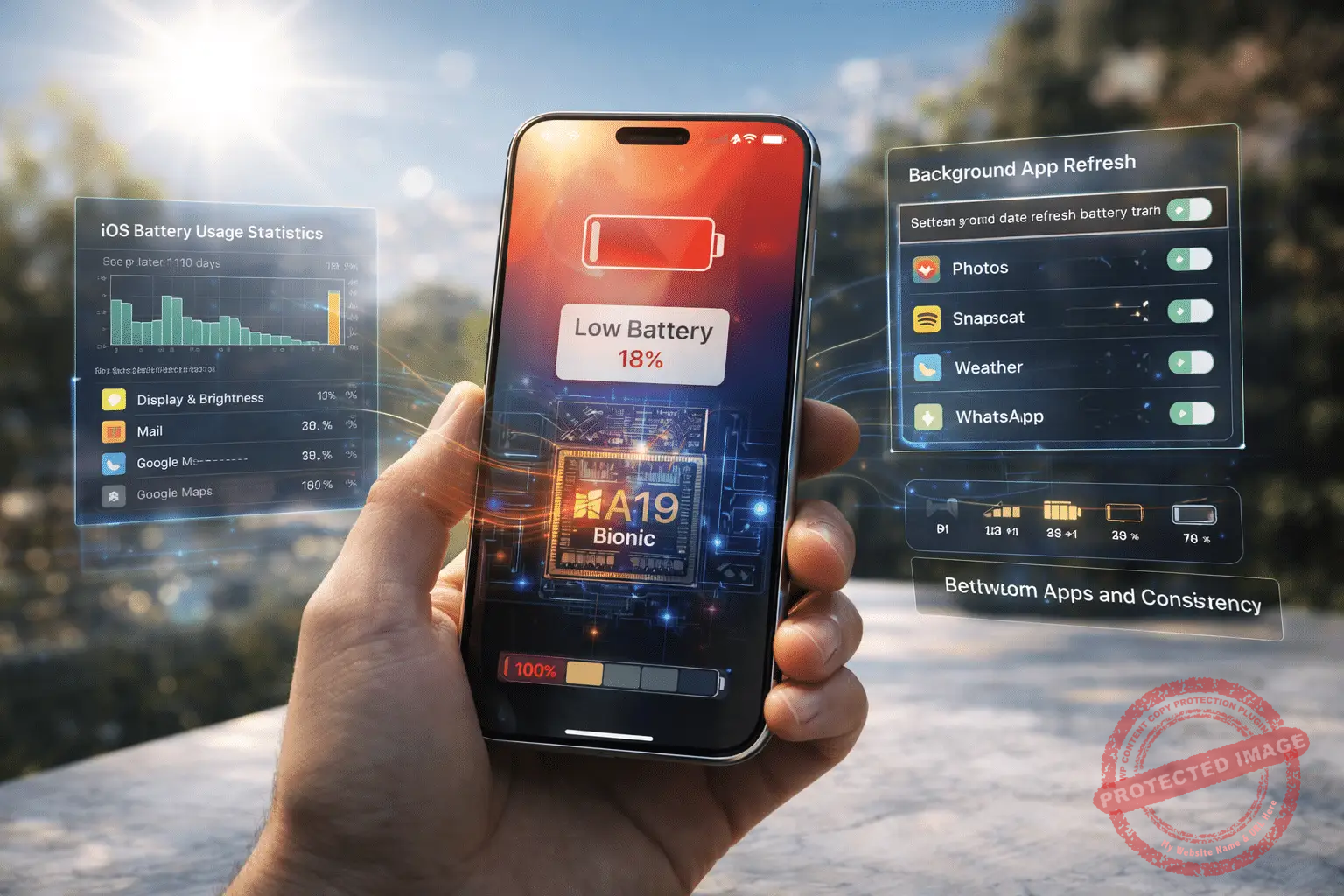
Exploring the determinants that influence battery longevity in Apple’s iPhone lineup. Battery life remains one of the central concerns for smartphone users, especially for those invested in the Apple ecosystem. With iPhones being an essential part of modern life, understanding the factors influencing their battery longevity is crucial for optimizing performance and user satisfaction. Now let’s take an assessment of Apple’s battery life.
Device Screen Brightness: One of the largest consumers of battery power on any smartphone, including iPhones, is the brightness and size of the device’s screen. Users often set their screens to maximum brightness, especially in outdoor conditions, which significantly increases battery consumption. The larger and brighter the display, the more power it requires, reducing the overall longevity of the battery charge.
Processor Efficiency: The efficiency of the iPhone’s processor plays a key role in battery life. Apple’s A-series chips are renowned for their power efficiency, yet tasks that demand intense processing can lead to faster battery drain. The balance between performance and energy efficiency is constantly being fine-tuned to ensure that devices can perform functions efficiently without unnecessarily depleting the battery.
Background App Activity: Apps running in the background contribute significantly to battery usage in iPhones. While Apple’s iOS is designed to manage background activities efficiently, apps that persistently refresh or run in the background can lead to increased power consumption. Understanding and managing app permissions and settings can help mitigate this effect.
Network Connectivity: The state of network connectivity, whether it be Wi-Fi, Bluetooth, or cellular data, influences battery performance. Searching for a signal or maintaining a connection in weak-signal areas can cause considerable battery drain. Thus, the reliability of network connections and how often these networks are used are integral to gauging battery longevity on iPhones.
Location Services Usage: Location services are another factor affecting battery consumption. Many iPhone apps use GPS to track location, which can significantly drain the battery when used extensively. Hence, managing location settings and limiting the number of apps allowed to access location services contributes to longer battery life.
Comparative Analysis Over the Years: Over the years, Apple’s iPhone lineup has witnessed significant evolution in battery technology, marked by advancements in both capacity and efficiency. Earlier iPhones featured smaller batteries, focusing primarily on compact design and lightweight construction. As technology progressed, Apple began integrating more powerful batteries, adapting to the demands of larger screens and more complex functionalities. With every new iPhone model, Apple has managed to enhance battery longevity, maintaining a delicate balance between providing robust performance and extending battery life.
Hardware and Software Enhancements: In terms of hardware, Apple has steadily increased the energy capacity of its batteries to keep up with the enhanced performance requirements. Software updates have also played a pivotal role in battery optimization. Each version of iOS is meticulously crafted to ensure resource-efficient performance, offering effective power management features. Apple’s focus on seamless integration between hardware and software has enabled the iPhone to deliver optimal endurance even under intensive usage, setting benchmarks in the industry for battery optimization.
Yearly Improvements and User Experience: The user experience has continuously improved alongside battery technology. Looking at models from the iPhone 4 through to the latest iterations, one can observe a noticeable shift, with users now able to enjoy enhanced multitasking abilities, greater app usage, and extended on-screen activities without concern of quick battery drain. Innovations like the introduction of low-power mode have further empowered users to maximize battery life according to their needs, contributing positively to user satisfaction and retention.
Environmental Considerations: Apple’s commitment to environmental sustainability also impacts battery development. The company strives to use recycled materials in battery design and promotes lasting battery life to reduce electronic waste. By facilitating battery replacement initiatives and designing iPhones that hold up well over time, Apple promotes durability and efficiency. As consumers become more environmentally conscious, such considerations have become an increasingly important aspect of Apple’s approach to battery technology in its iPhone offerings.
Technological Milestones: Key technological milestones include the incorporation of lithium-ion battery technology, greater battery health monitoring tools, and distinct features meant to prolong battery life cycles such as Optimized Battery Charging. These reflect a comprehensive approach to hardware and software refinement aimed at extending battery longevity across various iPhone models. With each passing year, Apple continues to integrate cutting-edge technologies to push the boundaries of what’s possible with smartphone batteries, cementing iPhones’ reputation for reliability and innovation in battery performance.
Battery Life in Apple Phones: Exploring the determinants that influence battery longevity in Apple’s iPhone lineup.Battery life remains one of the central concerns for smartphone users, especially for those invested in the Apple ecosystem. With iPhones being an essential part of modern life, understanding the factors influencing their battery longevity is crucial for optimizing performance and user satisfaction.
Device Screen Brightness: One of the largest consumers of battery power on any smartphone, including iPhones, is the brightness and size of the device’s screen. Users often set their screens to maximum brightness, especially in outdoor conditions, which significantly increases battery consumption. The larger and brighter the display, the more power it requires, reducing the overall longevity of the battery charge.
Processor Efficiency: The efficiency of the iPhone’s processor plays a key role in battery life. Apple’s A-series chips are renowned for their power efficiency, yet tasks that demand intense processing can lead to faster battery drain. The balance between performance and energy efficiency is constantly being fine-tuned to ensure that devices can perform functions efficiently without unnecessarily depleting the battery.
Background App Activity: Apps running in the background contribute significantly to battery usage in iPhones. While Apple’s iOS is designed to manage background activities efficiently, apps that persistently refresh or run in the background can lead to increased power consumption. Understanding and managing app permissions and settings can help mitigate this effect.
Network Connectivity: The state of network connectivity, whether it be Wi-Fi, Bluetooth, or cellular data, influences battery performance. Searching for a signal or maintaining a connection in weak-signal areas can cause considerable battery drain. Thus, the reliability of network connections and how often these networks are used are integral to gauging battery longevity on iPhones.
Location Services Usage: Location services are another factor affecting battery consumption. Many iPhone apps use GPS to track location, which can significantly drain the battery when used extensively. Hence, managing location settings and limiting the number of apps allowed to access location services contributes to longer battery life.
Comparative Analysis Over the Years: Over the years, Apple’s iPhone lineup has witnessed significant evolution in battery technology, marked by advancements in both capacity and efficiency. Earlier iPhones featured smaller batteries, focusing primarily on compact design and lightweight construction. As technology progressed, Apple began integrating more powerful batteries, adapting to the demands of larger screens and more complex functionalities. With every new iPhone model, Apple has managed to enhance battery longevity, maintaining a delicate balance between providing robust performance and extending battery life.
Now for a quick assessment on Apple’s hardware and enhancements:
Hardware and Software Enhancements: In terms of hardware, Apple has steadily increased the energy capacity of its batteries to keep up with the enhanced performance requirements. Software updates have also played a pivotal role in battery optimization. Each version of iOS is meticulously crafted to ensure resource-efficient performance, offering effective power management features. Apple’s focus on seamless integration between hardware and software has enabled the iPhone to deliver optimal endurance even under intensive usage, setting benchmarks in the industry for battery optimization.
Yearly Improvements and User Experience: The user experience has continuously improved alongside battery technology. Looking at models from the iPhone 4 through to the latest iterations, one can observe a noticeable shift, with users now able to enjoy enhanced multitasking abilities, greater app usage, and extended on-screen activities without concern of quick battery drain. Innovations like the introduction of low-power mode have further empowered users to maximize battery life according to their needs, contributing positively to user satisfaction and retention.
Environmental Considerations: Apple’s commitment to environmental sustainability also impacts battery development. The company strives to use recycled materials in battery design and promotes lasting battery life to reduce electronic waste. By facilitating battery replacement initiatives and designing iPhones that hold up well over time, Apple promotes durability and efficiency. As consumers become more environmentally conscious, such considerations have become an increasingly important aspect of Apple’s approach to battery technology in its iPhone offerings.
Technological Milestones: Key technological milestones include the incorporation of lithium-ion battery technology, greater battery health monitoring tools, and distinct features meant to prolong battery life cycles such as Optimized Battery Charging. These reflect a comprehensive approach to hardware and software refinement aimed at extending battery longevity across various iPhone models. With each passing year, Apple continues to integrate cutting-edge technologies to push the boundaries of what’s possible with smartphone batteries, cementing iPhones’ reputation for reliability and innovation in battery performance.
Optimizing Battery Performance: Optimizing battery performance in iPhones requires a multi-faceted approach combining hardware innovation with smart software capabilities. One effective strategy is the implementation of power-saving modes. Apple’s iOS features like Low Power Mode can significantly extend battery life by throttling background activities, reducing visual effects, and limiting network usage. These adjustments ensure that essential functions are preserved while non-critical processes are minimized.
Smart Charging Techniques: Another significant advancement is the introduction of smart charging techniques, such as Optimized Battery Charging, which learns a user’s daily charging routine to slow the rate of battery aging. By delaying charging past 80% until needed, this feature helps maintain battery health over time. This intelligent algorithm curtails unnecessary battery stress, thereby enhancing the longevity of iPhone batteries.
Software Updates: With every iOS update, Apple introduces battery management improvements which are pivotal in optimizing battery usage. These updates often include better algorithms for battery health management and power leakage prevention. iOS has a built-in capability to provide detailed battery usage data, helping users identify which apps consume the most power and adjust their usage accordingly.
Monitoring and Adjustments: Effective battery performance optimization also involves user awareness and proactive monitoring of battery health. iOS provides insights into battery health metrics, allowing users to make informed decisions about when to replace their battery or make adjustments to their charging habits. By incorporating features that alert users when their battery health is deteriorating, Apple ensures that users can prolong the life of their devices by opting for timely battery replacements.
Sustainable Practices: Apple encourages sustainable charging practices through educational tips and alerts regarding battery care found within iOS. Users are advised to keep their devices away from extreme temperatures and to remove certain cases while charging to prevent overheating. By maintaining an ecosystem that promotes these sustainable practices, Apple helps users achieve maximum battery efficiency and device satisfaction over the long term.
User Tips for Extending Battery Life: Understanding how to maximize battery longevity with your iPhone not only enhances daily device usage but also prolongs the overall lifespan of the battery. One of the most straightforward strategies is to make use of Low Power Mode, which is easily enabled through the Control Center or the Settings app. This mode automatically reduces background app refresh, mail fetch, and certain visual effects, conserving battery without compromising on fundamental functionalities. It is especially useful when you are away from a charger for extended periods.
Managing App Activity: Regularly reviewing your app usage can also lead to significant battery savings. iPhones display detailed reports of battery consumption by app, which can be found in the Battery section of the Settings. Shutting down or uninstalling power-hungry apps that are not in regular use diminishes unnecessary drain on the battery. Additionally, it’s beneficial to disable Background App Refresh for apps that don’t require constant updates, preserving energy for more critical tasks.
Optimal Charging Practices: Adopting optimal charging practices is essential in promoting battery health. It is recommended to charge your iPhone using certified chargers and avoid exposing it to extreme heat while charging, as high temperatures can degrade the battery’s lifespan. Users should also avoid frequently letting their battery deplete completely before recharging. Instead, maintaining a charge between 20-80% can be healthier for the battery’s long-term longevity.
Updating Software: Keeping your iPhone up-to-date ensures that you benefit from the latest energy management features Apple develops with each iOS update. New software versions often include enhancements that can offer better power efficiency and help in detecting and troubleshooting battery issues. This not only improves day-to-day battery life but also extends the overall durability of the iPhone’s battery.
Temperature Regulation: Understanding and controlling your iPhone’s operating temperature can also significantly affect battery performance. iPhones function best between 32° to 95° F (0° to 35° C). Extreme conditions outside these ranges can accelerate battery degradation. Using common sense strategies like preventing prolonged exposure to direct sunlight or leaving the iPhone in a car during hot days can help maintain optimal battery longevity.
Future Advancements in Battery Technology: Apple continues to pioneer innovations that promise to reshape the future of battery life in iPhones. One of the most anticipated advancements is the adoption of solid-state batteries, which hold the potential to revolutionize battery longevity and safety. Unlike traditional lithium-ion cells, solid-state batteries utilize a solid electrolyte, offering higher energy density, faster charging times, and a significantly lower risk of overheating or combustion. This technology is expected to substantially extend the lifespan of an iPhone’s battery, appealing to both tech enthusiasts and eco-conscious consumers.
Nanotechnology Integration: Another cutting-edge development lies in the integration of nanotechnology into battery manufacturing. By employing nanomaterials, Apple aims to boost the capacity and efficiency of iPhone batteries without increasing their physical size. Nanotechnology could enable miniaturized components that enhance ion flow and energy retention, potentially paving the way for thinner, lighter iPhones with longer-lasting power. This integration aligns with Apple’s commitment to innovation and sustainability, promising a future where users can rely on their devices for extended periods without frequent recharging.
Renewable Energy Solutions: In line with its dedication to environmental responsibility, Apple is exploring renewable energy solutions that could transform how iPhone batteries are maintained. Initiatives like solar charging capabilities and kinetic energy harvesters are among the concepts being investigated. Such technologies would allow iPhones to gather and store energy from ambient sources, reducing dependence on traditional charging methods and contributing to a more sustainable ecosystem.
AI-Powered Battery Management Systems: As artificial intelligence becomes increasingly integrated into smart devices, future iPhones are expected to feature AI-powered battery management systems. These intelligent systems could analyze usage patterns and make real-time adjustments to optimize battery performance and health. By predicting user behavior and autonomously switching to power-saving modes, AI can ensure that iPhones operate at peak efficiency, thereby enhancing battery longevity.
Continuous Research and Development: Apple’s significant investments in battery research and development indicate a strategic focus on future technologies that will further enhance battery life. Collaborations with leading universities and research institutions fuel innovation, resulting in patented technologies and breakthroughs that maintain Apple’s competitive edge. These efforts not only promise better battery performance for consumers but also reinforce Apple’s reputation as a leader in technological advancement and sustainability within the smartphone industry.
Contributing Editors:
Benoit Leduc, Co-Editor, Montreal, Quebec.
Peter Jonathan Wilcheck, Co-Editor, Miami, Florida.
#Apple, #iPhone, #AppleWatch, #MacBook, #iOS, #AppleStore, #AppleEvent, #AppleMusic, #AppleTV, #AppleCare, #AirPods, #iPhonePro, #AppleEcosystem, #AppleNews, #AppleTechnology
Editor’s Note: The assessments made are from evaluations made by the authors of this article. These are their sole opinions and not a reflection of the influence of any other article’s assessments on Apple’s battery or features.
Post Disclaimer
The information provided in our posts or blogs are for educational and informative purposes only. We do not guarantee the accuracy, completeness or suitability of the information. We do not provide financial or investment advice. Readers should always seek professional advice before making any financial or investment decisions based on the information provided in our content. We will not be held responsible for any losses, damages or consequences that may arise from relying on the information provided in our content.

 AAPL
AAPL MSFT
MSFT GOOG
GOOG TSLA
TSLA AMD
AMD IBM
IBM TMC
TMC IE
IE INTC
INTC MSI
MSI NOK
NOK DELL
DELL ECDH26.CME