


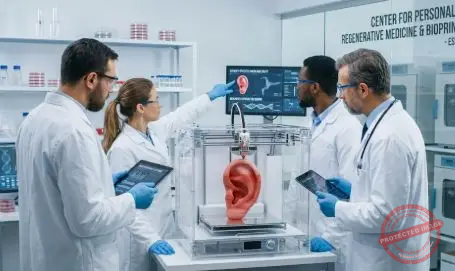
3D bioprinting is moving from futuristic concept to practical tool for building patient-specific tissues, disease models and drug-testing platforms.
From plastic prototypes to living constructs
Early 3D printing in healthcare focused on plastic models for surgical planning and device prototyping. Bioprinting extends that concept to living cells and biomaterials, layering them into three-dimensional constructs that can mimic native tissues. In 2026, advances in bioinks, printing hardware and cell engineering are turning bioprinting into a versatile platform for personalized medicine, spanning regenerative therapies, drug screening and complex disease modeling. American Chemical Society Publications
Building better bioinks and scaffolds
Modern bioprinting revolves around bioinks: mixtures of cells, hydrogels and biomolecules that must be printable, biocompatible and supportive of long-term tissue function. Researchers are engineering bioinks that replicate the mechanical and biochemical properties of specific tissues—soft and viscoelastic for brain, stiffer for bone, anisotropic for myocardium. American Chemical Society Publications
Composite scaffolds combine natural polymers such as collagen or gelatin with synthetic materials that provide structural integrity and controlled degradation. Some constructs incorporate microvasculature channels or pro-angiogenic factors to encourage blood vessel ingrowth after implantation. Others embed controlled drug-delivery systems that release growth factors or immunomodulatory molecules over time to guide tissue regeneration. PMC
Personalized tissue models for drug development
One of the fastest-moving applications is in drug discovery and safety testing. Patient-derived cells can be bioprinted into miniaturized organoids or tissue patches—liver, cardiac, tumor, intestinal—that more accurately mimic human biology than traditional 2D cultures or many animal models. ScienceDirect
Pharmaceutical companies and CROs are adopting bioprinted tissues as platforms for high-content drug screening and toxicity assessment. When combined with patient-specific genomics, these models enable “clinical trials in a dish,” where candidate therapies are tested on constructs that capture a patient’s unique genetic and microenvironmental context. This approach can help flag cardiotoxicity, hepatotoxicity or other adverse effects early, potentially saving time and reducing late-stage trial failures. ScienceDirect
Regenerative medicine and transplant innovation
In regenerative medicine, bioprinting is being used to create grafts for cartilage repair, skin reconstruction and vascular patches. For example, customized cartilage implants for knee or facial reconstruction can be printed to match a patient’s anatomy, seeded with their own cells and implanted with reduced risk of rejection. Skin equivalents with layered structures of keratinocytes, fibroblasts and vascular support cells are being used to treat complex wounds and burns. American Chemical Society Publications
While fully functional, transplantable organs remain a long-term goal, progress is being made in printing organ components—such as liver lobules or kidney proximal tubule models—that can support extracorporeal devices or serve as testbeds for gene and cell therapies. Combining bioprinting with gene-edited cells opens the possibility of creating tissues that are both patient-matched and engineered for enhanced function or immune compatibility. Wiley Online Library
Integration with genomics and AI
Genomics plays a pivotal role in personalizing bioprinted constructs. Genomic profiles guide the selection and engineering of cells used in bioinks, inform the design of disease-specific tissue models and help interpret how bioprinted tissues respond to drugs or environmental stimuli.
AI models, in turn, can predict how different bioprinting parameters—cell density, scaffold composition, growth factor gradients—affect tissue maturation and function. They can also analyze imaging and omics readouts from printed tissues to detect subtle patterns of dysfunction or early toxicity. Over time, these feedback loops may lead to “self-optimizing” bioprinting pipelines that personalize constructs for each patient and indication. ScienceDirect
Regulatory pathways and ethical questions
Regulatory frameworks for bioprinted products are still coalescing. Authorities must decide when a construct is regulated as a device, a biologic, or a combination product, and what evidence is required to demonstrate safety, efficacy and manufacturing consistency. Standards for bioink composition, print fidelity, sterility and long-term stability are being developed in parallel with clinical trials. American Chemical Society Publications
Ethically, bioprinting raises questions about equitable access, consent for use of patient-derived cells, and the implications of printing complex organs or tissues that might challenge traditional notions of donation and ownership. As the technology matures, transparent governance and robust public engagement will be critical to maintaining trust.
Closing thoughts and looking forward
In 2026, 3D bioprinting is transitioning from eye-catching demonstrations to real-world impact in drug development, regenerative medicine and personalized disease modeling. The field is still in its early chapters. Still, the underlying trajectory is unmistakable: a gradual shift from one-size-fits-all implants and generalized preclinical models toward patient-specific tissues that reflect individual genetics and physiology.
Looking forward, the convergence of genomics, AI, and bioprinting could enable hospitals to maintain “bio-factories” that produce customized grafts, organoids, and testing platforms on demand. While fully bioprinted replacement organs remain a long-term goal, the steps being taken today are already reshaping how clinicians and researchers think about tissue repair, clinical trials, and personalized therapy design.
Reference sites
3D Bioprinting for Personalized Medicine – ACS Biomaterials Science & Engineering – https://pubs.acs.org/doi/10.1021/acsbiomaterials.5c00740
3D bioprinting for drug development and screening – Bioactive Materials (ScienceDirect) – https://www.sciencedirect.com/science/article/pii/S2773207X24001817
3D Bioprinting of Biomaterials: A Review of Advances in Personalized Medicine – Polymers for Advanced Technologies (Wiley) – https://onlinelibrary.wiley.com/doi/10.1002/pat.70324
Innovative applications of 3D printing in personalized medicine – iScience (Cell Press) – https://www.cell.com/iscience/fulltext/S2589-0042%2825%2901766-3
Innovative applications of 3D printing in personalized medicine – National Library of Medicine (PMC) – https://pmc.ncbi.nlm.nih.gov/articles/PMC12481080/
Mark Samuel, Contributor, Health Management, Montreal, Quebec.
Peter Jonathan Wilcheck, Co-Editor, Miami, Florida.
#Bioprinting #3DPrinting #RegenerativeMedicine #PersonalizedMedicine #Organoids #DrugScreening #TissueEngineering #Genomics2026 #Bioinks #TransplantInnovation
Post Disclaimer
The information provided in our posts or blogs are for educational and informative purposes only. We do not guarantee the accuracy, completeness or suitability of the information. We do not provide financial or investment advice. Readers should always seek professional advice before making any financial or investment decisions based on the information provided in our content. We will not be held responsible for any losses, damages or consequences that may arise from relying on the information provided in our content.

 AAPL
AAPL MSFT
MSFT GOOG
GOOG TSLA
TSLA AMD
AMD IBM
IBM TMC
TMC IE
IE INTC
INTC MSI
MSI NOK
NOK DELL
DELL ECDH26.CME