


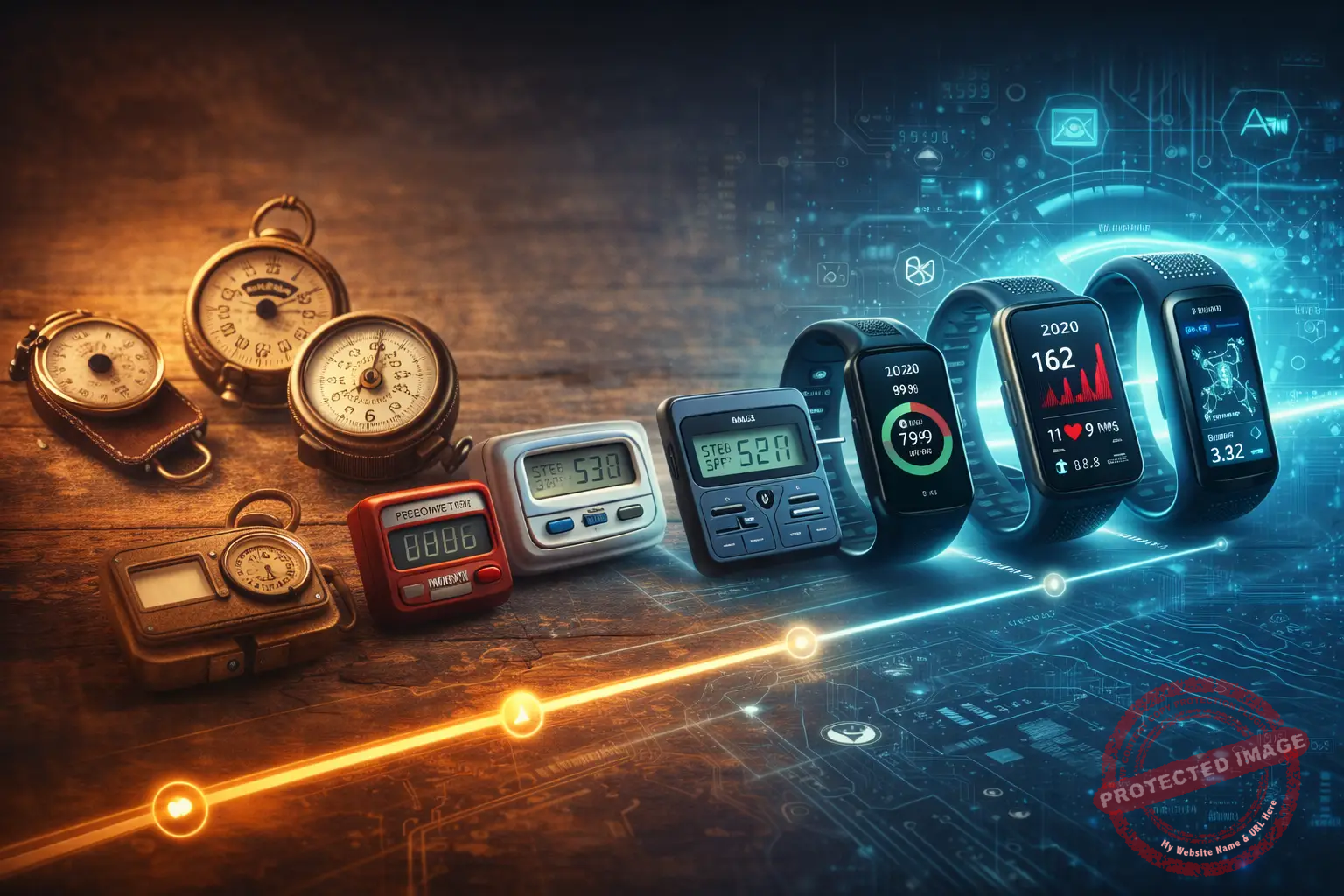
The evolution of fitness tracking has been a journey marked by continuous innovation, driven by the integration of technology into everyday routines. From the rudimentary pedometers of the early 20th century to the sophisticated wearables of the early 2020s, the path of fitness tracking has been paved with technological advances that have gradually transformed how individuals monitor and engage with their health.
Initially, fitness tracking was a concept limited to professional athletes and fitness enthusiasts who relied on mechanical devices to gauge basic metrics like steps taken or distance covered. The late 20th century saw the advent of digital technology, which propelled the first wave of electronic fitness trackers into the consumer market. These early devices, while revolutionary for their time, offered limited functionality primarily focused on counting steps and estimating calories burned.
The turn of the millennium witnessed a significant shift as the proliferation of smartphones laid the groundwork for more sophisticated tracking capabilities. Enabled by GPS technology and sensors embedded in mobile devices, fitness apps began providing users with real-time feedback and more detailed insights into their physical activities. This period marked a pivotal transition, transforming fitness tracking from a niche interest into a mainstream pursuit.
The explosion of interest in personal health data coincided with advancements in wireless technology and miniaturization, leading to the development of dedicated fitness trackers and smartwatches in the late 2000s and 2010s. Companies like Fitbit, Jawbone, and Garmin emerged as trailblazers, offering devices capable of continuous heart rate monitoring, sleep analysis, and other health-related metrics, ushering in an era of personalized health information.
As the market matured, tech giants such as Apple and Samsung entered the arena, leveraging their engineering prowess to integrate fitness capabilities into their smartwatches. This move not only expanded the functionality of wearable devices but also democratized access to sophisticated health tracking technologies, making them a staple in everyday consumer electronics. Concurrently, the burgeoning ecosystem fostered an environment ripe for innovation, prompting the development of specialized wearables and pushing the boundaries of fitness tracking.
Today, in 2026, this rich history underpins the current state of wearable technology, characterized by intelligent devices that seamlessly integrate with individuals’ lives. As fitness trackers continue to evolve, they increasingly combine aesthetic appeal with cutting-edge functionality, reflecting a dynamic interplay between design, utility, and personal health management. Understanding the history of fitness tracking provides essential context for the contemporary landscape of health-oriented wearables.
Technological advancements in fitness trackers
Technological advancements in fitness trackers have propelled these devices into a new era where intelligence and personalization are at the forefront. Over the past few years, fitness trackers have evolved from basic data collection tools into sophisticated platforms powered by artificial intelligence. They now offer users not just passive health data but proactive insights and recommendations tailored to individual needs.
AI-driven health coaching is redefining the user experience by providing highly personalized advice and guidance. These advanced algorithms analyze a vast array of data points, including a user’s activity patterns, heart rate variability, and even lifestyle choices, to deliver tailored health and fitness advice. This personalized coaching is designed to encourage users, helping them set realistic goals, optimize their workouts, and ultimately lead healthier lives.
One of the significant technologies contributing to these advancements is predictive analytics. By leveraging machine learning models, fitness trackers can now identify patterns and predict potential health issues before they become significant problems. For instance, by analyzing trends in a user’s heart rate and activity levels, these devices can provide early warnings of potential cardiac issues, prompting users to seek medical advice ahead of time.
Additionally, advancements in stress and sleep monitoring have become integral to the functionality of modern fitness trackers. Devices are now equipped with sensors sensitive enough to detect subtle changes in sleep cycles, providing users with detailed sleep stage analysis. This feedback allows users to understand their sleep quality better and make critical adjustments to improve their rest and reduce stress levels.
The early-detection algorithms for 2026–2027 are expected to become even more sophisticated. They will not only identify irregularities in health data but will also cross-reference these with environmental factors and historical data to offer comprehensive health appraisals. These smart algorithms boost the capabilities of wearables, providing insights that were previously accessible only through professional medical consultations.
On a larger scale, the interest from enterprises in utilizing these technologies for corporate wellness programs and remote workforce health tracking has surged. Companies are increasingly viewing these wearables as tools to improve employee well-being, which can, in turn, enhance productivity and reduce healthcare costs. By offering these devices to their employees, companies can encourage healthier lifestyles and monitor trends in workforce health anonymously, thus tailoring their wellness initiatives more effectively.
These technological advancements are not just refining the individual user experience but are also opening new avenues for integrating fitness trackers into broader health and wellness contexts, signifying a transformative shift in how we perceive and utilize wearable technology in everyday life.
Impact on health and lifestyle
In recent years, the emergence of smart rings as a mainstream form factor has represented a significant shift in the wearable technology landscape. By 2026, smart rings have gained popularity due to their compact design, extended battery life, and high-precision sensors that rival those found in larger devices like smartwatches. With advancements in battery technology, users now enjoy several days of use on a single charge, alleviating the constant need for recharging that has historically been a limitation for wearable tech.
Smart rings offer a subtler aesthetic appeal, blending seamlessly with personal style and allowing users to track their health and fitness discreetly. Despite their small size, these rings incorporate advanced sensors capable of capturing key health metrics such as heart rate, blood oxygen levels, and activity tracking, providing users with actionable insights into their well-being.
In contrast to smartwatches, which often serve multiple functions including communication and media playback, smart rings focus on health monitoring and personal convenience. Their minimalist design appeals to consumers looking for unobtrusive wearables that integrate easily into daily attire without drawing attention. Furthermore, the reduced surface area of smart rings enhances their durability and resistance against daily wear, making them a pragmatic choice for active lifestyles.
The future of wearable technology extends beyond smart rings and holds the promise of next-generation devices such as smart patches and smart fabrics. Smart patches, for instance, provide non-intrusive health monitoring via skin contact, offering even more granular data with minimal user intervention. Meanwhile, smart fabrics are beginning to incorporate embedded sensors that can track biometric data in real-time, effectively turning clothing into dynamic health monitoring systems.
For enterprises and consumers alike, these cutting-edge wearables promise even deeper integration into daily routines by offering more comprehensive health monitoring capabilities. As the market for these devices expands, costs are expected to decrease, making advanced health tracking accessible to a wider audience. Enterprises looking to incorporate wearables into their operations won’t just view them as employee perks but as integral components of health-oriented workplace strategies that optimize the work environment and improve employee well-being.
With usability at the forefront, these upcoming technologies will emphasize seamless integration with existing digital ecosystems, ensuring that users can effortlessly sync data across devices and platforms. As the boundaries of wearable technology continue to push forward, users can anticipate an era where wearables become an indispensable part of health management, providing unprecedented insights and convenience tailored to individual lifestyles.
Consumer trends and preferences
Wearable data is increasingly becoming integral in healthcare diagnostics, chronic condition monitoring, and workplace safety systems. This integration is driven by the ability of fitness trackers to continuously collect detailed health metrics, which can be used to enhance medical assessments and interventions. In healthcare, wearable devices serve as valuable tools for remote patient monitoring, enabling healthcare providers to track conditions like heart disease or diabetes in real time, thus facilitating timely interventions.
For instance, patients with chronic heart conditions might use fitness trackers to monitor their heart rate variability, providing their healthcare team with continuous data to assess their health status. When integrated into electronic health records, this data contributes to more comprehensive patient profiles, leading to improved diagnostic accuracy and personalized treatment plans.
In the realm of workplace safety, companies are leveraging fitness tracker technology to enhance the health and productivity of their workforce. These devices can monitor workers for signs of fatigue or stress, providing data that helps prevent accidents or illnesses. By analyzing aggregated data, employers can implement informed policies to optimize workplace environments and improve employee wellness.
However, the use of wearable tech in clinical and enterprise settings raises significant regulatory and privacy concerns. In the United States, the FDA has begun to establish guidelines for the approval of consumer health devices that claim medical benefits. Similarly, privacy regulations like the GDPR in Europe and HIPAA in the U.S. set strict requirements for the handling and protection of personal health information, ensuring that individuals’ data is secure from unauthorized access.
Data privacy is a critical concern as wearables collect a vast amount of sensitive information. Manufacturers are required to implement robust security protocols, including data encryption and user consent mechanisms, to protect against data breaches. The potential misuse of health data, such as discrimination based on health status or lifestyle choices, underscores the need for rigorous enforcement of these regulations.
Reliability and standardization present their own challenges. With various manufacturers producing wearables that may use different methods to measure the same metrics, consistency in data quality can be an issue. Ensuring the accuracy and reliability of wearable data is essential, particularly when it’s used in medical or occupational settings. Industry-wide standards and the development of interoperable devices are steps toward addressing these challenges, enabling seamless integration into health and enterprise systems.
Furthermore, the varied accuracy of different devices highlights the need for ongoing research and refinement. As fitness trackers evolve, ensuring that they provide reliable and standardized data is crucial for maintaining user trust and maximizing their benefits in health management and workplace applications.
The future of fitness tracking
The evolution of fitness trackers is now intersecting with cutting-edge technologies like extended reality (XR), human-machine interaction (HMI), and brain-computer interfaces. These advancements are not only enhancing the capabilities of wearables but are also redefining how individuals interact with technology in their pursuit of health and wellness. By 2026–2027, this convergence is expected to become more pronounced, offering unprecedented ways for users to engage with their fitness data.
Wearables that integrate with XR devices, such as augmented reality (AR) and virtual reality (VR), provide immersive and interactive fitness experiences. Users can enter virtual environments where real-time data from their wearables is overlaid, enhancing their workouts with dynamic visual feedback and gamified elements. This fusion of XR and fitness tracking technology creates a more engaging space for exercise, encouraging users to push their limits in novel and entertaining ways.
Enterprises are already experimenting with these technologies for professional applications. In sectors like industrial design and training, XR devices paired with wearables facilitate immersive simulation environments. For example, workers can practice complex tasks in a virtual setting where their physical movements are monitored and optimized through wearable feedback. This approach helps in refining techniques and improving safety, especially in high-risk industries like construction and manufacturing.
The role of HMI is also evolving, with gesture control and voice commands becoming more integrated into wearable technology. Gesture recognition allows users to interact with their devices more intuitively, reducing reliance on traditional touch interfaces. This is particularly beneficial during physical activities where hands-free interaction is crucial. By interpreting simple gestures, wearables can provide users with real-time updates or adjust workout settings without interrupting their activity.
Neural input, facilitated by brain-computer interfaces, represents the next frontier of HMI. These interfaces can detect brain signals and translate them into commands for devices, offering a seamless and unobtrusive method of control. In the context of fitness technology, this could mean automatic adjustment of physical exercises based on a user’s mental state, offering personalized workouts tailored to the user’s focus and stress levels.
This integration of XR, HMI, and brain-computer interfaces into wearable fitness technology signifies a shift towards a more holistic approach to health monitoring and lifestyle management. As these technologies mature and become more affordable, we can anticipate a future where the boundaries between physical and digital wellness blur, creating a dynamic environment for users to maintain and enhance their health through innovative means. Enterprises will likely continue to lead this charge, utilizing these capabilities to drive productivity, enhance training, and foster more connected and immersive communication within their workforce.Contributing Editors:
Contributing Editors
Benoit Leduc, Co-Editor, Montreal, Quebec.
Peter Jonathan Wilcheck, Co-Editor, Miami, Florida.
References:
-
Best fitness trackers & watches overview – Wareable’s guide to the top fitness trackers and features as of 2025. Wareable
https://www.wareable.com/fitness-trackers/the-best-fitness-tracker -
Harvard Health on smart wearable workouts – Explains how wearable fitness watches can support safer and smarter exercise routines. Harvard Health
https://www.health.harvard.edu/heart-health/smarter-safer-workouts-with-a-wearable-fitness-tracker -
TechGearLab Best Fitness Trackers of 2025 – Expert-tested list of top fitness trackers and smartwatches. TechGearLab
https://www.techgearlab.com/topics/health-fitness/best-fitness-tracker -
TechRadar’s Best Smart Watches 2025 – Comprehensive review of top wearable tech and fitness trackers. TechRadar
https://www.techradar.com/news/wearables/best-smart-watches-what-s-the-best-wearable-tech-for-you-1154074 -
GearJunkie Fitness Watch Guide – Tested best fitness watches with GPS, battery, and tracking insights. GearJunkie
https://gearjunkie.com/health-fitness/best-fitness-watch -
Android Central Best Smartwatches & Fitness Trackers – Picks covering top wrist-worn fitness wearables. Android Central
https://www.androidcentral.com/best-smartwatches-fitness -
Tech Advisor Fitness Trackers 2026 – Updated guide to the best fitness wearables for Android & iPhone. techadvisor.com
https://www.techadvisor.com/article/723392/best-fitness-tracker.html -
Listful Smartwatches for Fitness Tracking 2025 – List of best smartwatches optimized for fitness metrics. listful.com
https://www.listful.com/guides/article/the-best-smartwatches-for-fitness-tracking-in-2025 -
UPMC Wearable Tech for Fitness & Health – Health system guide explaining how wearable tech improves fitness tracking. share.upmc.com
https://share.upmc.com/2025/05/how-wearable-tech-improves-health-fitness/ -
Lancet Research on Activity Trackers – Scholarly study showing wearable trackers increase physical activity. thelancet.com
https://www.thelancet.com/journals/landig/article/PIIS2589-75002200111-X/fulltext
Post Disclaimer
The information provided in our posts or blogs are for educational and informative purposes only. We do not guarantee the accuracy, completeness or suitability of the information. We do not provide financial or investment advice. Readers should always seek professional advice before making any financial or investment decisions based on the information provided in our content. We will not be held responsible for any losses, damages or consequences that may arise from relying on the information provided in our content.

 AAPL
AAPL MSFT
MSFT GOOG
GOOG TSLA
TSLA AMD
AMD IBM
IBM TMC
TMC IE
IE INTC
INTC MSI
MSI NOK
NOK DELL
DELL ECDH26.CME