


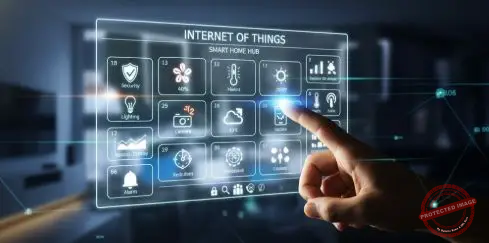
From Phones to Homes to Cities—How Smart Technology Has Transformed the Way We Live, Work, and Connect.
The Rise of a Connected World
A decade ago, the term “smart device” referred mainly to smartphones and tablets. Today, it encompasses an entire ecosystem of interconnected technology—wearables, appliances, vehicles, industrial sensors, and infrastructure—all designed to collect data, learn from it, and act intelligently.
This shift, known as the smart device revolution, has changed how we experience the world. Intelligence is no longer confined to computers—it’s embedded in everything. From the thermostat that learns your routine to the watch that monitors your health, the modern world has become a web of data-driven interactions that adapt to human behavior in real time.
In short, devices have evolved from passive tools to active partners in our digital lives.
From Connected to Cognitive
The first wave of smart devices focused on connectivity—linking objects to the internet through the Internet of Things (IoT). The next wave adds intelligence.
Modern smart devices combine sensing, computation, and AI-driven learning to interpret their environment and make autonomous decisions. For example:
-
Smart thermostats analyze usage patterns and external weather to optimize energy consumption.
-
Wearable fitness devices use biometrics to predict stress or detect heart irregularities.
-
Smart speakers integrate natural language processing to understand complex commands and adapt to user preferences.
This fusion of connectivity and cognition marks a pivotal transition from “smart” to self-aware technology.
The Role of Datafication and AI
Every smart device is, at its core, a data generator. Sensors capture temperature, motion, voice, and location—feeding vast streams of information into the cloud or edge networks.
Artificial Intelligence (AI) transforms this data into insight. Through pattern recognition, predictive modeling, and contextual analysis, AI enables devices to learn and evolve continuously.
This process, known as datafication, converts daily life into data that drives personalization and optimization. The result: devices that not only respond—but anticipate our needs.
Smart Devices in Everyday Life
Smart technology has infiltrated every aspect of modern existence:
-
Home: Voice assistants, connected lighting, and security systems create adaptive living environments.
-
Healthcare: Smartwatches and medical wearables track vitals and transmit data directly to doctors.
-
Transportation: Vehicles equipped with sensors and AI assist in navigation, safety, and performance optimization.
-
Retail: Smart shelves and checkout systems enable frictionless shopping experiences.
-
Industry: Smart sensors in factories improve efficiency through predictive maintenance and quality control.
These applications show how intelligence is now distributed across physical space, not confined to traditional computing devices.
The Convergence of 5G, Edge, and IoT
The true power of smart devices lies in their ability to communicate quickly and reliably. Technologies like 5G and edge computing provide the backbone for this ecosystem.
5G’s ultra-low latency allows instantaneous communication between devices, while edge computing brings data processing closer to the source—reducing bandwidth demands and improving responsiveness.
This convergence is enabling real-time decision-making in environments like autonomous vehicles, industrial robotics, and smart cities—where milliseconds matter.
Designing for the Human Experience
Beyond technical innovation, smart devices are redefining the human experience. Design now focuses on intuition, context, and emotion.
User interfaces have evolved from touch and text to voice, gesture, and biometric interaction. The most successful smart devices are those that fade into the background, operating seamlessly and invisibly—what researchers call ambient computing.
In the near future, devices will not merely respond to commands but will collaborate with humans, understanding context and intent to deliver proactive assistance.
Ethical and Environmental Considerations
With intelligence comes responsibility. The mass adoption of smart devices introduces new challenges in privacy, security, and sustainability.
-
Privacy: Continuous data collection raises concerns about surveillance and consent.
-
Security: Every connected device can serve as a potential cyberattack entry point.
-
Sustainability: The rapid turnover of smart hardware contributes to electronic waste.
Tech manufacturers are responding with improved encryption, transparent data policies, and recyclable materials—but the balance between innovation and ethics remains delicate.
Closing Thoughts and Looking Forward
Smart devices are not just reshaping industries—they’re reshaping humanity’s relationship with technology. We’ve moved from using devices to living with them, in an era where intelligence is woven into the fabric of our daily existence.
As AI, 5G, and edge computing continue to evolve, the next generation of smart devices will go beyond convenience to enable context-aware ecosystems that adapt seamlessly to human life.
The future is not about owning smart devices—it’s about living in intelligent environments.
References
-
“The Evolution of Smart Devices and Connected Living” – World Economic Forum
https://www.weforum.org/agenda/2024/06/the-evolution-of-smart-devices-connected-living -
“AI, IoT, and the Future of Smart Technology” – McKinsey & Company
https://www.mckinsey.com/industries/technology-media-and-telecommunications/our-insights/ai-iot-future-smart-technology -
“5G and Edge Computing: Powering the Smart Device Revolution” – Gartner Insights
https://www.gartner.com/en/articles/5g-and-edge-computing-powering-the-smart-device-revolution -
“Designing for the Age of Smart Devices” – MIT Technology Review
https://www.technologyreview.com/2024/10/12/designing-for-the-age-of-smart-devices -
“Sustainability and Ethics in Smart Tech Manufacturing” – Forbes Tech Council
https://www.forbes.com/sites/forbestechcouncil/2024/08/05/sustainability-and-ethics-in-smart-tech-manufacturing
Author: Serge Boudreaux – AI Hardware Technologies, Montreal, Quebec
Co-Editor: Peter Jonathan Wilcheck – Miami, Florida
Post Disclaimer
The information provided in our posts or blogs are for educational and informative purposes only. We do not guarantee the accuracy, completeness or suitability of the information. We do not provide financial or investment advice. Readers should always seek professional advice before making any financial or investment decisions based on the information provided in our content. We will not be held responsible for any losses, damages or consequences that may arise from relying on the information provided in our content.

 AAPL
AAPL MSFT
MSFT GOOG
GOOG TSLA
TSLA AMD
AMD IBM
IBM TMC
TMC IE
IE INTC
INTC MSI
MSI NOK
NOK DELL
DELL ECDH26.CME