


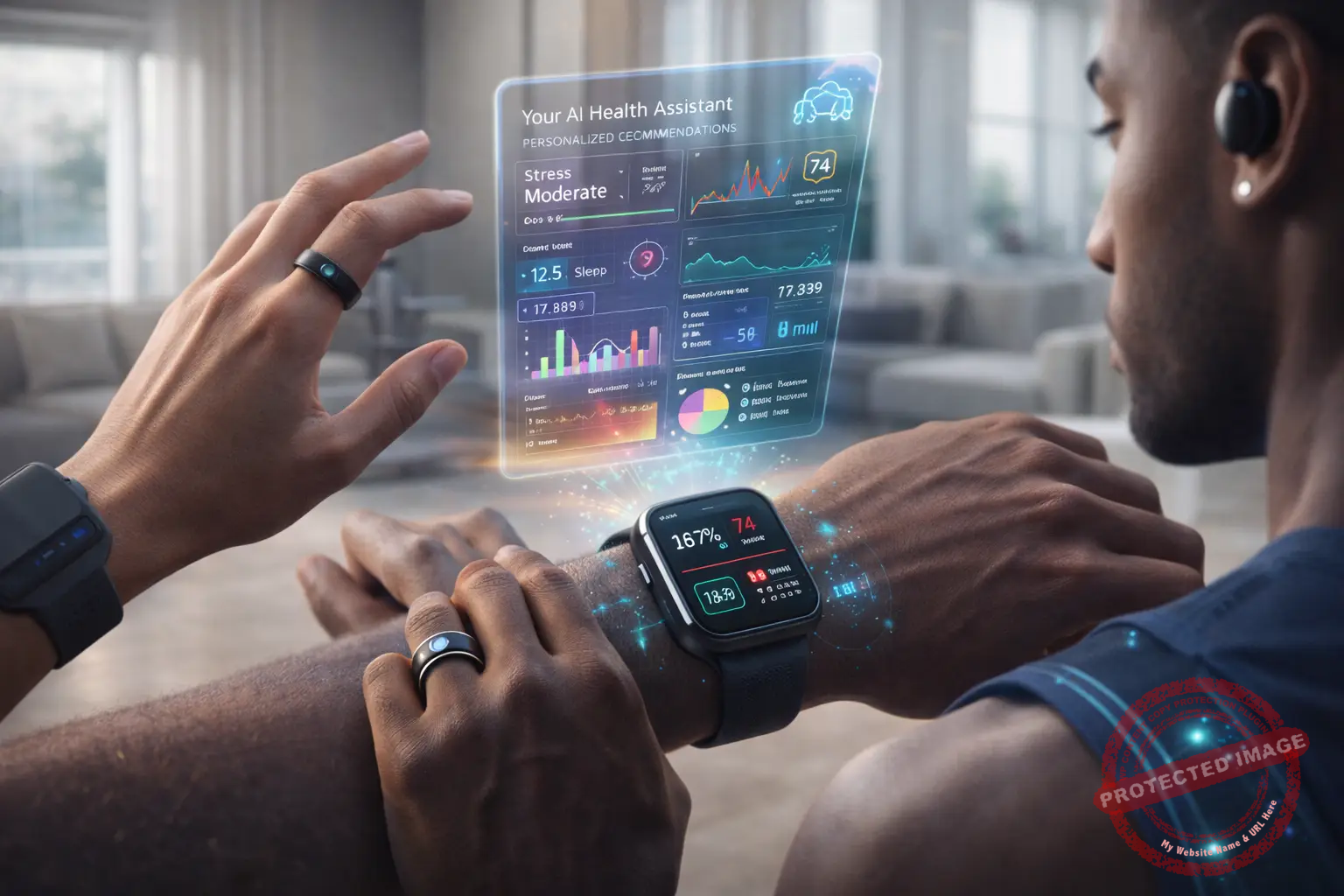
In the field of wearable technologies, 2026 marks a period of significant innovation and maturation. Advancements in AI-driven health tracking, the proliferation of smart rings, and the integration of next-generation sensors are defining this era. Smart devices have evolved from rudimentary health trackers to sophisticated ecosystems that offer nuanced insights into users’ mental and physical well-being. These wearables are increasingly equipped with AI algorithms that gather and analyze large volumes of data to provide personalized health recommendations.
One of the most noted advancements is the AI health monitoring capabilities integrated into wearable devices. Leveraging machine learning and sophisticated prediction models, these wearables not only track metrics such as heart rate and activity levels but also predict potential health issues before they arise. This proactive approach to health management is transforming how users interact with their wellbeing, offering opportunities for early intervention that were not feasible a few years ago.
Smart rings have emerged as key players in the wearable technology landscape. Their discreet form factor combined with potent technology enables them to fit seamlessly into daily life. These rings monitor physiological data through advanced sensors, providing real-time feedback on stress levels, sleep patterns, and overall wellness. The development of these smart rings underscores a broader industry trend towards miniaturization and the integration of technology into devices that are both fashionable and functional.
Extended Reality (XR) interfaces are also enhancing how wearables communicate with users, offering immersive experiences that blend virtual and physical interactions. This technology is redefining user engagement, making data visualization more intuitive and actionable. As XR becomes more prevalent, it is anticipated to bridge the gap between abstract data sets and practical health applications, facilitating improved understanding and management of personal health metrics.
Advanced sensors have played a pivotal role in elevating the capabilities of wearable devices. The use of non-invasive sensors that can continuously monitor various health indicators without requiring user intervention is a breakthrough. These sensors gather data unobtrusively while maintaining accuracy, enabling long-term health tracking that is effortless for users. The integration of these technologies presents a comprehensive view of a user’s health, collectively enhancing decision-making for both consumers and healthcare providers.
As wearable technology continues to evolve, it is becoming an integral component of daily life, transforming human-machine interaction and reshaping the healthcare and enterprise ecosystems. Organizations are investing in these technologies for employee wellness programs, recognizing the potential of data-driven health insights in enhancing productivity and job satisfaction. Informed consumers, eager to leverage these advancements, are increasingly adopting these wearables not just as tech gadgets, but as essential tools for managing mental and physical health.
Benefits for mental well-being
Wearable devices have become pivotal in promoting mental well-being by offering users unparalleled insights into their psychological health. These devices play a crucial role in gauging stress levels, detecting mood fluctuations, and fostering self-awareness. Equipped with sophisticated sensors and algorithms, wearables can track physiological indicators such as heart rate variability, galvanic skin response, and sleep patterns, which are critical in understanding an individual’s mental state. By continuously monitoring these metrics, wearables provide users and clinicians with real-time data that can be used to identify stressors and intervene before issues escalate significantly.
One of the most significant benefits of wearables for mental health is their ability to facilitate mindfulness and relaxation techniques. Many devices now offer guided meditation programs and breathing exercises that are triggered automatically when heightened stress levels are detected. This personalized interaction encourages users to engage in mental wellness practices that are proven to reduce anxiety and improve overall mental health. Additionally, wearables encourage users to maintain healthy routines by sending reminders to take breaks, hydrate, and exercise, which are key factors in sustaining mental well-being.
Social connectivity features integrated into wearables also contribute to mental well-being by keeping users connected with support networks. Features like community challenges, sharing daily progress, and achieving wellness goals with friends and family add a social dimension that can be motivating and support mental health. This virtual support framework is crucial for individuals who are prone to feelings of isolation or loneliness, providing them with a sense of belonging and community engagement.
Furthermore, wearable devices are invaluable in therapeutic settings, offering therapists a wealth of data that can be used to tailor treatment plans. Clinicians can track patients’ progress outside of sessions, monitor adherence to prescribed activities, and detect early signs of relapse or distress, facilitating timely interventions. This continuous feedback loop enables therapists to adjust treatment approaches in real-time, optimizing therapy efficiency and outcomes.
The integration of wearable technology into everyday life has created new opportunities for enhancing mental well-being. By providing personalized insights and fostering healthy habits, these devices empower users to take an active role in managing their mental health, ultimately leading to improved quality of life and a deeper understanding of one’s psychological state.
Challenges and limitations
Despite their numerous advantages, wearable devices face several challenges and limitations that can impact their effectiveness in mental health monitoring and interventions. One of the primary challenges is ensuring the accuracy and reliability of the data collected. While modern wearables are equipped with sophisticated sensors, various factors such as improper device placement, skin tone variations, and environmental conditions can affect the data quality, leading to potential discrepancies in mental health assessments.
Another significant limitation is the potential for over-reliance on technology. Users may become dependent on their devices for mental health management, potentially neglecting other essential aspects of mental wellness, such as human interaction and traditional therapeutic methods. This could lead to a scenario where technology becomes a substitute rather than a complement to comprehensive mental health care.
User engagement and adherence also pose challenges, as wearables often require consistent use to provide valuable insights. Many users may initially purchase these devices with enthusiasm, only to abandon them due to lack of motivation, perceived lack of immediate benefits, or frustration with device interfaces and notifications. Ensuring long-term user engagement requires designing intuitive, user-friendly devices that seamlessly integrate into daily routines without becoming intrusive or burdensome.
Battery life and the need for frequent charging can limit wearables’ practicality, especially for devices intended for continuous mental health monitoring. Users may find the need to recharge their devices frequently an inconvenience, particularly smart rings and other compact devices that offer limited battery capacity.
Data privacy and security are critical concerns in the realm of wearable technology, given the sensitive nature of the information collected. Wearable devices gather a significant amount of personal data, including location, physical activity, and physiological metrics, which, if not adequately protected, could lead to privacy breaches or misuse. Ensuring robust data encryption and compliance with privacy regulations is essential to maintain user trust and confidence.
Additionally, the high cost of advanced wearables may pose a barrier to widespread adoption, potentially exacerbating health disparities. Not every individual or community can afford the latest technology, which might limit access to its mental health benefits to those with higher socioeconomic status, leaving marginalized groups with fewer resources.
Interoperability issues with existing healthcare infrastructure can also hinder the effective integration of wearables into broader health management systems. Ensuring that wearables are compatible with other health platforms and can seamlessly share data with healthcare providers without technical barriers remains a challenge.
Addressing these challenges requires ongoing innovation and thoughtful design. Manufacturers and developers must prioritize data accuracy, privacy, user engagement, and accessibility to maximize the potential of wearable devices in supporting mental health and well-being.
Privacy and ethical considerations
In the realm of wearable technology, privacy and ethical considerations are of paramount importance, perhaps more so than in any other tech industry. As wearables become increasingly capable of collecting vast amounts of sensitive personal data, ranging from physiological and biometric details to intricate behavioral patterns, the potential for misuse or breaches in data security amplifies. This presents a significant ethical dilemma: balancing technological advancement with the need to protect individual privacy.
One of the main ethical concerns is informed consent. It is crucial that users understand exactly what data is being collected, how it will be used, and who will have access to it. Transparency in data practices is needed to ensure users have complete control over their personal information, and that they are not inadvertently waiving their rights to privacy. Developers should implement clear, understandable consent processes that allow users to make informed decisions about their data sharing.
Equally critical are the implications of data sharing with third parties. Wearable technology companies often share data with researchers or use it to improve their services, but this raises questions about the potential for commercial exploitation of personal health data. Strict guidelines must be followed to ensure data is used ethically, benefitting users without compromising their privacy. Ethical data management practices need to include restricting access to data, anonymizing it when possible, and ensuring that it is never used for discriminatory purposes, such as affecting employment or insurance eligibility.
Data security is another pressing concern, with wearable devices being prime targets for cyberattacks due to the sensitive information they carry. Robust cybersecurity measures are needed to protect against unauthorized access and data breaches. Developers must prioritize building secure architectures that incorporate encryption, regular security updates, and comprehensive risk assessments.
The application of privacy laws like GDPR in Europe and HIPAA in the United States becomes integral in guiding how personal health data is handled. These regulations ensure that sensitive health information is protected and that entities handling such data adhere to strict privacy standards. However, the global nature of wearable technology means that varying international laws can create complex compliance challenges, requiring companies to navigate multiple regulatory environments carefully.
Ethical considerations also extend to the potential for bias in the data algorithms used by these devices. Machine learning models depend heavily on the data they are trained on, and if this is not representative of diverse populations, the insights provided could perpetuate existing health inequities. It is essential for developers to consider inclusivity in their data collection methodologies to avoid biased outcomes that could disadvantage certain groups.
As the capabilities of wearables continue to grow, so too must our commitment to ethical standards in their development and deployment. Continuing to innovate while keeping privacy and ethical considerations at the forefront will be key to fostering trust and maximizing the positive impact of wearables on mental health.
Future trends in mental health monitoring
The landscape of wearable technology is poised for transformative developments in the realm of mental health monitoring as we approach 2026–2027. Cutting-edge advancements in sensors, artificial intelligence, and personalized health metrics are expected to greatly enhance the capabilities of wearables, providing users with deeper insights into their mental health.
One of the prominent trends is the integration of advanced biomarker sensors that can detect subtle changes in physiological and neurological states, providing early warning signs of mental health conditions. These sensors aim to go beyond basic heart rate and activity tracking by measuring markers such as cortisol levels, oxygen saturation, and brain activity through EEG sensors. As a result, wearables will be able to offer more precise assessments of stress, anxiety, and overall mental well-being.
AI-driven analytics will also play a critical role in future wearables by interpreting complex data sets to deliver tailored mental health support. Machine learning algorithms will become more adept at identifying patterns in users’ behavior and biometrics, allowing for the prediction of mood fluctuations and mental health episodes. This enables proactive interventions, such as suggesting relaxation exercises or alerting caregivers or mental health professionals when necessary.
Connectivity between wearables and mental health platforms is set to improve, leading to more seamless integration with telehealth services. This connectivity will facilitate real-time sharing of mental health data with healthcare providers, enabling them to monitor patients remotely and intervene as needed. Such advancements promise to enhance the accessibility and effectiveness of mental health care.
Moreover, the use of cross-device ecosystems will allow for comprehensive health tracking. Future wearables will be capable of syncing with other smart devices, such as phones, tablets, and home assistants, providing users with a cohesive portrait of their mental and physical health. This convergence will enable more personalized and context-aware health solutions that can adapt to a user’s lifestyle and preferences.
The rise in popularity of voice-activated interfaces and natural language processing within wearables will offer new ways for users to interact with their devices without the need for screens or manual inputs. This development will be particularly beneficial for mental health applications, as wearables will be equipped to respond to voice commands and offer emotional support through conversational AI, creating a more intuitive and user-friendly experience.
As wearable technology continues to evolve, the focus on user empowerment and engagement is expected to grow. Future devices will prioritize user experience, incorporating engaging interfaces and personalized feedback loops to enhance adherence to mental health practices. The concept of ‘gamification’ may be employed to encourage users to maintain healthy mental habits through rewards and motivational prompts.
Ultimately, the future of wearable technology in mental health monitoring promises increased personalization, accuracy, and integration, which will empower users to take charge of their mental health with unprecedented efficacy. This evolution is poised to reshape the mental health landscape, providing innovative tools that are as proactive as they are preventive in managing mental wellness.
Contributing Editors:
Benoit Leduc, Co-Editor, Montreal, Quebec.
Peter Jonathan Wilcheck, Co-Editor, Miami, Florida.
#AppleWatch #AppleWatchRemove term: #DigitalHealth #DigitalHealthRemove term: #FitnessTech #FitnessTechRemove term: #FitnessTracker #FitnessTrackerRemove term: #Gadgets #GadgetsRemove term: #HealthTech #HealthTechRemove term: #SmartRing #SmartRingRemove term: #Smartwatch #SmartwatchRemove term: #Tech #TechRemove term: #Wearables #WearablesRemove term: #WearableTech #WearableTechRemove term: #WearableTechnology #WearableTechnologyRemove term: ai aiRemove term: iot iot Technology Technolog
Post Disclaimer
The information provided in our posts or blogs are for educational and informative purposes only. We do not guarantee the accuracy, completeness or suitability of the information. We do not provide financial or investment advice. Readers should always seek professional advice before making any financial or investment decisions based on the information provided in our content. We will not be held responsible for any losses, damages or consequences that may arise from relying on the information provided in our content.

 AAPL
AAPL MSFT
MSFT GOOG
GOOG TSLA
TSLA AMD
AMD IBM
IBM TMC
TMC IE
IE INTC
INTC MSI
MSI NOK
NOK DELL
DELL ECDH26.CME