


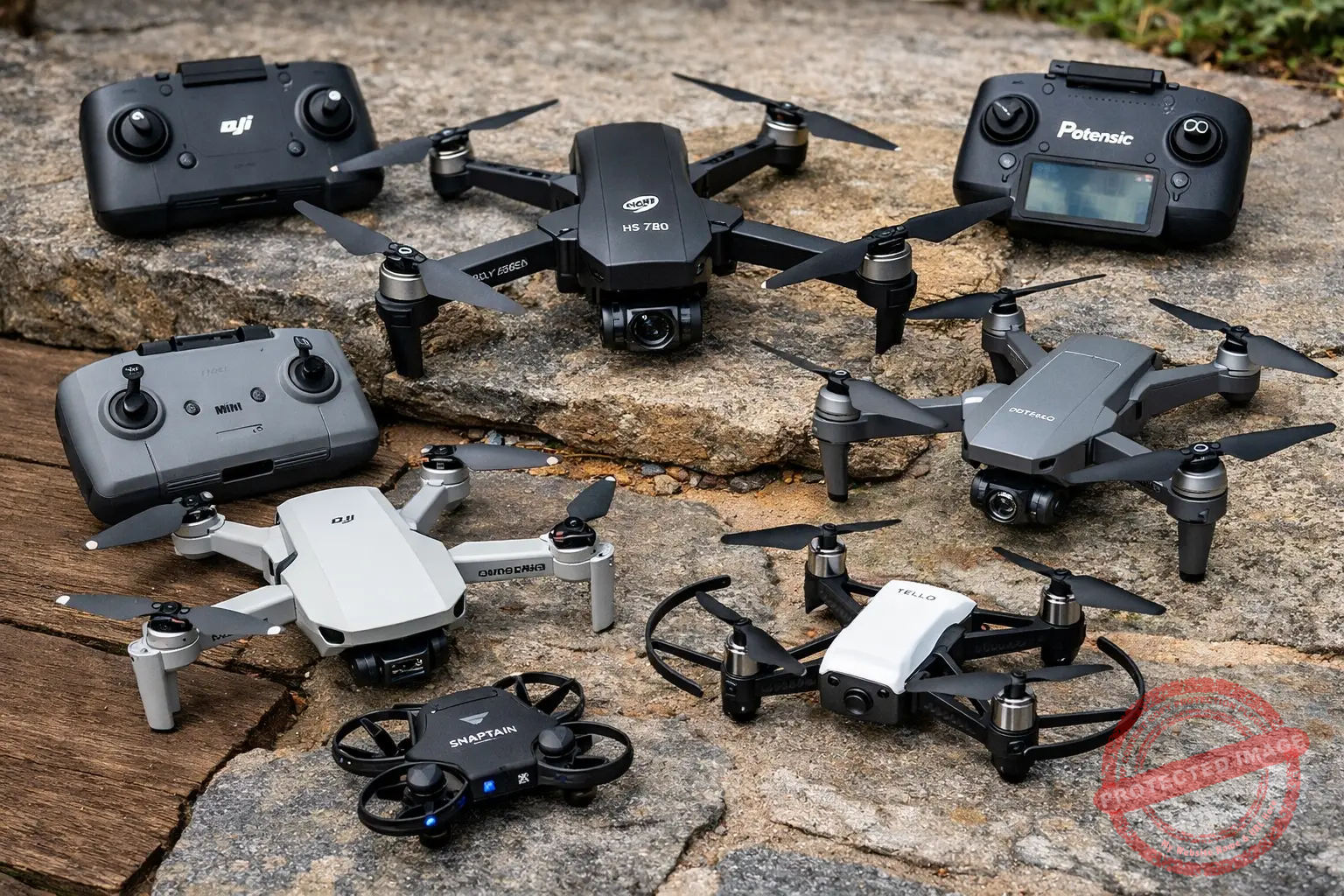
When selecting a drone as a beginner, it is essential to consider models that are user-friendly, affordable, and equipped with features that enhance the flying experience without overwhelming the pilot. Several drones stand out in this category for their ease of use and reliability.
The DJI Mini SE is an excellent choice for beginners, offering a lightweight design and a user-friendly interface. It features a 12 MP camera capable of capturing 2.7K video, providing quality imagery while remaining simple to operate. With a flight time of up to 30 minutes and a robust GPS system, this drone allows newcomers to explore aerial photography with confidence.
Another great option is the Holy Stone HS720, which comes with a 4K camera and GPS-assisted flight. It has a follow-me mode, altitude hold, and a modular battery that extends flight time to around 26 minutes. The HS720’s intuitive controls make it easy for beginners to master flying skills while enjoying advanced features typically found in more expensive models.
The Potensic D80 is also suitable for novice pilots, featuring a 1080P full HD camera and a first-person view (FPV) capability. This drone is equipped with intelligent flight modes, such as gesture control and headless mode, making it easier for new users to fly and capture stunning aerial footage. With a flight range of about 300 meters, it offers plenty of space for exploration.
For those seeking a more compact option, the Snaptain SP350 provides a fun flying experience with its lightweight design and easy-to-use controls. It features a 720P HD camera and multiple flight modes, including one-key takeoff and landing, which simplifies the flying process for beginners. The drone also includes a protective casing that reduces damage in case of crashes.
Lastly, the Tello by Ryze Tech is an excellent entry-level drone that combines affordability with impressive features. With a 5 MP camera and the ability to perform aerial stunts, the Tello is perfect for beginners looking to learn the basics of drone flying. Its compatibility with programming apps can also introduce users to coding and robotics, making it a great educational tool.
These drones provide a balance between price, performance, and ease of use, ensuring that beginners can develop their skills while enjoying the exciting world of aerial photography and flight.
Best Drones for Professionals
When it comes to selecting a drone for professional use, the requirements shift significantly towards advanced features, superior camera quality, and enhanced control capabilities. Professionals often seek drones that can deliver exceptional performance in demanding conditions, offering features that support various applications such as cinematography, surveying, and inspections.
The DJI Mavic 3 is a standout choice for professionals, equipped with a dual-camera system that includes a 20 MP Hasselblad sensor capable of shooting 5.1K video. Its advanced obstacle avoidance system and impressive flight time of up to 46 minutes make it an ideal tool for capturing cinematic shots while ensuring safety during complex maneuvers. The Mavic 3’s intelligent features, such as ActiveTrack and Mastershots, allow users to create stunning footage with minimal effort.
Another top contender is the Autel Robotics EVO Lite+. This drone boasts a 50 MP camera that supports 6K video recording, providing high-resolution imagery for professionals needing detailed visuals. Its impressive flight time of up to 40 minutes and 3-axis gimbal stabilization ensure smooth footage even in challenging environments. The EVO Lite+ also features dynamic tracking modes and multiple intelligent flight modes, making it versatile for various shooting scenarios.
For those looking for a robust and versatile drone, the DJI Inspire 2 is a favorite among filmmakers and industrial professionals. This drone can carry the Zenmuse X7 camera, which offers 24 MP stills and 6K CinemaDNG video. The Inspire 2’s dual battery system allows for extended flight times, while its advanced obstacle sensing technology enhances safety during operations. With a maximum speed of 58 mph and a range of intelligent flight modes, it is designed for high-performance needs.
The Parrot Anafi USA is another excellent option for professionals, especially in fields like public safety and surveying. This compact drone features a 32 MP camera with a 4K HDR video capability and a unique 180-degree tilt gimbal, allowing for versatile shooting angles. The Anafi USA is built with ruggedness in mind, offering a lightweight design that withstands harsh conditions, making it ideal for outdoor use in various industries.
For those who require a drone specifically for mapping and surveying, the senseFly eBee X is an industry leader. This fixed-wing drone can cover large areas efficiently, providing high-resolution aerial imagery and data collection capabilities. With a variety of camera options and the ability to fly at different altitudes, it is an essential tool for professionals in agriculture, construction, and environmental monitoring.
Lastly, the Skydio 2 is renowned for its autonomous flying capabilities, making it ideal for professionals who need a drone that can navigate complex environments with ease. With a 12 MP camera and the ability to shoot 4K video, the Skydio 2 features advanced obstacle avoidance technology that allows it to fly without direct control. This makes it particularly useful for dynamic filming situations or inspections where manual piloting may be challenging.
These drones represent the pinnacle of technology and capability in the professional market, each tailored to meet specific needs while delivering high-quality performance and reliability.
Top Features to Consider
When choosing a drone, several key features should be considered to ensure that the model suits your needs, whether you are a beginner or a professional.
First, camera quality is paramount. For those interested in aerial photography or videography, a drone with a high-resolution camera is essential. Look for features like 4K video capability, adjustable frame rates, and good low-light performance. Additionally, the type of gimbal stabilization can greatly affect the quality of your footage; a 3-axis gimbal is typically preferred for smooth video capture.
Battery life is another critical feature to consider. Drones with longer flight times allow for more extensive shooting sessions without the interruption of changing batteries. Many consumer drones offer flight times ranging from 20 to 40 minutes. Additionally, consider the ease of battery replacement and charging time, as these factors can affect your overall flying experience.
Range and transmission quality are important for maintaining control and receiving real-time video feed. Drones with a longer range allow you to fly farther while still maintaining a strong connection. Look for models that utilize advanced transmission technologies, such as OcuSync or Lightbridge, which provide clearer video feedback and better control stability over long distances.
Intelligent flight modes can enhance your flying experience significantly. Features such as GPS-assisted flight, follow-me mode, waypoints, and gesture controls can make piloting easier and more intuitive, especially for beginners. These modes can also help professionals capture complex shots with minimal manual input.
Durability and build quality should not be overlooked. A well-constructed drone can withstand minor crashes and adverse weather conditions. Look for models with reinforced frames, weather-resistant materials, and protective features like propeller guards, which can help minimize damage during unexpected incidents.
Portability is also a vital factor, particularly for those who plan to travel with their drones. Compact and lightweight designs are easier to transport and store. Some models even come with foldable arms, making them more convenient for travel without sacrificing performance.
Finally, consider the software and compatibility features. Many drones come with companion apps that enhance functionality, offering features such as automated flight planning, live telemetry data, and editing tools for your captures. Additionally, check for firmware updates and community support, as these can improve your drone’s capabilities over time.
By evaluating these features, you can select a drone that not only meets your immediate needs but also grows with you as your skills and requirements develop.
Comparison of Popular Models
When comparing popular drone models, it’s essential to consider various factors that differentiate them in performance, features, and usability. Each of the leading drones offers unique advantages, catering to different user needs, from casual hobbyists to serious professionals.
For beginners, the DJI Mini SE, Holy Stone HS720, Potensic D80, Snaptain SP350, and Tello by Ryze Tech each present distinct characteristics that make them appealing. The DJI Mini SE stands out for its compact design and impressive camera capabilities, making it a top choice for beginners who want to capture high-quality images without complexity. Its lightweight build enhances portability, allowing users to take it on adventures easily. Meanwhile, the Holy Stone HS720 offers robust features like GPS-assisted flight and a 4K camera, which provide a more advanced experience while remaining accessible for novices. The inclusion of intelligent flight modes enhances the learning curve, allowing beginners to build confidence quickly.
The Potensic D80 offers additional excitement with its FPV capability and intelligent flight modes, making it a versatile option for those looking to experiment with aerial photography and videography. In contrast, the Snaptain SP350 is perfect for younger users or those entirely new to drones due to its straightforward controls and protective casing, which mitigates the risk of damage during early flying experiences. Lastly, the Tello by Ryze Tech, while small and affordable, introduces users to programming and robotics, making it an excellent educational tool that fosters creativity and technical skills.
On the professional side, drones like the DJI Mavic 3, Autel Robotics EVO Lite+, DJI Inspire 2, Parrot Anafi USA, senseFly eBee X, and Skydio 2 represent the cutting edge of drone technology. The DJI Mavic 3 delivers unparalleled camera performance with its dual-camera system, providing stunning imagery and advanced features tailored for filmmakers and content creators. Its obstacle avoidance technology is crucial for professionals working in dynamic environments, where safety is a primary concern.
The Autel Robotics EVO Lite+ is another professional-grade option, distinguished by its high-resolution camera and extensive flight time. This drone is particularly favored for its 6K video recording capabilities, allowing professionals to capture detailed visuals that can be crucial for marketing or analysis. The DJI Inspire 2 is tailored for high-performance needs, featuring an advanced gimbal system for superior stabilization and the capability to carry professional-grade cameras, making it ideal for serious filmmakers.
In sectors requiring robust and versatile solutions, the Parrot Anafi USA excels with its unique camera features and durability, suitable for applications in public safety and surveying. Its tilt gimbal provides unique shooting angles that can enhance the storytelling aspect of aerial footage. For surveying and mapping, the senseFly eBee X stands out due to its fixed-wing design, enabling it to cover vast areas efficiently while providing high-resolution data necessary for professional applications.
Lastly, the Skydio 2 distinguishes itself with its autonomous flying capabilities, making it a game-changer for professionals who need to navigate complex environments without direct control. This model is particularly beneficial for inspections and dynamic filming situations, where manual piloting can be challenging.
In summary, when comparing these popular models, it becomes evident that the choice of drone is influenced by specific use cases, desired features, and the skill level of the operator. Understanding the strengths and weaknesses of each model can help users make informed decisions, ensuring they select the best drone to meet their needs.
Tips for Safe Flying
To ensure a safe and enjoyable flying experience, it is crucial to follow a set of guidelines designed to protect both the drone and its surroundings. Before taking off, familiarize yourself with local regulations governing drone use. This includes understanding no-fly zones and altitude restrictions, as well as any necessary permits or registrations. Many countries require drone operators to register their devices, and failure to comply can result in fines or other penalties.
Always conduct a pre-flight inspection of your drone to ensure it is in good working condition. Check the battery levels, propeller integrity, and overall functionality. Ensure that the firmware is up to date, as manufacturers frequently release updates that can improve performance and safety features. Additionally, ensure that your remote control is paired correctly with the drone and that it has a sufficient battery charge for the duration of your flight.
When flying, maintain a visual line of sight with your drone at all times. This not only helps you keep track of its position but also allows you to react promptly to any potential hazards. Avoid flying in adverse weather conditions, such as high winds, rain, or fog, as these can affect the drone’s stability and control. Wind can be particularly challenging for lightweight drones, which may struggle to maintain altitude or direction.
It is also essential to be aware of your surroundings. Keep a safe distance from people, animals, and property to prevent accidents. This includes avoiding crowded areas and respecting the privacy of individuals. Many communities have specific guidelines regarding flying over residential areas, so be sure to respect these rules to maintain good relations with your neighbors.
Utilizing the drone’s built-in safety features can greatly enhance your flying experience. Most modern drones come equipped with obstacle avoidance systems that can detect and avoid obstacles in their flight path. Familiarize yourself with these features, but do not rely solely on them. Always be prepared to take manual control of the drone if necessary.
Establish a maximum flight altitude and distance before taking off. This can help you stay within safe operational limits and reduce the risk of losing your drone. Many drones come with geofencing capabilities that prevent them from flying into restricted areas, so ensure this feature is activated.
In case of an emergency, such as a loss of signal or a low battery warning, it is crucial to have a plan in place. Most drones will automatically return to their takeoff point when the battery is low or the connection is lost, but this feature may not always work perfectly in all situations. Practice emergency maneuvers and understand how to regain control if needed.
Post-flight, always power down your drone and inspect it for any potential damage that may have occurred during the flight. Keeping a maintenance log can also help you track any issues and ensure your drone remains in optimal condition.
By adhering to these safety tips, you can enjoy a worry-free flying experience while minimizing risks to yourself, others, and your drone.
Maintenance and Care for Your Drone
To keep your drone in optimal working condition and extend its lifespan, regular maintenance and care are essential. After each flight, it is advisable to inspect your drone for any visible damage, such as cracked propellers, loose components, or signs of wear on the body. Addressing these issues promptly can prevent more severe problems down the line.
Cleaning your drone is another crucial maintenance step. Use a soft cloth or microfiber towel to gently wipe down the drone’s exterior after each flight, removing dust, dirt, or debris that may have accumulated. Pay special attention to the camera lens, as any smudges or dirt can affect image quality. Additionally, check the propellers for any dirt or residue that could impact performance. If necessary, use a small brush or compressed air to keep them clean.
Battery care is vital for maintaining flight time and performance. Always use the manufacturer-recommended batteries and follow proper charging practices. Avoid letting the battery drop to critically low levels; instead, recharge it before it falls below 20%. Store batteries in a cool, dry place, and if they are not going to be used for an extended period, consider using a storage mode to maintain their health.
Firmware updates are essential for keeping your drone’s software current. Manufacturers frequently release updates that enhance performance, introduce new features, and address any bugs or issues. Regularly check for updates through the drone’s companion app or the manufacturer’s website, and follow the instructions for installation carefully.
When not in use, store your drone in a protective case or bag to shield it from physical damage and environmental factors. Ensure that the drone is completely dry before storing it, as moisture can lead to corrosion and other issues. If your drone has detachable parts, such as propellers or camera gimbals, consider removing them for storage to prevent any unintentional damage.
Calibration of your drone should be performed periodically, especially if you notice any irregular behavior during flights. This includes compass calibration and IMU (Inertial Measurement Unit) calibration, which help ensure that the drone accurately understands its position and orientation. Refer to the manufacturer’s instructions for the correct calibration procedures.
Lastly, keep an eye on the overall performance of your drone. If you notice a decrease in flight time, unusual sounds, or erratic flight behavior, it may be time to consult the manufacturer’s support or a professional technician. Regular check-ups can help identify potential problems before they escalate, ensuring that your drone remains reliable for all your flying adventures.
By adopting a consistent maintenance routine and taking care of your drone, you can enhance its performance, extend its lifespan, and ensure a safer flying experience.
Co-Editors
Dan Ray, Co-Editor, Montreal, Quebec.
Peter Jonathan Wilcheck, Co-Editor, Miami, Florida.
#ConsumerDrones2026 #DroneTechnology #AIFlight #AviationInnovation #RemoteID #BatteryTech #DroneRegulation #AutonomousSystems #SmartFlight #AerospaceAI
Post Disclaimer
The information provided in our posts or blogs are for educational and informative purposes only. We do not guarantee the accuracy, completeness or suitability of the information. We do not provide financial or investment advice. Readers should always seek professional advice before making any financial or investment decisions based on the information provided in our content. We will not be held responsible for any losses, damages or consequences that may arise from relying on the information provided in our content.

 AAPL
AAPL AMD
AMD CIS.HA
 DELL
DELL IBM
IBM INTC
INTC MSFT
MSFT GOOG
GOOG HPE
HPE NVDA
NVDA TSLA
TSLA TMC
TMC MSI
MSI NOK
NOK OPEAZZX