



For years, post-quantum cryptography sounded like a future problem. It sat in the same mental folder as fault-tolerant quantum computers, million-qubit machines, and other milestones that were important but not yet operationally urgent. That framing is now outdated. The practical question is no longer whether organizations should prepare for quantum-resistant security. It is how quickly they can find, prioritize, test, and replace the cryptography already embedded in their systems.
The reason is not that a publicly known quantum computer can break RSA or elliptic-curve cryptography today. It cannot. The reason is that cryptographic migration takes years, and some information being encrypted today will still be valuable when stronger quantum computers arrive. This is the “harvest now, decrypt later” risk: an adversary records protected traffic or stores stolen encrypted data now, then waits for future quantum capabilities that could make today’s public-key protections inadequate.
In June 2026, the United States accelerated this issue from planning guidance toward execution. The White House executive order, “Securing the Nation Against Advanced Cryptographic Attacks,” directed federal agencies to organize post-quantum migration around named leadership, cryptographic inventories, and deadlines for high-value systems. A related fact sheet described targets for moving certain high-value assets to post-quantum protections by 2030 and 2031, depending on the use case. That matters beyond government because federal contractors, software vendors, cloud providers, and regulated industries often move in the wake of federal security requirements.
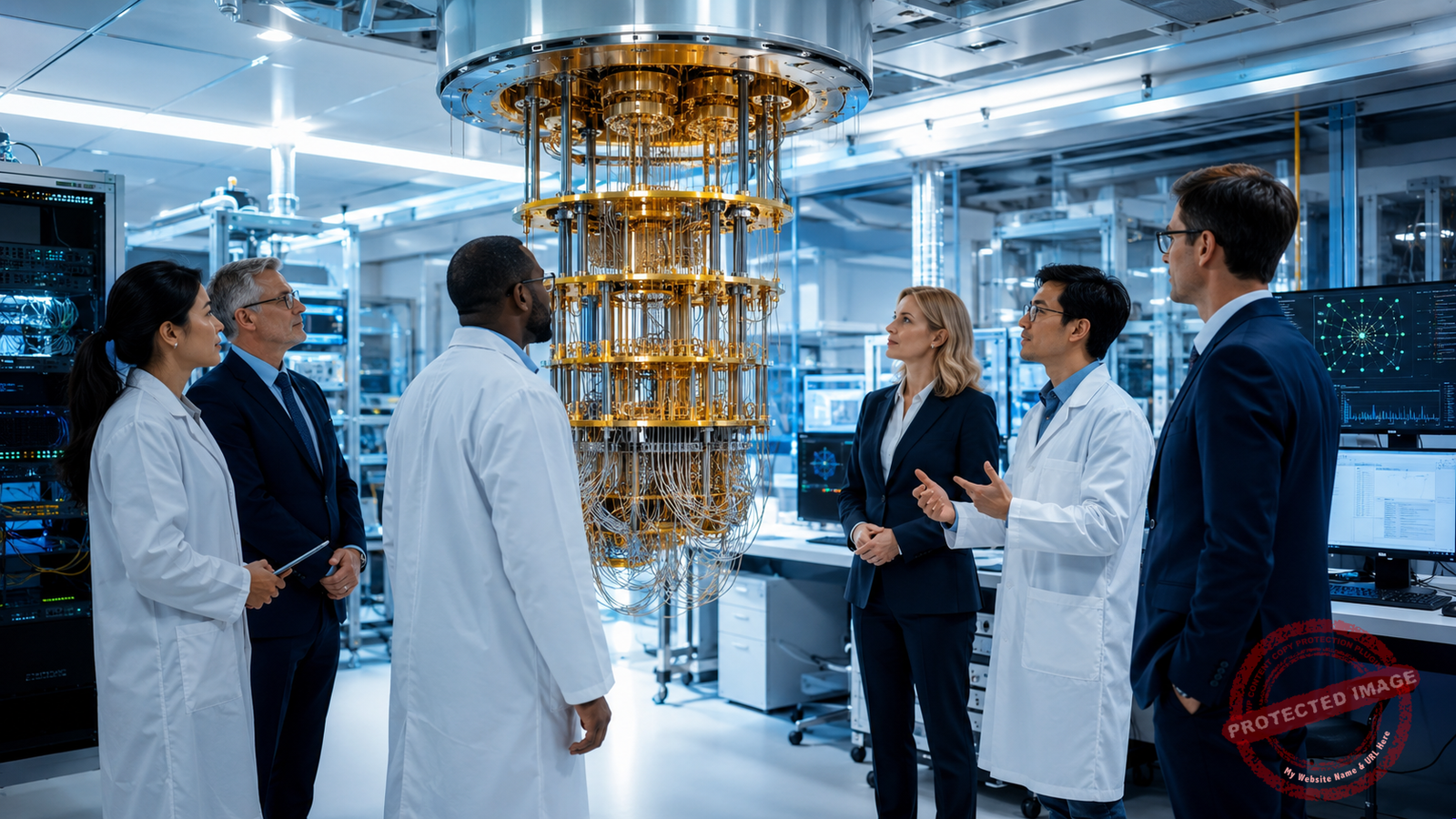
The technical foundation for this transition comes from the National Institute of Standards and Technology. In August 2024, NIST finalized its first three post-quantum cryptography standards. FIPS 203 specifies ML-KEM, a key-encapsulation mechanism used to establish shared secrets for encryption. FIPS 204 specifies ML-DSA, a lattice-based digital signature method. FIPS 205 specifies SLH-DSA, a stateless hash-based signature method that offers a different mathematical foundation. In March 2025, NIST selected HQC as an additional backup algorithm for post-quantum encryption, giving the ecosystem another path if future cryptanalysis weakens confidence in the main key-establishment approach.
These names are technical, but the operational distinction is straightforward. Key-establishment algorithms help two parties agree on encryption keys across an untrusted network. Digital signature algorithms prove that software, firmware, documents, certificates, or messages really came from the claimed source and were not altered. Both matter, but they create different migration problems. Protecting data in transit is urgent because of harvest-now-decrypt-later attacks. Post-quantum authentication, including certificates and signatures, is more entangled with browsers, certificate authorities, hardware roots of trust, software update systems, and long-lived device ecosystems.
This is why the migration should not be treated as a one-for-one algorithm swap. Modern cryptography is scattered across transport security, application protocols, identity systems, code signing, embedded firmware, databases, backups, virtual private networks, payment systems, machine-to-machine APIs, and vendor products. Many organizations do not have a reliable map of where cryptography is used. They may know which web servers have TLS certificates, but not which internal services use older libraries, which devices cannot receive firmware updates, or which archived data needs confidentiality for twenty years.
CISA and NIST have both emphasized discovery and inventory for this reason. A credible post-quantum program begins with knowing what cryptography exists, where it lives, who owns it, what data it protects, and how quickly it can be changed. That inventory should identify public-key algorithms such as RSA, Diffie-Hellman, elliptic-curve Diffie-Hellman, and ECDSA, as well as key sizes, certificate lifetimes, protocol versions, software dependencies, and systems that depend on external vendors. Without this map, migration becomes guesswork.
The next useful concept is crypto-agility. Crypto-agility means designing systems so algorithms can be replaced without rebuilding the entire product or business process. In practice, that includes using maintained libraries, avoiding hard-coded algorithm assumptions, supporting modern protocol negotiation, testing hybrid modes, shortening certificate lifetimes where appropriate, and making sure update mechanisms themselves are secure. The goal is not merely to install ML-KEM once. The goal is to build an environment that can adapt if standards evolve, implementations fail validation, or future attacks change the risk model.

Hybrid deployment is one practical bridge. In a hybrid key exchange, a classical method such as elliptic-curve Diffie-Hellman is combined with a post-quantum method such as ML-KEM. The shared secret depends on both. This approach helps manage transition risk because the connection is not relying solely on a newer post-quantum algorithm while the ecosystem is still gaining operational experience. Google Cloud has described using ML-KEM in both standalone and hybrid configurations for protecting data in transit. Cloudflare has also reported post-quantum deployments across parts of its network and security products. These deployments are important because they test real-world performance, interoperability, and failure modes at Internet scale.
Performance still matters. Post-quantum keys, signatures, and ciphertexts can be larger than their classical counterparts, and different algorithms impose different bandwidth, latency, memory, and implementation tradeoffs. ML-KEM is attractive for many network uses because it is comparatively efficient, but signatures are often harder. Software signing, certificate chains, constrained devices, and protocols with tight packet limits may need careful engineering. The correct lesson is not that post-quantum cryptography is impractical. The lesson is that implementation details matter, and they should be tested before deadlines force rushed deployment.
It is also important to separate post-quantum cryptography from quantum key distribution. QKD uses quantum physics to help distribute keys and can be valuable in specialized settings, but it requires dedicated infrastructure and does not replace the broad need for software-based cryptographic algorithms that run across today’s Internet. Post-quantum cryptography is designed to work on classical computers, servers, phones, routers, and embedded devices while resisting known attacks from future quantum computers. That makes it the main migration path for most organizations.
The uncomfortable part is prioritization. Not every system carries the same quantum risk. A public web session protecting a lunch order does not have the same urgency as a diplomatic message, health record, source-code signing key, banking credential, satellite command channel, or industrial control update mechanism. Organizations should rank systems by data sensitivity, required confidentiality lifetime, exposure to interception, dependency complexity, and replacement difficulty. High-value data with a long shelf life should move earlier. Systems that are hard to patch should also move earlier, because delay compounds the engineering problem.

For leaders, the most useful question is not “When will a cryptographically relevant quantum computer arrive?” No one can answer that with certainty. The better question is “How long would it take us to migrate if we had to?” If the honest answer is five to seven years, then waiting for a dramatic quantum announcement is poor risk management. Large organizations need budget cycles, procurement language, vendor commitments, testing environments, compliance evidence, and rollback plans. Small organizations need to know whether their cloud providers, security vendors, payment processors, and software platforms are handling the transition on their behalf.
There is a balanced way to approach this. First, build the inventory. Second, classify systems by data lifetime and business criticality. Third, require vendors to disclose post-quantum roadmaps and standards alignment. Fourth, pilot hybrid post-quantum key exchange in controlled environments. Fifth, update software development and procurement policies so new systems do not deepen dependence on quantum-vulnerable algorithms. Sixth, document exceptions honestly, especially for legacy systems that cannot be upgraded quickly.
The field will continue to evolve. Standards will mature, implementation guidance will sharpen, and real deployments will reveal practical lessons that laboratory analysis cannot. Quantum hardware progress will remain uneven: impressive advances in error correction, logical qubits, and architecture do not automatically translate into a machine that can break production cryptography. Still, the security community does not need to know the exact date of that machine to act. Cryptographic transitions are infrastructure projects, not emergency patches.
Post-quantum cryptography has entered the phase where sober execution matters more than dramatic prediction. The organizations that do well will not be the ones with the loudest claims about quantum disruption. They will be the ones that know where their cryptography is, understand which data must remain confidential, test standards-based replacements early, and build systems flexible enough for the next transition. In that sense, the quantum-safe era is less about waiting for quantum computers than about improving the discipline of security engineering today.
Reference Sites:
- NIST, Post-Quantum Cryptography Standards: https://csrc.nist.gov/projects/post-quantum-cryptography
- NIST, FIPS 203/204/205 Approved: https://csrc.nist.gov/news/2024/postquantum-cryptography-fips-approved
- NIST, HQC Selected as Backup Algorithm: https://www.nist.gov/news-events/news/2025/03/nist-selects-hqc-fifth-algorithm-post-quantum-encryption
- White House, Securing the Nation Against Advanced Cryptographic Attacks: https://www.whitehouse.gov/presidential-actions/2026/06/securing-the-nation-against-advanced-cryptographic-attacks/
- CISA, Post-Quantum Cryptography Initiative: https://www.cisa.gov/topics/risk-management/quantum
Researched and Written by Peter Jonathan Wilcheck
What part of post-quantum migration do you think organizations are most likely to underestimate: discovery, vendor readiness, cost, or operational complexity?
Please share your opinion and add a personal commentary from your own experience or perspective.
Post Disclaimer
The information provided in our posts or blogs are for educational and informative purposes only. We do not guarantee the accuracy, completeness or suitability of the information. We do not provide financial or investment advice. Readers should always seek professional advice before making any financial or investment decisions based on the information provided in our content. We will not be held responsible for any losses, damages or consequences that may arise from relying on the information provided in our content.

 AAPL
AAPL AMD
AMD CIS.HA
 DELL
DELL IBM
IBM INTC
INTC MSFT
MSFT GOOG
GOOG HPE
HPE NVDA
NVDA TSLA
TSLA TMC
TMC MSI
MSI NOK
NOK ECDH26.CME
 OPEAZZX