


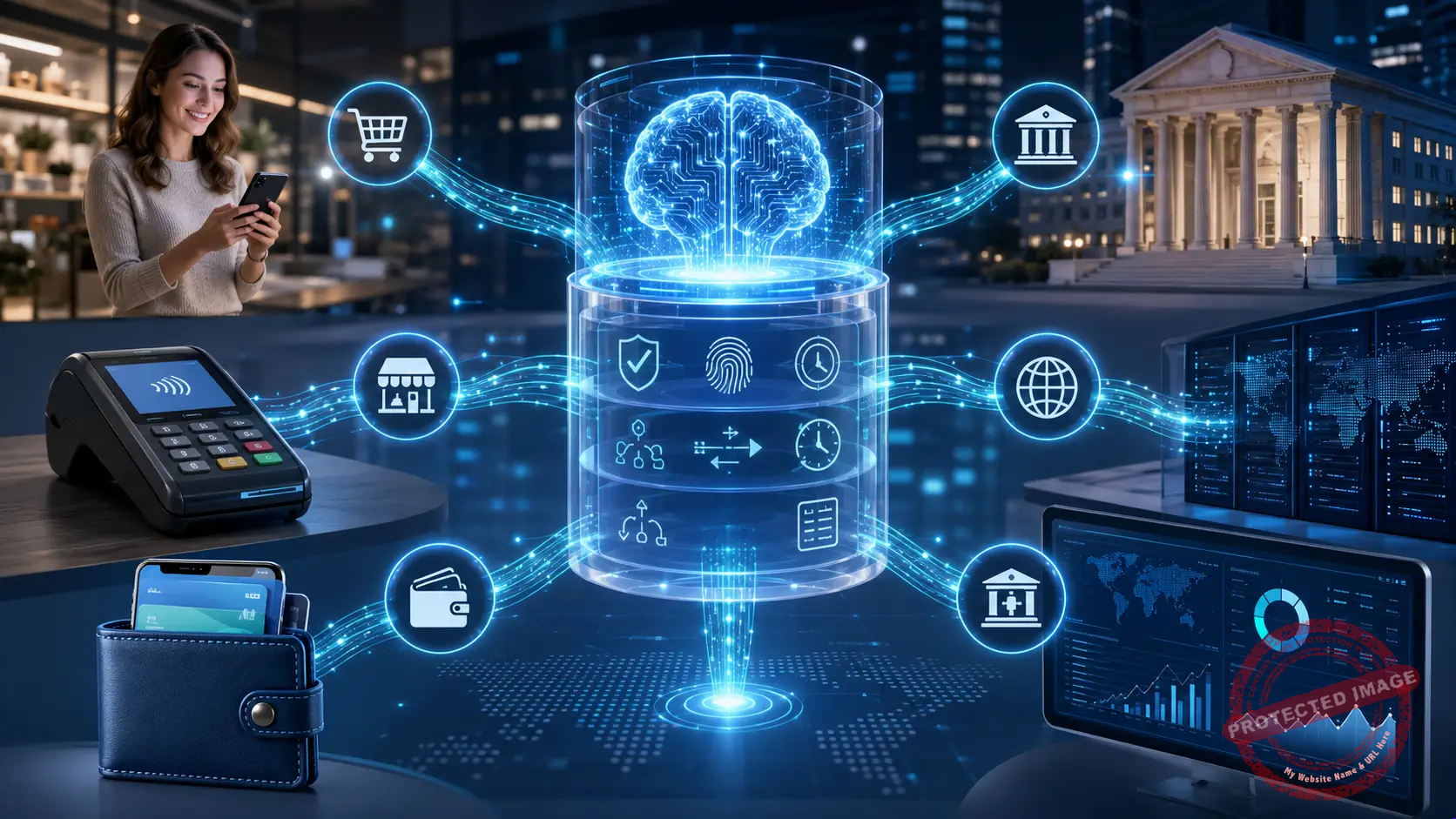
Payment processing is entering a new phase in 2026. The industry has spent years improving speed, acceptance, tokenization, embedded checkout, and fraud scoring. Those capabilities still matter, but the strategic question has changed: can a payment ecosystem safely authorize transactions initiated by software, machines, and AI agents without losing control of identity, risk, consent, and settlement?
That question now sits at the center of agentic commerce, real-time payments, B2B automation, and fraud prevention. The winners will not simply be the companies with the fastest rails or the cleverest AI models. They will be the organizations that can prove who is acting, what authority they have, what risk is present, and how funds should move across cards, bank rails, wallets, stablecoins, and account-to-account networks.
The Shift From Digital Payments To Delegated Payments
For years, digital commerce assumed the customer was present at checkout. Even with one-click payments, wallets, and stored credentials, the user still made the purchase decision.
Agentic commerce changes that. AI agents can search, compare, negotiate, reorder, subscribe, and eventually purchase on behalf of consumers or businesses. Visa Intelligent Commerce and Mastercard Agent Pay show where the market is going: embedding credentials, controls, authentication, and transaction rules into AI-initiated buying.
This is not just a checkout upgrade. It is a governance problem.
A payment processor, issuer, merchant, or platform must know whether an AI agent is acting under valid permission. It must understand spending limits, merchant restrictions, timing, product category, refund rights, dispute rules, and liability. In B2B settings, the challenge becomes even more serious: an autonomous purchasing workflow may affect procurement controls, treasury forecasting, working capital, tax documentation, and supplier risk.
The commercial upside is significant. Properly governed AI purchasing could reduce friction, improve conversion, automate replenishment, and streamline invoice-to-pay processes. But weak controls could create a new class of disputes: “the agent bought it, but did it have authority?”
Real-Time Rails Raise The Stakes
Instant payments are also changing the risk equation. FedNow enables participating financial institutions to support real-time, around-the-clock payments in the United States. Same Day ACH continues to expand, and Nacha has approved a future increase in the Same Day ACH per-payment limit to $10 million in 2027.
These developments matter for CFOs and accounts receivable teams because payment timing, liquidity visibility, and reconciliation can improve materially. Faster settlement can reduce uncertainty in collections, improve cash application, and support more dynamic treasury operations.
But speed compresses the risk window. A card transaction has authorization and dispute infrastructure. ACH has familiar operating rules and return processes. Instant payments create different expectations: once money moves, recovery can be harder. That means fraud scoring, identity verification, and transaction intent must happen before the payment is released.
In 2026, the strongest payment operations will not treat faster payments as a standalone rail decision. They will connect rail selection to risk, identity, customer value, cost, liquidity need, and recoverability.
Fraud Is Becoming Adaptive, Synthetic, And AI-Assisted
AI has improved fraud detection, but it has also improved fraud execution. Criminals can generate more convincing phishing messages, synthetic identities, fake supplier instructions, deepfake approvals, and automated account takeover attempts.
This is especially relevant for accounts receivable and B2B payment teams. The old fraud model focused heavily on stolen credentials and suspicious card behavior. The emerging model includes fake businesses, manipulated invoices, compromised vendor records, fraudulent payment instruction changes, and AI-generated social engineering.
Real-time adaptive fraud scoring is becoming essential. Static rules are too brittle. Risk systems need to evaluate behavioral signals, device intelligence, transaction context, identity confidence, historical payment behavior, and network-level patterns. The point is not to block more transactions. The point is to apply the right level of friction at the right moment.
For executives, the commercial implication is clear: fraud prevention must be measured against approval rates, customer experience, operational cost, and loss avoidance. A model that blocks legitimate customers damages revenue. A model that approves too freely damages trust and margin. The best systems will tune risk dynamically by transaction type, rail, customer segment, and identity confidence.
Digital Identity Becomes Payment Infrastructure
Passkeys, verified credentials, and digital identity wallets are becoming central to payment security. FIDO standards are important because they reduce reliance on passwords and support phishing-resistant authentication. That matters in consumer commerce, but it may matter even more in enterprise payments, where compromised credentials can lead to high-value losses.
The long-term direction is toward portable, verifiable trust. A consumer, business, device, AI agent, or machine may need to prove identity, authorization, and intent without exposing unnecessary sensitive data. This could support safer account opening, stronger checkout authentication, better supplier onboarding, and more reliable delegated purchasing.
However, identity will not be solved by one wallet, one network, or one standard. Fragmentation is likely. Enterprises should prepare for a multi-credential environment where identity assurance, payment authorization, and compliance workflows need to interoperate across platforms.
Payment Orchestration Moves From Cost Optimization To Decision Intelligence
Payment orchestration used to mean routing transactions for cost, uptime, and authorization performance. In 2026, orchestration is becoming a broader intelligence layer.
A modern orchestration system may decide whether a transaction should move by card, ACH, FedNow, wallet, RTP, stablecoin, or local alternative payment method. It may consider FX cost, settlement speed, fraud risk, customer preference, retry logic, issuer behavior, liquidity need, and reconciliation requirements.
For B2B payments, this is especially powerful. Treasury teams want better liquidity forecasting. AR teams want faster cash application. CFOs want lower processing cost and cleaner working capital visibility. Payment orchestration can connect these goals, but only if it is integrated with ERP, risk systems, customer data, banking partners, and reconciliation workflows.
The danger is platform dependency. If orchestration logic becomes a black box, companies may lose visibility into why payments are routed, declined, delayed, or subjected to extra controls. Executives should demand explainability, auditability, and portability from orchestration providers.
Strategic Actions For Payment Leaders
Payment leaders should focus on five moves.
First, build a delegated payments policy. Define when AI agents, machines, employees, customers, or suppliers can initiate payments, under what limits, and with what approval requirements.
Second, modernize fraud operations around adaptive scoring. Static rules alone will not handle AI-enabled fraud, synthetic identities, and real-time payment risk.
Third, connect identity strategy to payment strategy. Passkeys, verified credentials, and stronger authentication should be treated as revenue protection and conversion infrastructure, not just security projects.
Fourth, prepare AR and treasury teams for faster settlement. Faster rails only create value when cash application, exception handling, liquidity forecasting, and reconciliation can keep pace.
Fifth, evaluate orchestration as a strategic control layer. The goal is not merely cheaper routing. The goal is smarter decisions across risk, cost, speed, customer trust, and working capital.
The next phase of payments will be less visible to the customer but more complex behind the scenes. That is the paradox of 2026: payments are becoming more invisible at the experience layer and more intelligence-heavy at the infrastructure layer.
The companies that win will make money move faster, but they will also make authority, identity, risk, and intent more verifiable.
References
- Visa Intelligent Commerce: https://www.visa.com/en-us/solutions/intelligent-commerce
- Mastercard Agent Pay for Machines: https://www.mastercard.com/us/en/news-and-trends/press/2026/june/mastercard-launches-agent-pay-for-machines.html
- Federal Reserve, About the FedNow Service: https://www.frbservices.org/financial-services/fednow/about.html
- Nacha, Same Day ACH: https://www.nacha.org/same-day-ach
- FIDO Alliance, Passkeys and phishing-resistant authentication: https://fidoalliance.org/
Research and written by Peter Jonathan Wilcheck
15 Tag Words
15 Key Words
Post Disclaimer
The information provided in our posts or blogs are for educational and informative purposes only. We do not guarantee the accuracy, completeness or suitability of the information. We do not provide financial or investment advice. Readers should always seek professional advice before making any financial or investment decisions based on the information provided in our content. We will not be held responsible for any losses, damages or consequences that may arise from relying on the information provided in our content.

 AAPL
AAPL AMD
AMD CIS.HA
 DELL
DELL IBM
IBM INTC
INTC MSFT
MSFT GOOG
GOOG HPE
HPE NVDA
NVDA TSLA
TSLA TMC
TMC MSI
MSI NOK
NOK OPEAZZX