



AI assistants are moving from distant cloud services toward the devices we touch every day: phones, laptops, wearables, vehicles, cameras, appliances, and industrial sensors. That shift matters because the most useful personal AI is often built from the most sensitive context: location, routines, voice patterns, health signals, work habits, messages, images, and real-time surroundings.
This is where Edge AI becomes more than a deployment choice. It becomes the foundation for hyper-personalized computing.
Edge AI means AI inference happens close to where data is created, often directly on a device. Instead of sending every request to a cloud model, the system can process some tasks locally, respond faster, preserve more privacy, work offline, and reduce bandwidth demands. The cloud still matters, especially for heavy reasoning, large context windows, and model updates. But the center of gravity is changing.

Why Personal AI Fits Naturally at the Edge
A generic chatbot can live in the cloud. A truly personal assistant benefits from living closer to the user.
Imagine an assistant that learns your notification habits, adapts to your speech patterns, summarizes your day, filters distractions, recognizes when you are driving, and helps coordinate tasks across your phone, earbuds, watch, and laptop. Sending every signal to the cloud is not always practical or desirable. It can increase latency, consume bandwidth, drain battery, and raise privacy concerns.
On-device models help solve part of that problem. Apple has described foundation models built for Apple Intelligence across on-device and server contexts, while Android’s Gemini Nano documentation emphasizes on-device generative AI through AICore for lower-latency local use cases. Qualcomm’s AI Hub also reflects the broader developer shift by offering optimized models for deployment on supported devices.
The practical takeaway is simple: the future assistant will not be “edge only” or “cloud only.” It will be hybrid. Fast, private, context-sensitive tasks will happen locally. Heavier tasks will still go to cloud systems when the user permits it or when the job genuinely requires more compute.
What Hyper-Personalization Actually Means
Hyper-personalized Edge AI is not just “recommendations, but faster.” It means AI systems adapt to an individual user, environment, and moment.
That can include:
- A phone that summarizes notifications differently during work, travel, or family time
- A hearing device that adapts to a user’s voice environment in real time
- A fitness wearable that adjusts coaching based on heart-rate patterns and recovery
- A vehicle assistant that learns driver preferences without uploading raw cabin data
- A factory sensor that recognizes equipment anomalies locally before downtime occurs
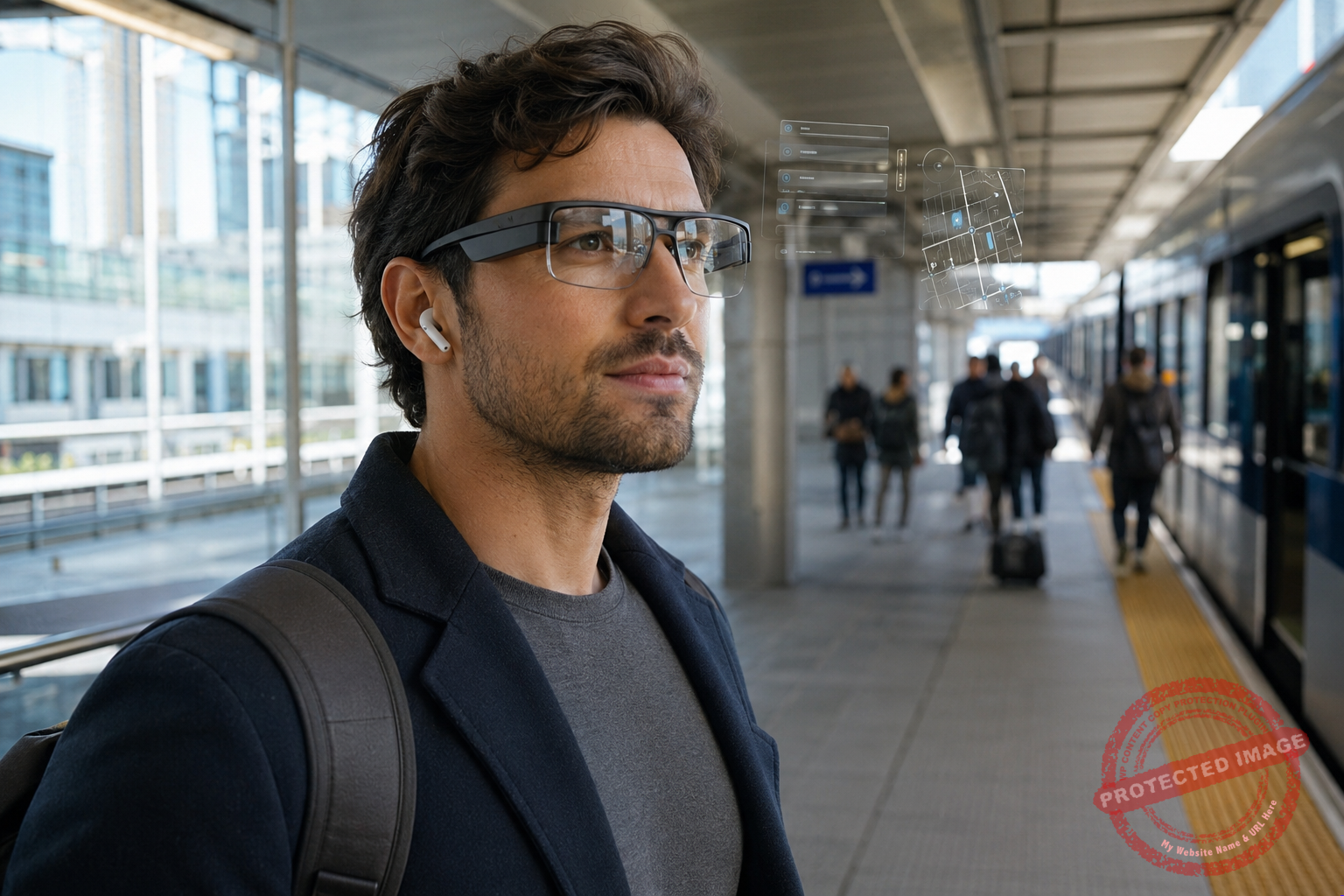
- AR glasses that provide private contextual reminders based on what the user sees
The strongest use cases share one pattern: the data is local, time-sensitive, and personal. That is exactly where Edge AI has an advantage.
The Tradeoff: Local Intelligence Has Limits
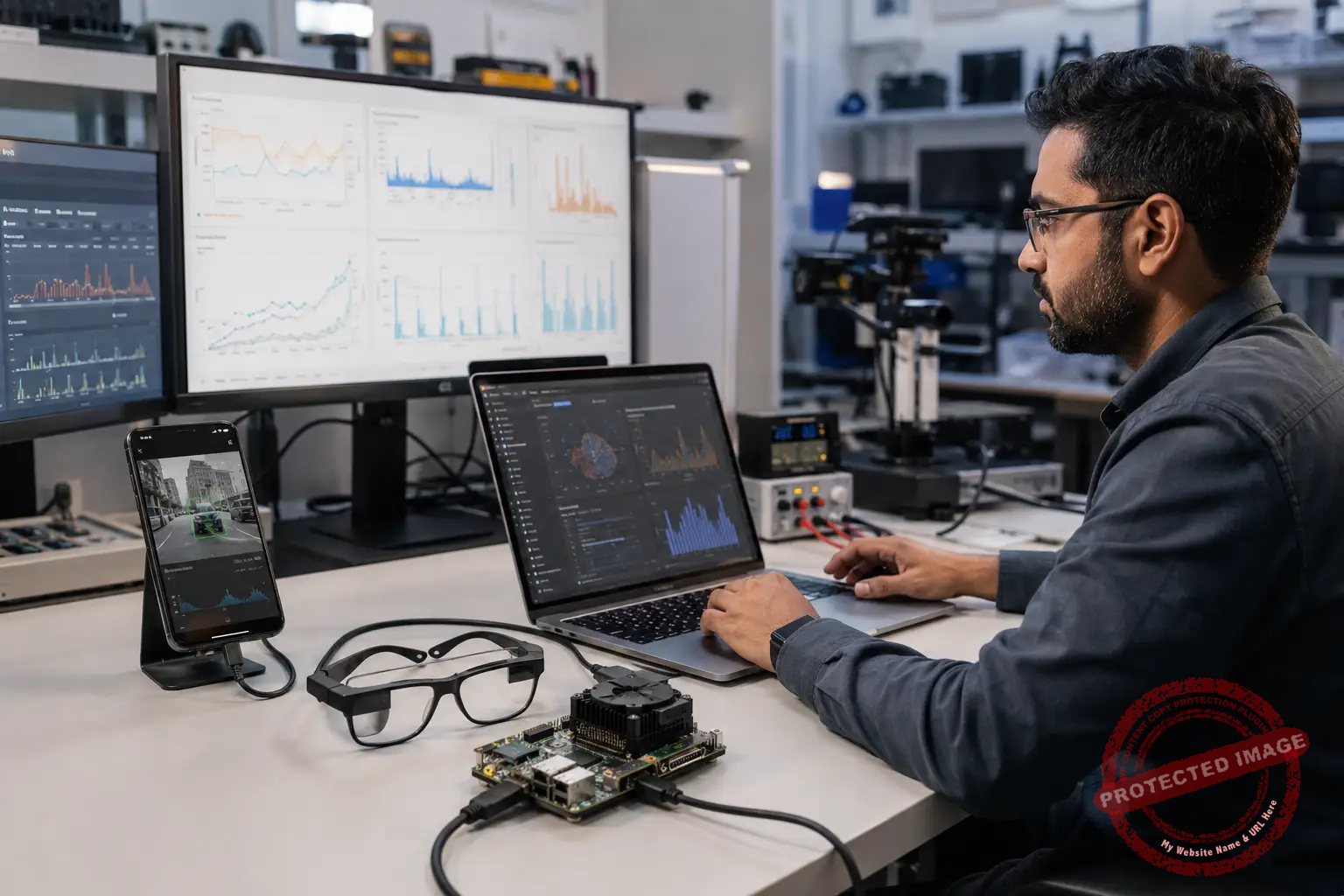
Edge AI is powerful, but it is not magic. Devices have limited compute, memory, energy, and thermal capacity. A phone or wearable cannot always run the same model as a cloud data center. Developers often need to compress, quantize, prune, distill, or specialize models so they can run efficiently.
That means edge systems usually make tradeoffs:
- Lower latency, but smaller models
- Better privacy, but less centralized data for improvement
- Offline functionality, but less access to fresh world knowledge
- Lower cloud cost, but more device-specific engineering
- More personalization, but more responsibility for user control and transparency
This is why small language models, TinyML models, and optimized runtimes matter. ONNX Runtime, for example, describes on-device training as a way to personalize models locally on edge devices. That points toward a future where devices do not merely run inference locally; they may also adapt locally.
Privacy Is the Selling Point, But Trust Is the Hard Part
Edge AI is often promoted as privacy-friendly because raw data can stay on the device. That is a real advantage, but it is not a complete trust strategy.
A local model can still make mistakes. It can infer sensitive patterns. It can act too aggressively. It can personalize in ways users do not understand. If a system quietly changes what it shows, recommends, blocks, or prioritizes, users need visibility and control.
This is why explainable Edge AI matters. A useful assistant should be able to answer questions such as:
- Why did you silence this notification?
- Why did you recommend this route?
- Why did you classify this activity as unusual?
- What data did you use?
- Can I turn this behavior off?
NIST’s Generative AI Risk Management Profile is a useful reminder that AI risk is not only about model accuracy. It also includes security, transparency, misuse, measurement, governance, and human oversight. Those concerns become sharper when AI becomes more personal and more proactive.
Federated Learning and the Local Data Vault
One promising pattern is federated learning, where devices can help improve models without sending raw personal data to a central server. Instead of centralizing the data, the system can train or tune locally and share model updates in a privacy-preserving way.
This does not eliminate risk. Model updates can still leak information if systems are poorly designed. Stronger approaches may combine federated learning with secure aggregation, differential privacy, and clear consent models. But conceptually, federated learning fits the direction of hyper-personalized Edge AI: keep sensitive context close, share less, and improve carefully.
Another emerging idea is the personal data vault. In this model, the user’s device or trusted local environment becomes the control point for preferences, history, identity, and context. Rather than dozens of cloud services each building fragmented profiles, a user-owned layer could mediate what is shared, when, and why.
That is still an emerging direction, not a solved standard. But it captures the deeper promise of Edge AI: personalization with more user agency.
Where Edge AI Works Best Today
Edge AI is most compelling when at least one of these conditions is true:
- The task needs an immediate response
- The data is sensitive
- Connectivity is unreliable
- Bandwidth is expensive
- The system runs continuously
- The environment is physical and sensor-rich
- The AI output is useful even when it is narrow or specialized
Examples include wake-word detection, camera-based quality inspection, driver monitoring, predictive maintenance, local document summarization, offline translation, hearing enhancement, smart-home automation, and wearable health insights.
The less compelling cases are tasks that need broad world knowledge, deep reasoning, huge context windows, or constantly updated external information. Those still tend to favor cloud models or hybrid systems.
The Next Step: Agentic Edge AI
The next frontier is agentic behavior: AI that does not just answer, but acts.
On the edge, that could mean a personal AI that rearranges notifications, prepares a reply draft, adjusts a smart-home routine, summarizes a meeting locally, or coordinates between apps. The opportunity is enormous, but so is the need for guardrails.
For agentic Edge AI to work well, systems need:
- Clear permission boundaries
- Local audit trails
- Reversible actions
- Explainable decisions
- Energy-aware operation
- Secure model and data storage
- Thoughtful fallback to the cloud
The goal should not be an assistant that acts everywhere without asking. The goal should be an assistant that knows when local context is enough, when user confirmation is needed, and when a cloud model is worth invoking.
Conclusion: The Best AI Will Feel Local
The future of personal AI will be shaped by a practical balance: cloud intelligence for scale and depth, edge intelligence for speed, privacy, resilience, and context.
Hyper-personalized Edge AI will not succeed because it sounds futuristic. It will succeed when it quietly makes devices more useful without making people feel watched, exposed, or out of control. The winning systems will be fast enough to feel natural, private enough to earn trust, and transparent enough that users understand what is happening.
Edge AI brings intelligence closer to the person. The next challenge is making sure it also brings control closer to the person.
Researched and written by: Peter Jonathan Wilcheck
5 Reference Sites
- Apple Machine Learning Research: https://machinelearning.apple.com/research/introducing-third-generation-of-apple-foundation-models
- Android Developers, Gemini Nano: https://developer.android.com/ai/gemini-nano
- Qualcomm AI Hub: https://aihub.qualcomm.com/
- ONNX Runtime On-Device Training: https://onnxruntime.ai/docs/get-started/training-on-device.html
- NIST Generative AI Risk Management Profile: https://www.nist.gov/publications/artificial-intelligence-risk-management-framework-generative-artificial-intelligence
Post Disclaimer
The information provided in our posts or blogs are for educational and informative purposes only. We do not guarantee the accuracy, completeness or suitability of the information. We do not provide financial or investment advice. Readers should always seek professional advice before making any financial or investment decisions based on the information provided in our content. We will not be held responsible for any losses, damages or consequences that may arise from relying on the information provided in our content.
 AAPL
AAPL AMD
AMD CIS.HA
 DELL
DELL IBM
IBM INTC
INTC MSFT
MSFT GOOG
GOOG HPE
HPE NVDA
NVDA TSLA
TSLA TMC
TMC MSI
MSI NOK
NOK OPEAZZX