


Manufacturing & Industry 4.0 Deployments: Why Edge AI Cameras and Security Edge Data Lakes Are Becoming Factory-Floor Infrastructure.
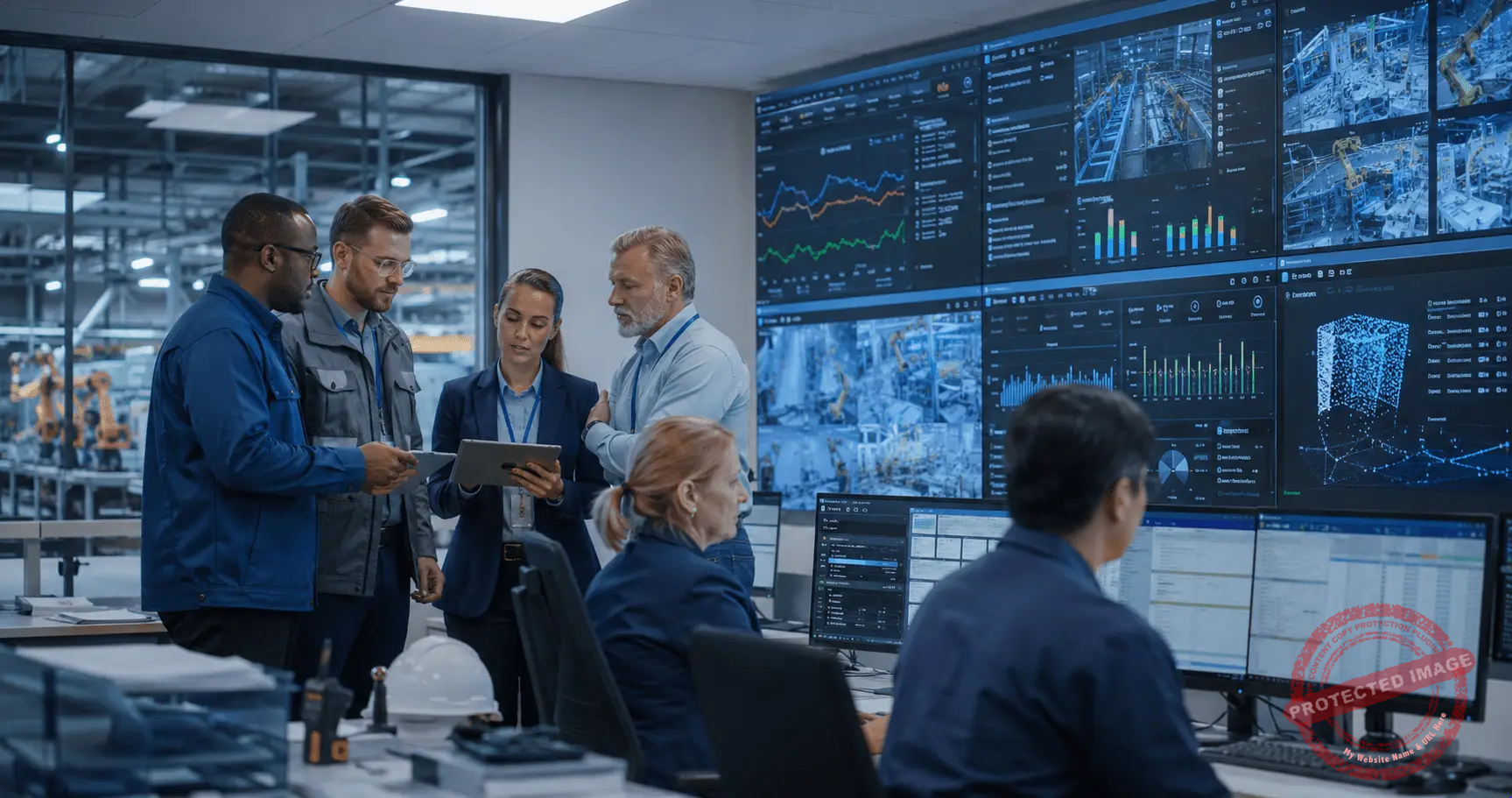
Manufacturing leaders are no longer treating Edge AI as a futuristic experiment. In Industry 4.0 deployments, the practical center of gravity is moving toward edge camera systems, local analytics, and secure edge data lakes that keep critical operational intelligence close to the machines, workers, and production lines that need it most.
The reason is simple: factories do not operate at cloud speed. A production line cannot always wait for raw video to travel to a remote data center, be analyzed, and return with an instruction. A robot cell, conveyor, weld station, bottling line, or semiconductor inspection system often needs answers immediately. Is this part defective? Is this motor vibrating outside its normal range? Did a safety zone violation occur? Is a camera seeing the first sign of tool wear before scrap rates rise?
That is where Edge AI becomes operationally important. Instead of sending every image, vibration reading, thermal signal, or acoustic pattern to the cloud, manufacturers run inference locally. Edge inference means an AI model analyzes data near its source, often inside an industrial camera, edge server, gateway, or ruggedized factory-floor computer. The cloud still matters for long-term storage, fleet management, model training, reporting, and enterprise analytics. But the first decision increasingly happens at the edge.
The Shift From Inspection After the Fact to Quality Control in the Moment
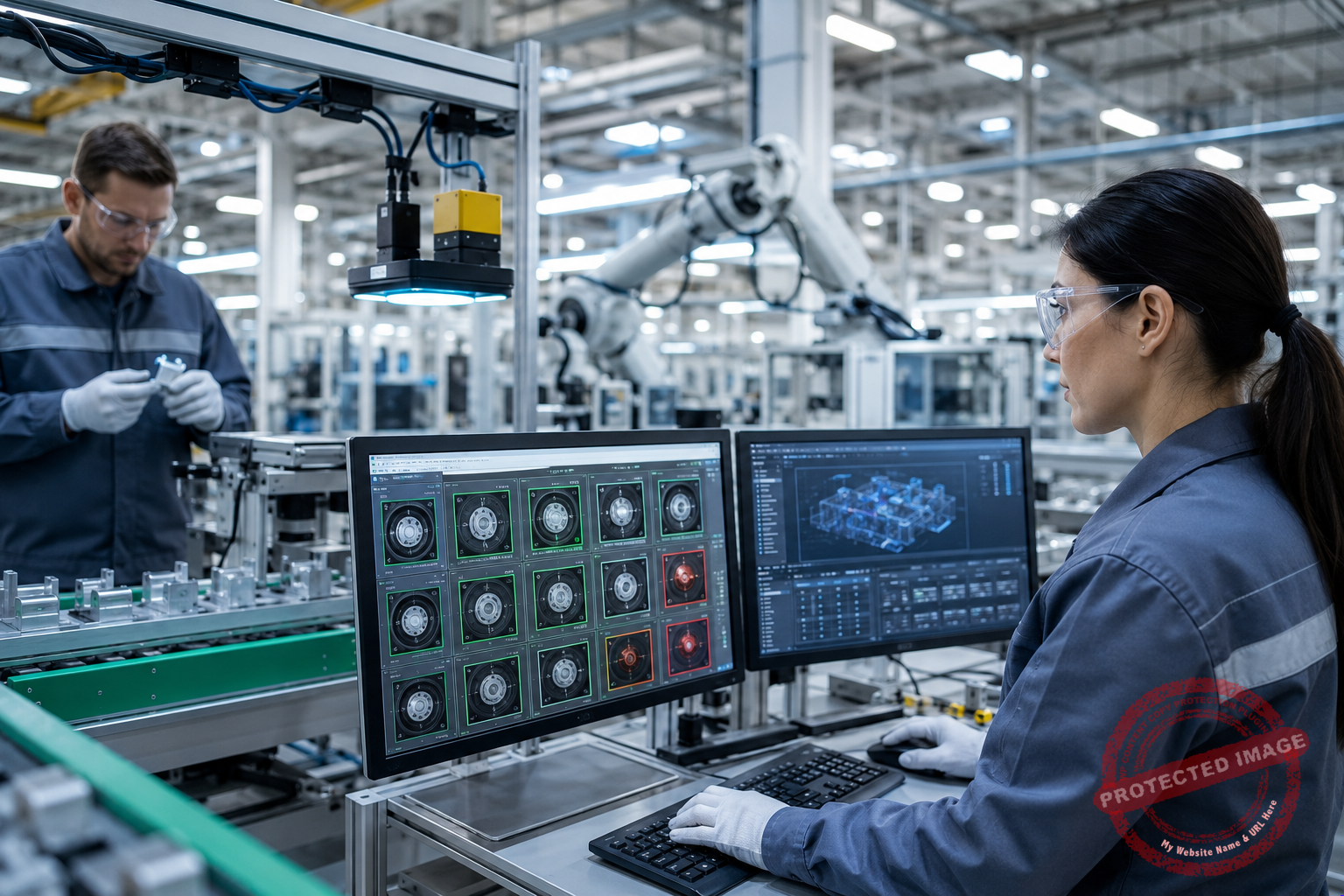
Traditional quality control often happens too late. A sample may be checked at the end of a batch, or a human inspector may review parts after several production steps have already added cost. In high-volume manufacturing, even a short delay can turn a small process deviation into thousands of defective units.
Edge camera systems change the timing. A camera can inspect each part as it moves through the line, while a local AI model checks surface defects, alignment, dimensions, labeling, fill levels, weld consistency, or missing components. If the model detects an issue, the system can reject the part, alert an operator, slow a machine, or trigger a root-cause workflow before the problem spreads.
This is especially useful where speed, bandwidth, and reliability matter. A single high-resolution industrial camera can generate a large stream of visual data. Multiply that by dozens or hundreds of cameras across several plants, and continuous cloud upload becomes expensive and fragile. Local processing reduces bandwidth demand because the system can store or transmit only the useful data: defect images, event clips, metadata, timestamps, confidence scores, and process context.
The point is not to remove humans from quality control. The better goal is to give engineers and operators sharper visibility. Edge AI catches repetitive visual patterns at machine speed, while people handle judgment, investigation, process improvement, and exception handling.
What a Security Edge Data Lake Actually Means
The phrase “security edge data lake” can sound like another architecture buzzword, but the idea is practical. A data lake is a flexible repository that can hold many types of data, including structured machine readings, unstructured images, video clips, logs, maintenance records, alerts, and metadata. An edge data lake brings some of that capability closer to the factory floor.
In manufacturing, this matters because the most valuable operational data is often distributed across cameras, programmable logic controllers, historians, SCADA systems, maintenance systems, robotics platforms, and safety systems. A security edge data lake can collect and govern local data so that plant teams can investigate events quickly without depending entirely on a distant cloud connection.
The “security” part is essential. Manufacturing data can expose intellectual property, production methods, customer designs, worker activity, facility layouts, and equipment vulnerabilities. A useful edge data lake should therefore include access control, encryption, audit logs, retention policies, segmentation between IT and OT networks, and clear rules for what gets stored locally versus sent to the cloud.
For example, a factory might keep raw video near the line for a short retention period, store defect clips for model improvement, send summarized metadata to an enterprise data platform, and preserve security-relevant events for compliance review. This layered approach supports speed without turning the plant into an unmanaged pile of sensitive video.
Predictive Maintenance Moves Closer to the Machine
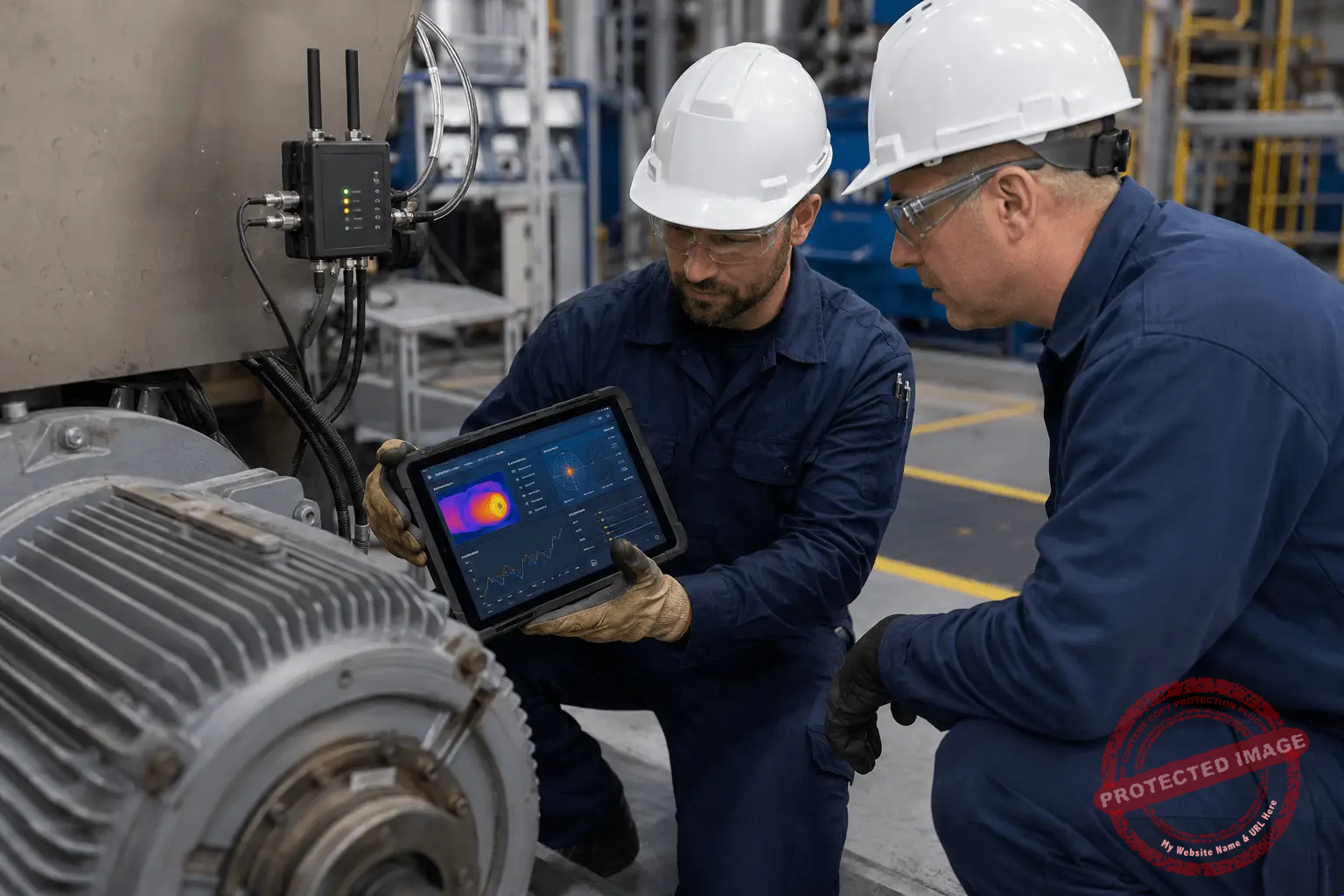
Predictive maintenance is another major driver. In simple terms, predictive maintenance uses operational data to estimate when equipment is likely to need service. Instead of replacing a part on a fixed schedule, or waiting until it fails, teams monitor signals such as vibration, temperature, pressure, current draw, acoustic emissions, oil quality, and machine cycle behavior.
Edge AI improves this workflow because many maintenance signals are time-sensitive. If a pump suddenly changes vibration patterns, a motor overheats, or a bearing starts producing abnormal acoustic signatures, local inference can detect the anomaly quickly. The system can alert technicians, create a maintenance ticket, or reduce machine speed before a small issue becomes a line stoppage.
This does not mean every predictive maintenance model must live entirely at the edge. A strong architecture often uses a hybrid model. The edge handles fast anomaly detection and local alerts. The cloud or central platform handles historical analysis, cross-factory comparisons, model retraining, spare-parts optimization, and executive reporting. That combination gives manufacturers both immediate reaction and long-range learning.
Why Enterprises Are Pushing These Systems Now
Several forces are converging. First, industrial cameras, sensors, and edge accelerators are more capable than they were a few years ago. AI models can now run on compact hardware with lower latency and reasonable power consumption. Second, manufacturers have learned that moving all raw data to the cloud can be costly, especially for video-heavy use cases. Third, supply-chain pressure and labor shortages make downtime, scrap, and rework more painful.
There is also a governance lesson. Many early Industry 4.0 pilots failed to scale because data was trapped in isolated systems. A camera pilot might work on one line but not integrate with maintenance records. A vibration model might detect anomalies but fail to connect with spare-parts inventory or technician scheduling. A dashboard might look impressive but not trigger action.
The newer deployment pattern is more integrated. Edge cameras and sensors generate data. Local systems process urgent events. Edge repositories hold short-term operational evidence. Cloud data platforms aggregate and contextualize what matters across facilities. Maintenance, quality, engineering, and operations teams then work from shared signals instead of disconnected alerts.
That is the real Industry 4.0 story: not just smarter devices, but better coordination between physical operations and digital intelligence.
The Architecture in Plain English
A practical manufacturing Edge AI deployment usually has several layers.
At the device layer, cameras, sensors, PLCs, robots, and machines produce raw operational data. At the edge compute layer, industrial PCs, gateways, smart cameras, or local servers run AI inference. At the local data layer, a secure edge repository stores event data, clips, logs, and metadata for fast plant-level access. At the integration layer, systems connect to MES, CMMS, ERP, historians, and quality platforms. At the cloud or enterprise layer, teams train models, compare performance across sites, manage device fleets, and build executive analytics.
Each layer has a different job. The mistake is expecting one layer to do everything. The edge is best for low-latency decisions, local resilience, bandwidth reduction, and privacy-sensitive processing. The cloud is best for large-scale learning, collaboration, model lifecycle management, and long-term optimization.
Good deployments are honest about this division of labor.
The Hard Parts: Accuracy, Drift, and Trust
Edge AI in manufacturing is powerful, but it is not magic. Visual inspection models can struggle when lighting changes, materials vary, cameras move, lenses get dirty, or new product versions appear. Predictive maintenance models can produce false alarms if they do not understand operating context, such as recipe changes, shift patterns, speed changes, or seasonal conditions.
This is why data context matters. A vibration spike may be normal during startup but suspicious during steady production. A visual blemish may matter on a medical device but not on internal packaging. A model that performs well in one plant may need tuning in another.
Trust also depends on explainability. Operators need to know why the system flagged a defect or maintenance risk. A confidence score alone is not always enough. Useful systems show the image region, signal trend, historical comparison, asset context, and recommended next step.
Edge AI adoption works best when plant teams are involved early. The people who understand machines, materials, and process behavior should help define labels, thresholds, workflows, and escalation rules.
Security Must Be Designed In, Not Added Later
As factories connect more cameras, sensors, and edge computers, the attack surface grows. NIST’s Industry 4.0 guidance highlights the cybersecurity risk that comes with greater interconnectivity, and that warning is especially relevant for AI-enabled industrial systems.
Security should include device identity, patch management, network segmentation, encrypted data movement, role-based access, secure model deployment, and audit trails. Manufacturers should also decide who can view video, export clips, change model thresholds, retrain models, or connect edge systems to enterprise platforms.
A security edge data lake should never become a forgotten local archive. It needs lifecycle rules. Some data should expire quickly. Some should be retained for compliance or quality investigations. Some should be anonymized or summarized before leaving the facility. The goal is to preserve operational value while reducing unnecessary exposure.
The Business Case: Less Scrap, Less Downtime, Faster Learning
The strongest business cases usually start with a painful operational problem. A line has recurring defects. A machine causes unplanned downtime. Manual inspection cannot keep up. Engineers lack evidence after a fault. Maintenance teams replace parts too early or too late. Safety teams need faster incident review.
Edge AI helps when the deployment connects detection to action. A defect alert should lead to containment. A maintenance prediction should lead to scheduling. A security event should lead to investigation. A recurring anomaly should feed process improvement. Without workflow integration, even accurate AI becomes another dashboard.
Enterprises are aggressively implementing these systems because the factory floor is becoming more data-rich and less tolerant of delay. Edge cameras and local data lakes give manufacturers immediate perception. Predictive maintenance gives them foresight. Enterprise data platforms give them scale.
The winning approach is not edge versus cloud. It is edge for immediacy, cloud for learning, and secure data architecture for trust.
My final thoughts
Manufacturing and Industry 4.0 deployments are entering a more practical phase. Edge AI cameras are moving quality control from delayed inspection to instant detection. Security edge data lakes are giving plants local evidence, governed access, and faster investigation. Predictive maintenance is shifting from calendar-based service to real-time equipment intelligence.
The promise is not a fully autonomous factory overnight. The real opportunity is more grounded and more valuable: fewer defects, fewer surprise failures, better use of bandwidth, stronger data governance, and faster decisions where production actually happens.
Reference Sites:
- NIST – Advanced Manufacturing Technology and Industry 4.0 Services: https://www.nist.gov/mep/advanced-manufacturing-technology-and-industry-40-services
- Microsoft Learn – Predictive Maintenance Reference Architecture: https://learn.microsoft.com/en-us/fabric/real-time-intelligence/architectures/predictive-maintenance
- NVIDIA Metropolis – Intelligent Vision AI Platform: https://www.nvidia.com/en-us/autonomous-machines/intelligent-video-analytics-platform/
- AWS – Guidance for Industrial Data Fabric on AWS: https://docs.aws.amazon.com/solutions/industrial-data-fabric-on-aws/
- Google Cloud – Manufacturing Data Engine Overview: https://docs.cloud.google.com/manufacturing-data-engine/docs/overview
Researched and Written by Peter Jonathan Wilcheck
Some questions for the for the industry readers
What is your opinion: should manufacturers prioritize edge AI for quality control first, predictive maintenance first, or build both around a shared data foundation from the beginning?
Please add your personal commentary on where you think Edge AI will create the biggest measurable impact on the factory floor.
Post Disclaimer
The information provided in our posts or blogs are for educational and informative purposes only. We do not guarantee the accuracy, completeness or suitability of the information. We do not provide financial or investment advice. Readers should always seek professional advice before making any financial or investment decisions based on the information provided in our content. We will not be held responsible for any losses, damages or consequences that may arise from relying on the information provided in our content.

 AAPL
AAPL AMD
AMD CIS.HA
 DELL
DELL IBM
IBM INTC
INTC MSFT
MSFT GOOG
GOOG HPE
HPE NVDA
NVDA TSLA
TSLA TMC
TMC MSI
MSI NOK
NOK OPEAZZX