


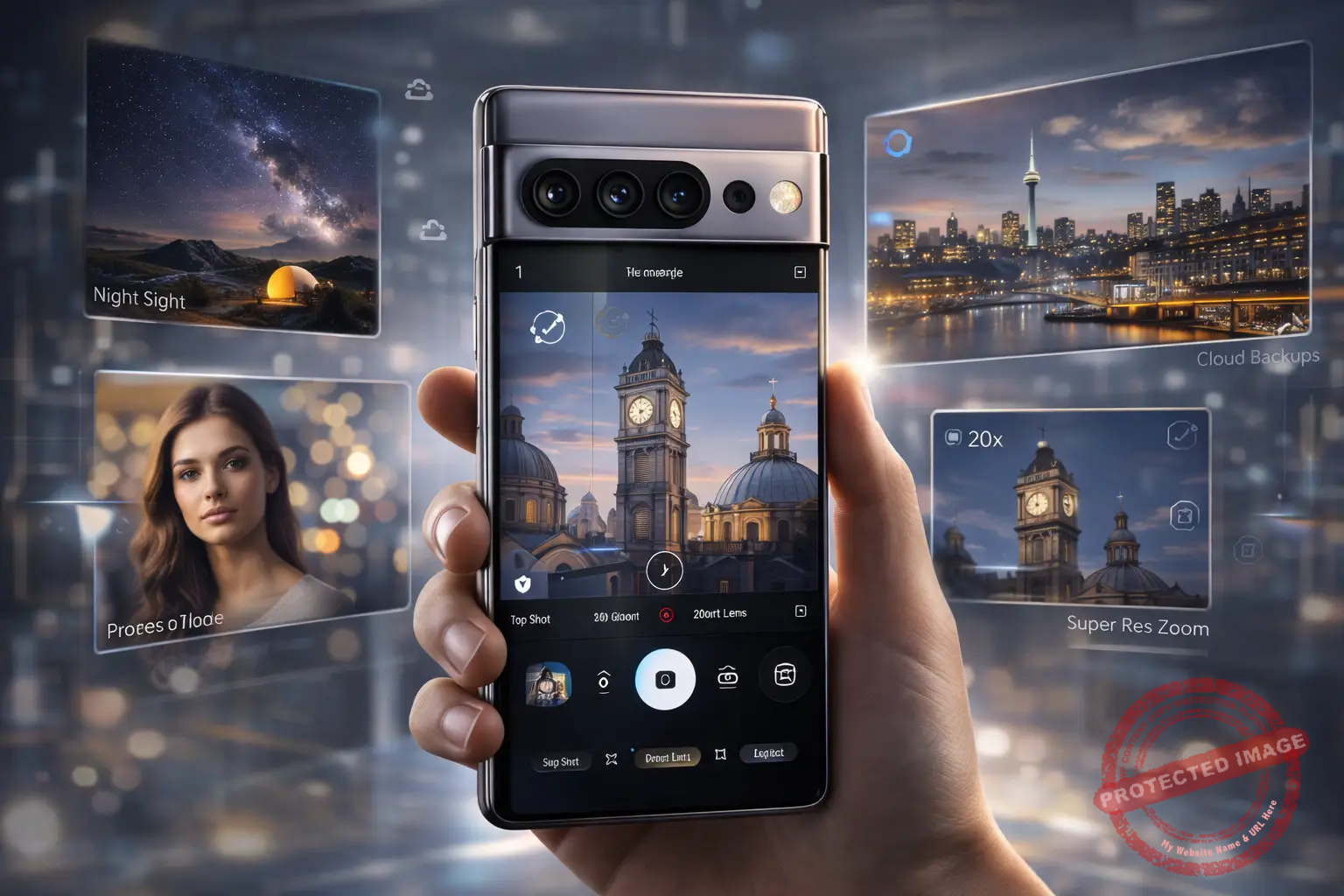
Discover how Google Pixel is transforming mobile photography with cutting-edge technology.
Google’s Pixel smartphones are renowned for their camera capabilities, setting new standards in mobile photography through remarkable technological advancements. As the digital world evolves, the photographic prowess of these devices continues to reach unprecedented heights, creating an enthusiast’s delight.
Revolutionary Camera Technology in Google Pixel
Google Pixel’s approach to camera technology has been nothing short of revolutionary. The foundation of this success lies in their focus on computational photography—using algorithms and software to enhance image quality far beyond the limits of traditional hardware alone. The latest models incorporate advanced sensors and autofocus systems that ensure precise detail and clarity. These sensors, combined with Google’s proprietary software, allow for features such as HDR+ and Super Res Zoom, which maintain sharpness even when the subject is at a distance. The innovation doesn’t stop here; Google’s Pixel cameras have introduced a unique fusion of machine learning and imaging systems, creating a new benchmark in smartphone photography. These advancements ensure that even with challenging lighting or complex scenes, every photo captured is rich in detail and vibrant in color, offering professional-grade quality at the touch of a button.
Groundbreaking AI Features for Photography
At the heart of Google Pixel’s photographic innovations are its groundbreaking AI features—tools that redefine what’s possible with a smartphone camera. Google leverages advanced machine learning to analyze millions of images, training its algorithms to enhance various aspects of photography. This AI-driven approach allows for real-time adjustments to lighting, color balance, and exposure, enabling users to take superb photos effortlessly. Features like Top Shot, which automatically recommends the best image from a burst, and Dual Exposure Controls, providing precise control over brightness and shadows, exemplify the seamless integration of AI into the photography process. The AI also powers features like Portrait Mode, which intelligently blurs the background while keeping the subject sharp, and Motion Auto Focus, which ensures moving subjects remain in focus. These AI enhancements make it easy for photographers of all skill levels to capture images that are not only crisp and clear but also artistically compelling, setting a new global standard for smartphone photography.
Enhanced Low-Light and Night Mode Capabilities
One of the standout features of the Google Pixel camera is its enhanced low-light and night mode capabilities, which push the boundaries of what’s achievable in dim environments. Google’s technological advancements have allowed users to capture stunningly clear and vivid photos even in near darkness. The Night Sight feature exemplifies this capability, using sophisticated algorithms that merge multiple exposures to brighten images without introducing noise or losing detail. This low-light prowess is bolstered by the use of machine learning, which helps the camera distinguish between different elements in the scene, fine-tuning the final image to appear as though it was shot in more favorable lighting conditions. Furthermore, Google’s continual improvements in optical image stabilization reduce blurriness in handheld shots taken at night. These enhancements ensure that whether capturing a city skyline at dusk, a starry night, or a candlelit dinner, the Google Pixel elevates smartphone photography to new levels, turning every photo opportunity into a visual masterpiece.
Seamless Integration with Google Services
The integration of Google Pixel devices with Google’s suite of services offers users a cohesive and intuitive photography experience. By leveraging the power of Google Photos, Pixel owners enjoy unlimited storage options for their images, automatically backed up and organized through intuitive AI-powered sorting mechanisms. This ensures that photos are not only safely stored in the cloud but also easily retrievable through advanced search capabilities. Google Lens, another integrated feature, adds a layer of interactivity to images, allowing users to identify objects, translate text, and even learn about landmarks directly from their photos. The seamless connection to Google Assistant further enhances the user experience, enabling hands-free operation and voice-activated commands to quickly capture photos or share them with contacts. This seamless integration ensures that every photo taken on a Google Pixel device is not just a static image but part of a dynamic ecosystem, enhancing the value and functionality of every shot captured.
Impact on the Smartphone Photography Landscape
Google’s advancements in camera technology and AI integration have significantly influenced the landscape of smartphone photography, redefining consumer expectations and industry standards. Pixel’s emphasis on computational photography has driven unprecedented growth in the capabilities of other smartphone cameras, forcing competitors to innovate rapidly and embrace similar technologies. As a result, features that were once exclusive to dedicated cameras, like professional-level editing tools and advanced autofocus systems, are now commonplace in the consumer market. Additionally, Google’s focus on user-friendly AI enhancements has democratized photography, allowing individuals with varying skill levels to achieve exceptional results effortlessly. This widespread accessibility has led to a cultural shift where everyday moments are increasingly captured, shared, and appreciated, impacting how users interact with visual media. Furthermore, Google’s commitment to seamless service integration has set a benchmark for user experience, encouraging an ecosystem approach that many other manufacturers strive to emulate. As Google continues to push the boundaries, the ripple effects of its innovations will undoubtedly continue to herald new trends in how we capture, edit, and perceive images in our daily lives.
Contributing Editors:
Benoit Leduc, Co-Editor, Montreal, Quebec.
Peter Jonathan Wilcheck, Co-Editor, Miami, Florida.
#GooglePixel, #Pixel, #TeamPixel,#ShotOnPixel,#MadeByGoogle, #Google, #Android, #Photography, #MobilePhotography, #PixelPhotography, #Tech, #Smartphone,
#PhonePhotography, #Teampixel, #ShotByPixel,
Post Disclaimer
The information provided in our posts or blogs are for educational and informative purposes only. We do not guarantee the accuracy, completeness or suitability of the information. We do not provide financial or investment advice. Readers should always seek professional advice before making any financial or investment decisions based on the information provided in our content. We will not be held responsible for any losses, damages or consequences that may arise from relying on the information provided in our content.

 AAPL
AAPL AMD
AMD CIS.HA
 DELL
DELL IBM
IBM INTC
INTC MSFT
MSFT GOOG
GOOG HPE
HPE NVDA
NVDA TSLA
TSLA TMC
TMC MSI
MSI NOK
NOK ECDH26.CME
 OPEAZZX