


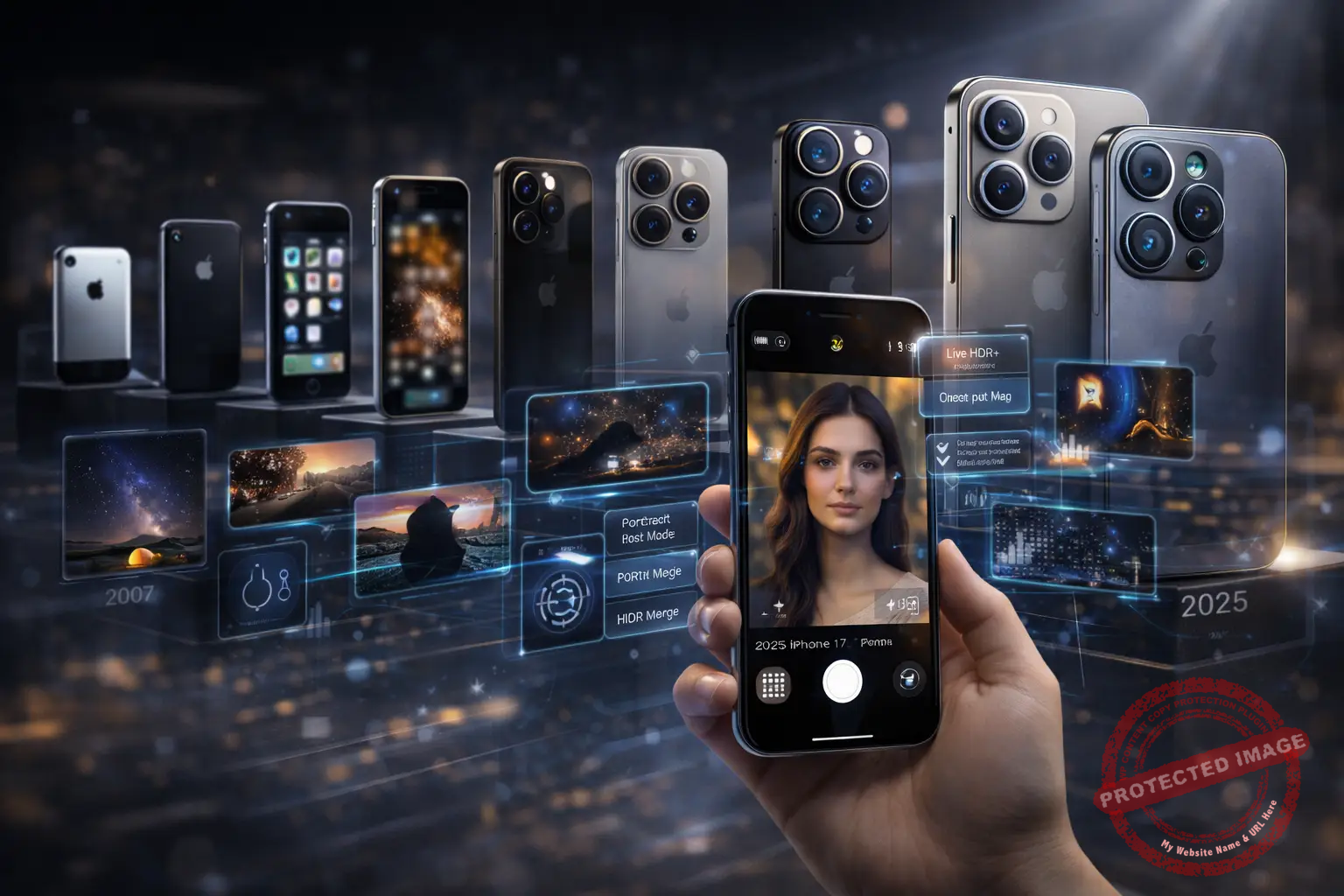
Exploring the groundbreaking evolution of camera technology in Apple iPhones.
Apple has consistently pushed the envelope in smartphone camera technology, setting standards that others in the industry aspire to match. This strategy of relentless innovation has been integral to the evolution of the iPhone, which has become synonymous with cutting-edge photography. Over the years, Apple has introduced remarkable changes that have fundamentally transformed how users experience mobile photography.
Evolution of Camera Technology in Apple Phones
The journey of iPhone cameras from their modest beginnings to becoming powerhouse imaging tools is nothing short of remarkable. Early models, like the original iPhone in 2007, featured basic cameras, sufficient for casual snapshots. However, as iPhones evolved, so did their photographic capabilities. Apple introduced the rear 8 MP iSight camera with the iPhone 4S, enhancing both image quality and user experience substantially. The real game-changer came with the iPhone 7 Plus, which featured a dual-camera system, pioneering the concept of portrait mode with its depth-of-field effect.
From One Lens to Many
With each generation, Apple has added new layers of complexity to its camera systems. The iPhone X introduced dual optical image stabilization. The iPhone 11’s wide-angle and night mode features provided users with more creative options and challenged traditional photography boundaries. The leap continued with the iPhone 12 Pro models, which included LiDAR scanners to improve autofocus in low light, offering professionals a suite of tools previously only found in high-end DSLRs.
Emphasis on Computational Photography
One of the defining features of Apple’s camera evolution is its focus on computational photography. Each new iPhone model boasts improved software that enhances image processing, from advanced HDR to Deep Fusion technology, which uses machine learning to render textures and details with unprecedented clarity. With the ever-blurring line between hardware and software, these advancements have turned every iPhone into a powerful photographic instrument, seamlessly integrating user-friendly features with professional-grade outputs.
Innovations in Lens and Sensor Design
With each iteration of the iPhone, Apple has introduced significant enhancements in lens and sensor technology, ensuring that their cameras remain at the forefront of mobile photography. The transition from standard plastic lenses to advanced six-element lenses has drastically improved image sharpness and clarity. Besides, the introduction of larger sensors across their models has revolutionized the way iPhones capture light, allowing for brighter images with reduced noise even in challenging low-light conditions. One of the most impactful advancements was the implementation of the larger 12 MP sensor, which not only improved pixel density but also enhanced dynamic range, providing more lifelike photos. Furthermore, the incorporation of sapphire glass coverings has added durability, protecting these high-performance lenses from scratches and abrasions.
Software Enhancements and AI Integration:
Software has played a pivotal role in transforming the camera capabilities of the iPhone into a powerhouse of mobile photography. Apple’s emphasis on integrating artificial intelligence (AI) has been central to this transformation. With the introduction of the A13 Bionic chip, Apple harnessed its neural engine to execute real-time photo and video analysis, enhancing the iPhone’s ability to process images with exceptional precision. Features like Smart HDR, Deep Fusion, and Night Mode are testaments to the synergy between hardware and software, allowing users to capture lifelike photos regardless of lighting conditions.
AI-Powered Photography Features:
Comprised of billions of operations, Apple’s photography features leverage AI to deliver unrivaled quality. Smart HDR employs machine learning to balance shadows and highlights through meticulous adjustments. Deep Fusion uses AI to improve texture and detail by combining multiple images pixel-by-pixel. Night Mode acknowledges low-light environments, allowing the iPhone camera to autonomously sense ambient conditions and adjust exposure times for optimal image quality, all powered by AI predictions and adaptations.
Portrait and Face Recognition Enhancements
Apple’s software advancements have notably refined the Portrait Mode, now capable of recognizing and emphasizing subjects while naturally blurring out the background. Enhanced by AI, the mode now supports greater bokeh effects, along with features such as Portrait Lighting, which utilizes depth-sensing data for dynamic lighting effects akin to studio settings. Additionally, face recognition software valuations continuously upgrade biometric accuracy, facilitating security advancements for iPhone users.
Comparison with Competitors in the Smartphone Market:
In the highly competitive smartphone market, Apple’s iPhone cameras continue to set a high bar, frequently driving the direction of industry-wide advancements. Key competitors like Samsung, Google, and Huawei have each introduced impressive photographic technologies, yet Apple’s seamless integration of hardware and software often gives them a unique edge. Samsung, for instance, boasts robust sensor technology and high-resolution outputs, particularly with its flagship Galaxy models. However, Apple’s deep-rooted focus on computational photography and AI enhancements positions it as a leader in delivering an intuitive user experience that blends ease-of-use with advanced capabilities.
Distinctive iPhone Features
The differentiation in Apple’s approach is evident in features like Night Mode and Smart HDR, which leverage AI for remarkable low-light performance and balanced imagery. Google’s Pixel phones rival with their own impressive AI-powered image processing, like the renowned Night Sight mode. Yet, the iPhone’s advancement in neural processing chips strengthens its ability to adapt and enhance images in real-time, often producing more natural-looking shots with greater detailing and fewer artifacts—qualities that are crucial for today’s photography enthusiasts.
Challenges and Opportunities
Despite these strengths, the competition is fierce, with rivals continually pushing technology boundaries in the realms of lenses, sensors, and app-based camera customization. As Android manufacturers explore higher megapixel counts and innovative telephoto solutions, Apple remains vigilant, focusing on holistic improvements across camera systems. Opportunities for Apple lie in continuing to refine its photography prowess while exploring new territories, such as augmented reality and 3D imaging capabilities, which can further elevate its posture in this race.
Consumer Preferences and Loyalty
Apple has nurtured fierce brand loyalty through its ecosystem, which extends beyond the camera, often swaying customer preferences in its favor. Users value not only the superior photography but the entirety of the iPhone experience—from build quality, design aesthetics, to the integrated iOS features. However, this loyalty doesn’t discount consumer desire for innovation, urging Apple to not only keep pace with but also anticipate and shape future photographic trends. The challenge remains to convert these expectations into distinguishable features that appeal to both existing Apple devotees and potential new customers.
Future Trends in Smartphone Imaging Technology
As smartphone cameras continue to evolve, the horizon for imaging technology in devices like the iPhone appears even more promising. One anticipated trend is the enhancement of augmented reality (AR) capabilities, which will revolutionize how cameras perceive and interact with the world. AR integration, bolstered by advanced LiDAR technology, will allow iPhones to map environments with precision, enhancing applications in gaming, interior design, and virtual try-ons.
Advancements in Computational Photography
The role of computational photography will become even more pronounced in future smartphones. Apple is likely to extend its investments in neural networks and machine learning algorithms to further refine image processing. This includes real-time enhancements in color accuracy, lighting adjustments, and superior noise reduction, all tailored to deliver professional-grade photography results seamlessly integrated into every capture.
Improved Sensor and Lens Technologies
Future iPhones are expected to feature more sophisticated sensors and lenses, pushing the boundaries of smartphone photography. These advancements will include increased sensor sizes for capturing more light, enabling users to take crisp, vibrant photos in ultra-low-light conditions. Furthermore, innovations in lens design will contribute to optical zoom capabilities that rival standalone cameras, maintaining Apple’s position as a leader in mobile imaging.
3D Imaging and Depth Sensing
Another emerging trend is the emphasis on 3D imaging and depth-sensing capabilities. By leveraging new technologies, iPhones will offer more precise depth mapping, enriching portrait mode effects and adding layers of detail to facial recognition and biometric functionality. These developments could also enhance virtual environments and interactive features, thrusting Apple’s camera technology to new frontiers.
Eco-Friendly and Sustainable Practices
With sustainability becoming a focal point across industries, Apple is likely to implement eco-friendly practices in the production of its camera components. This involves the use of recyclable materials and energy-efficient manufacturing processes, ensuring that the future of iPhone cameras aligns with broader environmental goals without compromising on quality or performance.
Continuous Software Updates and AI Evolution
Finally, Apple’s commitment to regular software updates will ensure that even existing iPhone models continue to receive improvements in camera performance through the power of AI and machine learning. These updates will optimize algorithms to enhance the photography experience, addressing user demands and ensuring iPhones remain state-of-the-art in mobile imaging technology.
Closing Thoughts and Looking Forward
Apple’s evolution in smartphone camera technology underscores a broader strategic truth: the iPhone camera is no longer a discrete feature, but a tightly integrated system where silicon, software, optics, and artificial intelligence advance in lockstep. What began as a simple point-and-shoot capability has matured into a sophisticated imaging platform that empowers everyday users and creative professionals alike. Looking forward, Apple’s continued investments in computational photography, AI-driven image processing, depth sensing, and augmented reality signal that the camera will remain central to the iPhone’s value proposition. As mobile imaging increasingly replaces traditional cameras for both personal and professional use, Apple is well positioned to define not only how photos and videos are captured, but how visual information is interpreted, enhanced, and experienced—reinforcing the iPhone’s role as a foundational tool in the future of digital storytelling and immersive computing.
Contributing Editors:
Benoit Leduc, Co-Editor, Montreal, Quebec.
Peter Jonathan Wilcheck, Co-Editor, Miami, Florida.
#Apple, #iPhone, #AppleWatch, #MacBook, #iOS, #AppleStore, #AppleEvent, #AppleMusic, #AppleTV, #AppleCare, #AirPods, #iPhonePro, #AppleEcosystem, #AppleNews, #AppleTechnology
Post Disclaimer
The information provided in our posts or blogs are for educational and informative purposes only. We do not guarantee the accuracy, completeness or suitability of the information. We do not provide financial or investment advice. Readers should always seek professional advice before making any financial or investment decisions based on the information provided in our content. We will not be held responsible for any losses, damages or consequences that may arise from relying on the information provided in our content.

 AAPL
AAPL AMD
AMD CIS.HA
 DELL
DELL IBM
IBM INTC
INTC MSFT
MSFT GOOG
GOOG HPE
HPE NVDA
NVDA TSLA
TSLA TMC
TMC MSI
MSI NOK
NOK OPEAZZX