


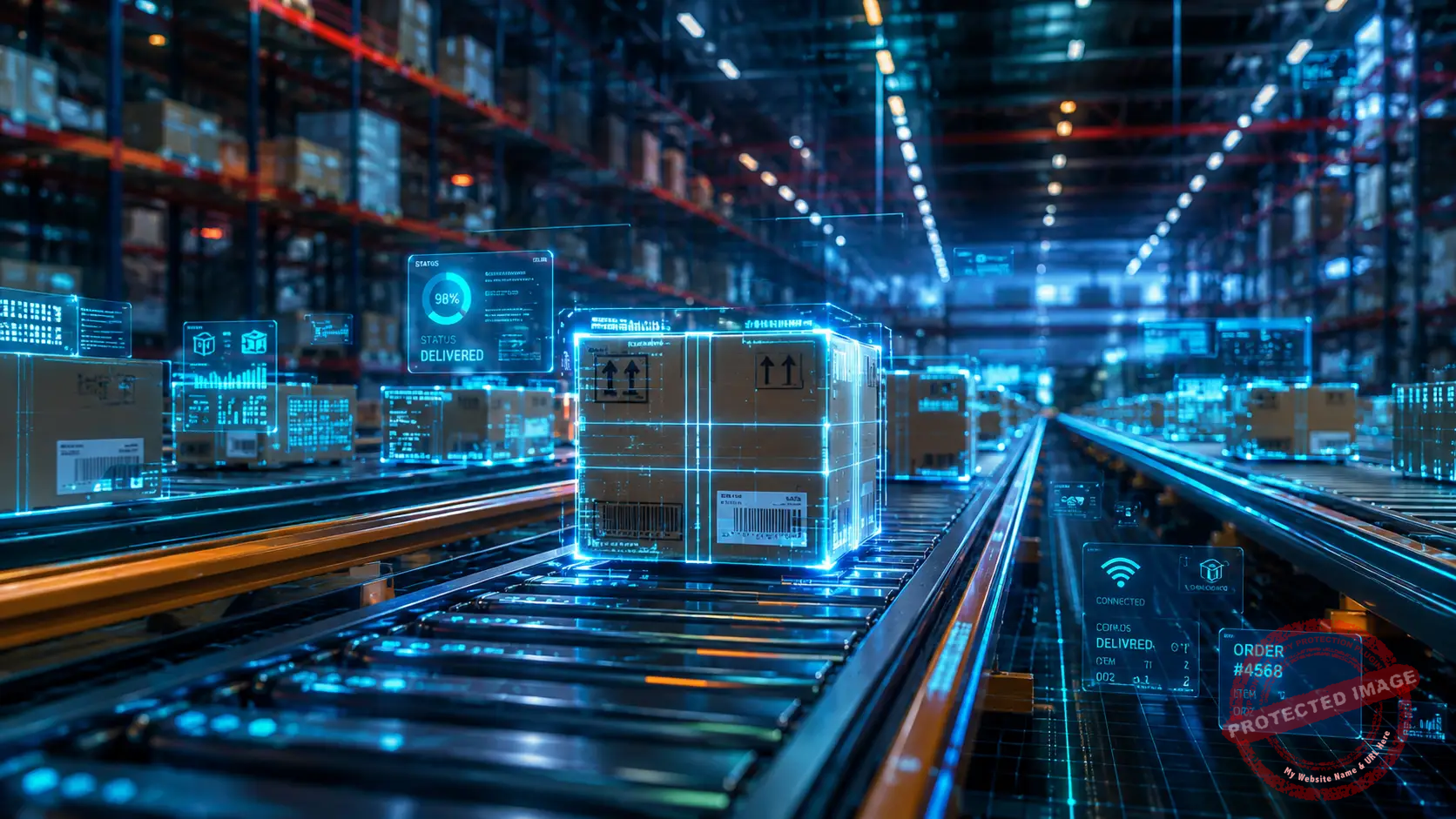
Supply chain leaders are entering 2026. The question is no longer whether artificial intelligence can improve planning, procurement, logistics, or risk management. The question is how quickly organizations can turn scattered pilots into connected, governed, measurable operating capabilities. Trade volatility, climate disruption, labor constraints, and rising expectations have made traditional, siloed supply chain management too slow.
The next phase is not more automation. It is connected intelligence: AI embedded across the enterprise, linking supply chain decisions with finance, procurement, sales, sustainability, and workforce planning. Done well, it creates faster sensing, clearer tradeoffs, and more resilient execution. Done poorly, it becomes another layer of complexity on top of fragile data and unclear accountability.
Agentic AI Moves From Advice to Action
Early generative AI helped teams summarize documents, draft supplier emails, and answer policy questions. Useful, but limited. In 2026, the sharper opportunity is agentic AI: systems that can pursue goals, coordinate steps, and trigger actions across workflows.
In practical terms, that could mean an AI agent detects a supplier delay, checks inventory exposure, compares alternate suppliers, drafts a customer impact note, and opens a purchase order recommendation. In mature environments, it may execute approved replenishment rules or launch follow-ups automatically.
The business value is speed and consistency. The risk is overdelegation. Companies should start with bounded, high-volume processes where decision rules are clear, approvals are explicit, and exceptions are visible. Agentic AI should reduce human firefighting, not hide decisions from the people accountable for service, cost, and compliance.
Digital Twins Become Resilience Engines
Digital twins are moving from demos to practical management tools. A supply chain digital twin creates a living model of plants, suppliers, lanes, inventory nodes, capacities, costs, and constraints. Leaders can simulate disruptions before they become expensive surprises.
This matters because many supply chains are optimized for yesterday’s assumptions. A tariff change, port closure, severe storm, or supplier outage can expose hidden dependencies in hours. Digital twins let teams test scenarios such as shifting volume to another region, prebuilding inventory, changing transport modes, or qualifying a backup supplier.
The best digital twins do not need perfect detail everywhere. They need enough trusted data to support the decisions that matter most. Start with critical products, constrained lanes, strategic suppliers, and high-margin customer segments. Build depth where risk and value justify it.
Risk Management Becomes Continuous
Risk management used to be periodic: annual supplier reviews, quarterly scorecards, and occasional crisis meetings. That cadence is too slow. AI now allows companies to continuously monitor signals from supplier performance, news, weather, financial data, logistics milestones, quality trends, and geopolitical developments.
The goal is not to predict every disruption. It is to shorten the time between weak signal and management action. A supplier risk score that updates daily can help procurement diversify sourcing, adjust buffers, renegotiate terms, or escalate attention before a disruption becomes a shutdown.
Still, resilience has a cost. Dual sourcing, extra inventory, regional capacity, and faster transportation all consume money. AI can improve the quality of the tradeoff, but leadership must decide how much resilience the business is willing to fund.
Sustainability Gets Operational
AI-driven sustainability is becoming less about reporting and more about operational choices. Machine learning can estimate emissions across supplier tiers, compare sourcing options, optimize routes, reduce empty miles, and identify where packaging or production changes lower cost and carbon.
This is valuable because ESG targets often fail when they sit outside daily planning. If sustainability metrics are embedded into sourcing, network design, and transportation decisions, teams can see the cost, service, and emissions impact together. That makes sustainability a management variable, not a separate reporting exercise.
Governance Is the Price of Autonomy
As AI systems influence purchasing, production, allocation, and supplier decisions, governance becomes central. Companies need clear ownership for model performance, data privacy, cybersecurity, third-party risk, and decision rights. They should measure model accuracy and business outcomes: fewer stockouts, faster recovery, lower expedite cost, better supplier compliance, and reduced emissions.
The practical path for 2026 is disciplined ambition. Pick supply chain processes with real pain, available data, and measurable value. Use agentic AI where workflows are repeatable. Use digital twins where decisions are complex and expensive. Use risk intelligence where delay is costly. Above all, connect AI to accountable operating decisions. That is how supply chains move from isolated intelligence to enterprise advantage.
- Deloitte, “Resilient by design: The agentic supply chain”
https://www.deloitte.com/us/en/insights/industry/manufacturing-industrial-products/agentic-supply-chain-artificial-intelligence-manufacturing.html - McKinsey, “Digital twins: The key to unlocking end-to-end supply chain growth”
https://www.mckinsey.com/capabilities/quantumblack/our-insights/digital-twins-the-key-to-unlocking-end-to-end-supply-chain-growth - Gartner, “Deploy Digital Supply Chain Twins to Improve Planning Outcomes”
https://www.gartner.com/en/documents/6771134 - IBM Institute for Business Value, “Scaling supply chain resilience with agentic AI”
https://www.ibm.com/thought-leadership/institute-business-value/en-us/report/supply-chain-ai-automation-oracle - PwC, “2026 Digital Trends in Operations Survey”
https://www.pwc.com/us/en/services/consulting/supply-chain-operations/library/digital-trends-operations-survey.html - Supply Chain Management Review, “2026: The age of the AI supply chain”
https://www.scmr.com/article/2026-the-age-of-the-ai-supply-chain - Supply Chain Management Review, “3 strategies to turn supply chain uncertainty into advantage in 2026”
https://www.scmr.com/article/3-strategies-to-turn-supply-chain-uncertainty-into-advantage-in-2026Written and researched by
Peter Jonathan Wilcheck
AI/ML Engine, Machine Learning, Deep Learning, Data and MLOPs
Post Disclaimer
The information provided in our posts or blogs are for educational and informative purposes only. We do not guarantee the accuracy, completeness or suitability of the information. We do not provide financial or investment advice. Readers should always seek professional advice before making any financial or investment decisions based on the information provided in our content. We will not be held responsible for any losses, damages or consequences that may arise from relying on the information provided in our content.
 AAPL
AAPL AMD
AMD CIS.HA
 DELL
DELL IBM
IBM INTC
INTC MSFT
MSFT GOOG
GOOG HPE
HPE NVDA
NVDA TSLA
TSLA TMC
TMC MSI
MSI NOK
NOK OPEAZZX