


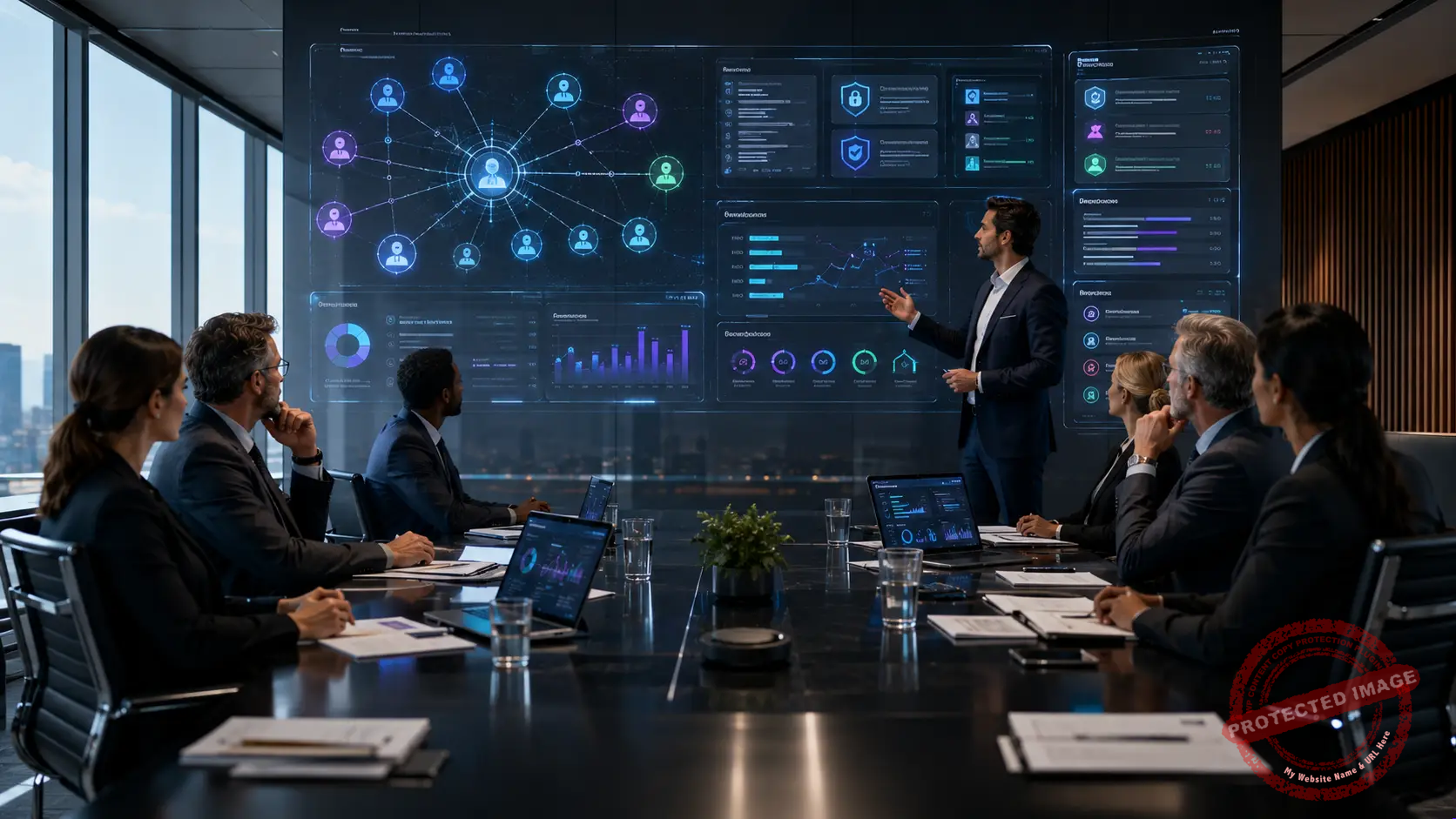
As of this week (July 5th, 2026) the most important autonomous AI swarm-agent development is not a new model release. It is the rapid convergence of agent-to-agent interoperability, tool access standards, and enterprise-managed authorization into a practical control plane for multi-agent systems.
For executives, that changes the question from “Can agents automate work?” to “Can we govern many agents acting across real systems?” For developers, it changes the architecture from a clever chain of prompts into a distributed system with identity, permissions, discovery, logging, failure modes, and cross-vendor coordination.

Why This Matters Now
Autonomous AI swarms are moving from laboratory metaphor to enterprise architecture. In 2025, most “multi-agent” systems were still experiments: one planner, a few worker agents, a tool layer, and a human hoping the workflow stayed inside the rails. In mid-2026, the foundations look different. The Agent2Agent Protocol, now hosted by the Linux Foundation, has moved into production-oriented adoption, with the foundation reporting more than 150 supporting organizations and integrations across major cloud platforms. At the same time, the Model Context Protocol has added stable Enterprise-Managed Authorization, giving organizations a way to centrally provision access to MCP servers through existing identity providers.
That combination matters because autonomous swarms fail less from lack of intelligence than from lack of coordination and control. A swarm that cannot discover other agents becomes a brittle point-to-point integration project. A swarm that can discover and delegate but cannot be governed becomes a compliance incident waiting for an audit. The strategic development this week is the arrival of a stack that begins to address both sides: A2A for agent coordination, MCP for tool and context access, and identity-centered authorization for enterprise control.
The evidence does not prove that fully autonomous enterprise swarms are mature. They are not. It does show that the industry is standardizing the plumbing before the next wave of deployment arrives in late 2026 and early 2027.
The Technical Shift: From Agent Chains To Agent Meshes
The distinction between an agent chain and an agent mesh is more than vocabulary. A chain is usually orchestrated by one application. It passes tasks between components it already knows. It may be useful, but it is tightly coupled. A mesh is different. Agents can advertise capabilities, discover one another, negotiate interaction patterns, and delegate work without sharing internal memory or implementation details.
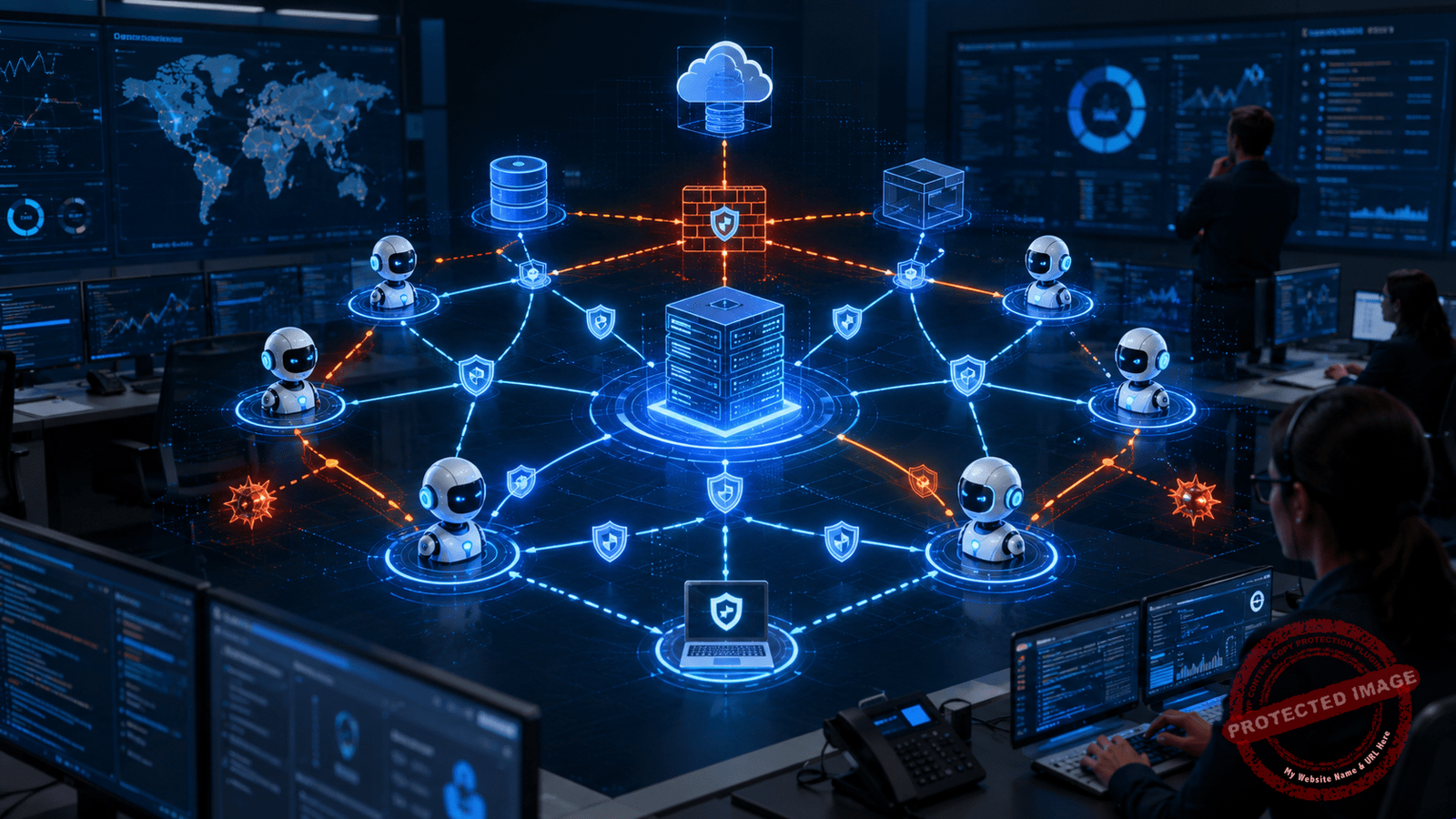
That is the role A2A is trying to play. Its specification describes a protocol for independent agentic systems to discover capabilities, negotiate modalities such as text, files, and structured data, manage collaborative tasks, and exchange information securely without exposing internal state. This is exactly the missing layer for cross-vendor swarm systems. A procurement agent should be able to ask a supplier-risk agent for a structured assessment. A security triage agent should be able to delegate evidence collection to cloud, endpoint, and identity agents. A finance agent should be able to request policy checks before initiating a high-impact workflow.
MCP addresses a related but separate layer. It standardizes how LLM applications and agents connect to tools, data, and context. In practical terms, MCP is the agent’s access layer, while A2A is the agent’s collaboration layer. The Linux Foundation has explicitly framed them as complementary: A2A coordinates agents with each other, while MCP connects agents to internal tools and data sources.
For swarm-agent developers, this points to a cleaner architecture. Stop building every integration as bespoke glue. Design agents around discoverable capabilities, task state, scoped tool access, auditable delegation, and explicit authorization boundaries.
Image prompt: High-resolution technical architecture diagram style, not text-heavy, showing two layers: agent-to-agent coordination above and tool/context access below, with identity provider and policy engine governing both, modern enterprise design language, blue, white, and green accents, 16:9.
The Control Plane Arrives Through Identity
The most timely piece of the story is MCP’s Enterprise-Managed Authorization extension, announced stable on June 18, 2026. The extension lets organizations centrally manage MCP server access through a trusted identity provider. Instead of each user approving each server one at a time, administrators define access policies once, and users inherit approved MCP access through corporate login, scoped by roles, groups, and conditional access rules.
This sounds administrative. It is actually strategic.
Autonomous swarms multiply access paths. One agent may summarize a contract, another may query customer records, another may open a ticket, another may generate code, and another may initiate a procurement workflow. If each connector is authorized ad hoc, the organization cannot confidently answer basic questions: Which agents can touch regulated data? Which tools can they invoke? Which user or service identity approved the action? Can access be revoked quickly? Can the chain of delegation be reconstructed?
Enterprise-managed authorization turns identity into the policy root for swarm behavior. It does not solve every problem. Agents can still misinterpret instructions, inherit poisoned context, or pursue badly specified goals. But it gives security, platform, and compliance teams a more defensible foundation than unmanaged OAuth sprawl.
For late 2026 planning, the implication is clear: agent architecture and identity architecture are now the same conversation.
Why Executives Should Care
The business promise of agent swarms is not that twenty chatbots can talk to one another. It is that specialized autonomous systems can coordinate across functions that currently depend on slow handoffs: sales operations, supply chain exceptions, IT remediation, claims processing, customer onboarding, financial controls, clinical administration, and software delivery.
But these are precisely the workflows where weak governance is expensive. A swarm that accelerates work also accelerates mistakes. If a planning agent delegates to a data agent, then to a contracting agent, then to a purchasing agent, the enterprise needs policy enforcement at every step. The old approval model, where a human clicks through each system manually, will not scale. The old security model, where permissions are attached mainly to human users and static applications, will not survive.
Executives should read the current protocol movement as an adoption signal and a warning. The adoption signal is that serious infrastructure is forming. Cross-vendor agents are becoming more plausible. The warning is that unmanaged agent deployments will become harder to excuse. Once standards and public guidance exist, “we did not know how to govern it” becomes a weaker defense.
The likely winners in early 2027 will not be the companies with the most agents. They will be the companies with the clearest agent operating model: inventory, identity, permissioning, monitoring, human checkpoints, rollback, audit evidence, and measurable business value.

The Security Reality: Swarms Expand The Attack Surface
The same features that make swarms useful make them risky. Agents use tools. They consume external information. They remember context. They delegate. They may act faster than humans can supervise. In multi-agent settings, one compromised or confused agent can contaminate a broader workflow.
Recent public guidance reflects that shift. The CISA and allied “Careful Adoption of Agentic AI Services” guidance focuses on cybersecurity challenges created by LLM-based agents, including risks from components, integrations, downstream use, and agent behavior. The Cloud Security Alliance’s June 2026 discussion of multi-agent environments similarly argues that enterprise AI has moved from isolated prompts to dynamic multi-agent systems, requiring security teams to protect the execution plane of self-directed digital workers.
The risk categories are becoming familiar: excessive privilege, prompt injection, tool misuse, context leakage, weak logging, agent impersonation, unsafe delegation, and unclear accountability. In a swarm, those risks compound. A single agent with too much privilege is dangerous. A network of agents that can delegate work across finance, code, customer data, and operations is a new class of enterprise actor.
This is why the control plane matters. Policy must travel with the task. Identity must be bound to the agent, the user, the tool, the data, and the purpose. Logs must capture not just final actions but delegation paths. Human approval should be reserved for high-impact decisions, not sprinkled randomly over low-risk steps. Kill switches and rollback procedures need to be designed before deployment, not improvised during an incident.
What Developers Should Build Differently
For AI agent developers, the lesson is architectural discipline. The next generation of credible swarm systems should include several design choices by default.
First, make capabilities explicit. Agents should publish what they can do, what inputs they accept, what outputs they return, and what authority they require. Discovery without capability clarity is just dynamic confusion.
Second, separate reasoning from authority. An agent may recommend a refund, code change, access grant, or trade adjustment. That does not mean it should execute the action under the same permission context. High-impact operations need stronger authorization and sometimes human confirmation.
Third, treat agent-to-agent messages as security-relevant events. Delegation is not internal chatter. It is part of the operational record. Message provenance, task state, policy decisions, and tool calls should be observable.
Fourth, design for graceful degradation. If a specialist agent is unavailable or fails a policy check, the swarm should not invent a path around it. It should escalate, retry safely, or stop.
Fifth, test swarms adversarially. Prompt injection and tool poisoning are not edge cases. They are expected environmental conditions for agents that read email, web pages, tickets, repositories, documents, and chat threads.
What To Watch Through Early 2027
The rest of 2026 will likely be defined by three tests. The first is interoperability: whether A2A implementations can work reliably across vendors, frameworks, and cloud environments without collapsing into lowest-common-denominator demos. The second is governance: whether enterprise identity, policy, and audit systems can keep up with autonomous delegation. The third is value: whether swarms can produce measurable outcomes in real workflows rather than impressive but fragile prototypes.
By early 2027, expect agent programs to be judged less by model capability and more by operational trust. Can the organization prove what the agents did? Can it constrain what they may do next? Can it revoke access immediately? Can it explain delegation chains to auditors, regulators, customers, and its own board?
The most important development right now is that the swarm-agent ecosystem is beginning to grow a control plane. That will not make autonomous agents safe by default. It does make serious deployment possible. The companies that understand this shift will build swarms as governed digital labor systems, not as clever automations loosely attached to corporate data.
Researched and written by Peter Jonathan Wilcheck
References
- Model Context Protocol Blog: Enterprise-Managed Authorization: Zero-touch OAuth for MCP
- Linux Foundation: A2A Protocol Surpasses 150 Organizations
- A2A Protocol Specification
- CISA: Careful Adoption of Agentic AI Services
- Cloud Security Alliance: Securing the Swarm
Post Disclaimer
The information provided in our posts or blogs are for educational and informative purposes only. We do not guarantee the accuracy, completeness or suitability of the information. We do not provide financial or investment advice. Readers should always seek professional advice before making any financial or investment decisions based on the information provided in our content. We will not be held responsible for any losses, damages or consequences that may arise from relying on the information provided in our content.
 AAPL
AAPL AMD
AMD CIS.HA
 DELL
DELL IBM
IBM INTC
INTC MSFT
MSFT GOOG
GOOG HPE
HPE NVDA
NVDA TSLA
TSLA TMC
TMC MSI
MSI NOK
NOK OPEAZZX