


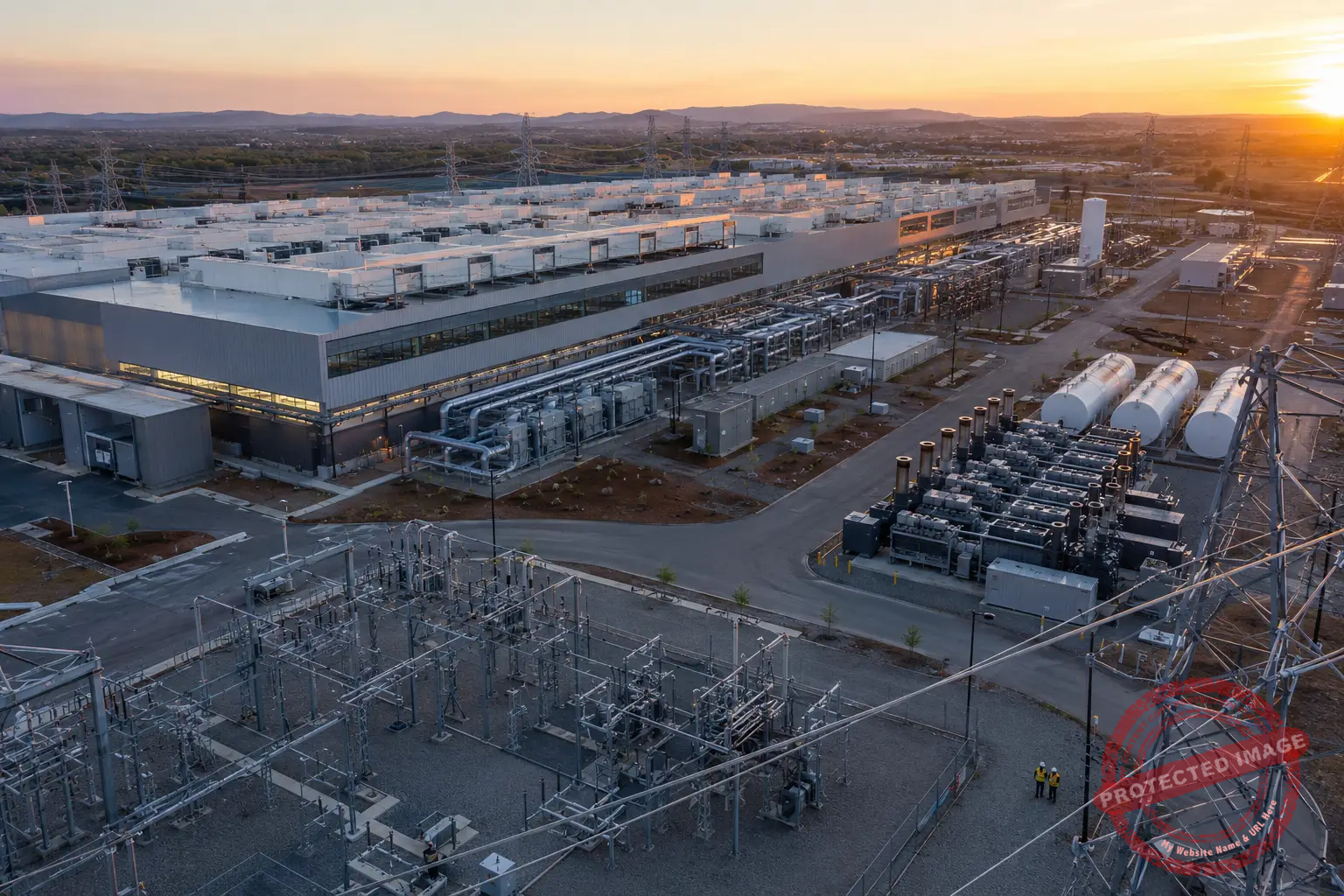
For the first wave of generative AI infrastructure, the scarce resource was the GPU. Enterprises, cloud providers, and startups competed for access to H100s, high-end clusters, and enough accelerator capacity to train or fine-tune large models.
That story is changing. As AI moves deeper into production and inference workloads scale, the limiting factor is no longer only silicon availability. It is power: where it can be delivered, how quickly it can be connected, how reliably it can be cooled, and how efficiently it can be converted into useful AI output.
The next generation of GPU hosting will be shaped by a simple operational reality: a data center cannot monetize GPUs it cannot power.
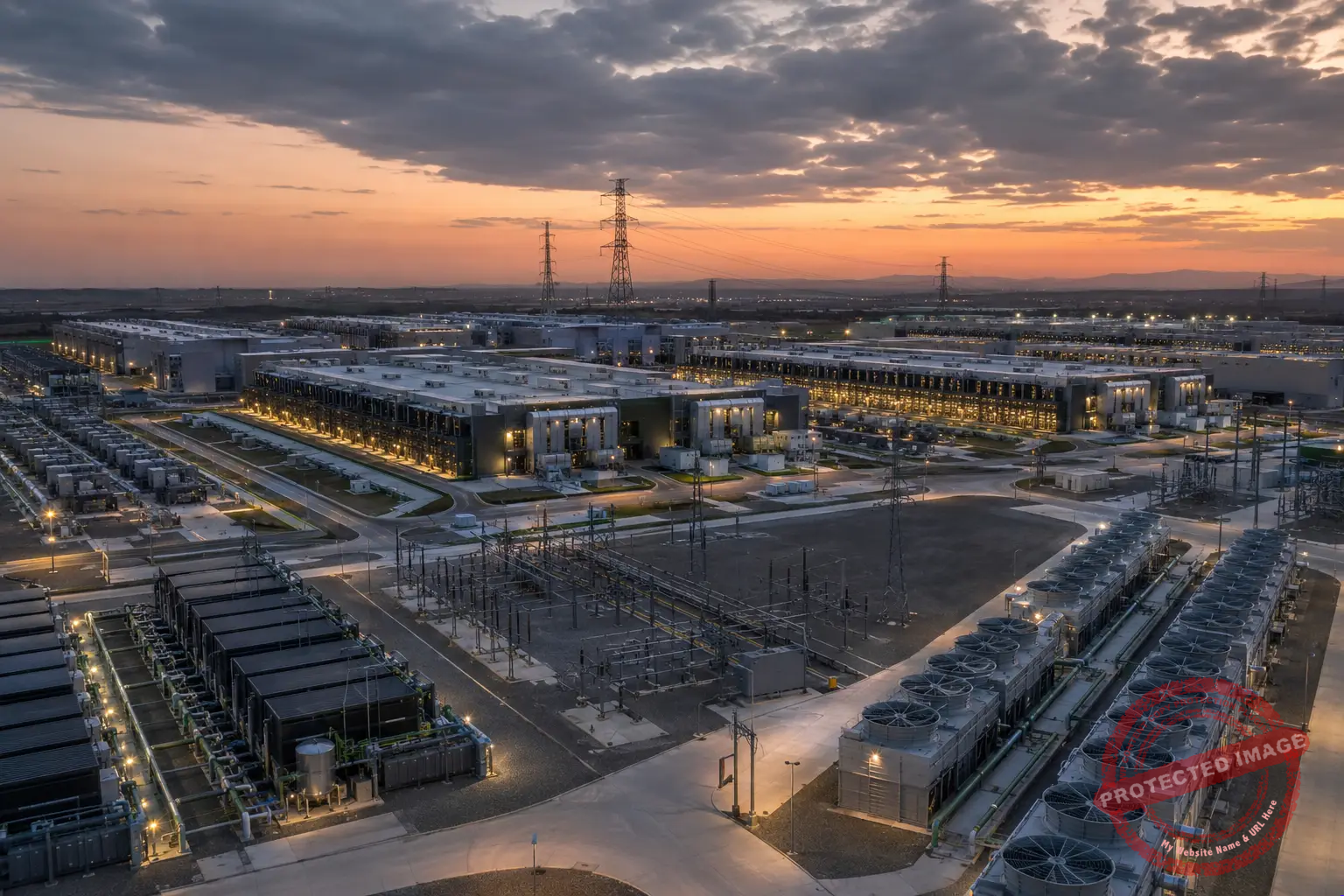
The AI Buildout Has Become an Energy Buildout
AI infrastructure is now tied directly to the electric grid. The International Energy Agency reported that global electricity demand from data centers grew 17% in 2025, while electricity consumption from AI-focused data centers grew much faster. The IEA also projects data center electricity consumption could roughly double from 485 TWh in 2025 to 950 TWh in 2030.
That matters because AI infrastructure is expanding faster than many physical systems can adapt. Power generation, substations, transformers, transmission lines, permitting, utility interconnection, and local community approval all move more slowly than cloud demand.
For GPU hosting providers, this changes the strategic map. The best market is not always the one with the biggest customer base or the lowest land cost. It is increasingly the one with fast, reliable, scalable power.
Site Selection Is Becoming a Power Strategy
In traditional cloud expansion, operators prioritized fiber routes, proximity to demand, tax incentives, land availability, and regional redundancy. Those factors still matter, but AI has elevated power availability above almost everything else.
Bloom Energy’s 2026 Data Center Power Report describes power availability as a defining boundary on data center growth, not merely a planning consideration. The report also notes that capital is concentrating in power-advantaged regions and that developers are increasingly considering onsite generation as part of long-term power strategy.
This is why AI infrastructure investment is shifting toward regions with predictable interconnection timelines, favorable energy markets, available generation, and less grid congestion. In practical terms, the new AI data center map is being drawn around megawatts.
Rack Density Changes the Physics
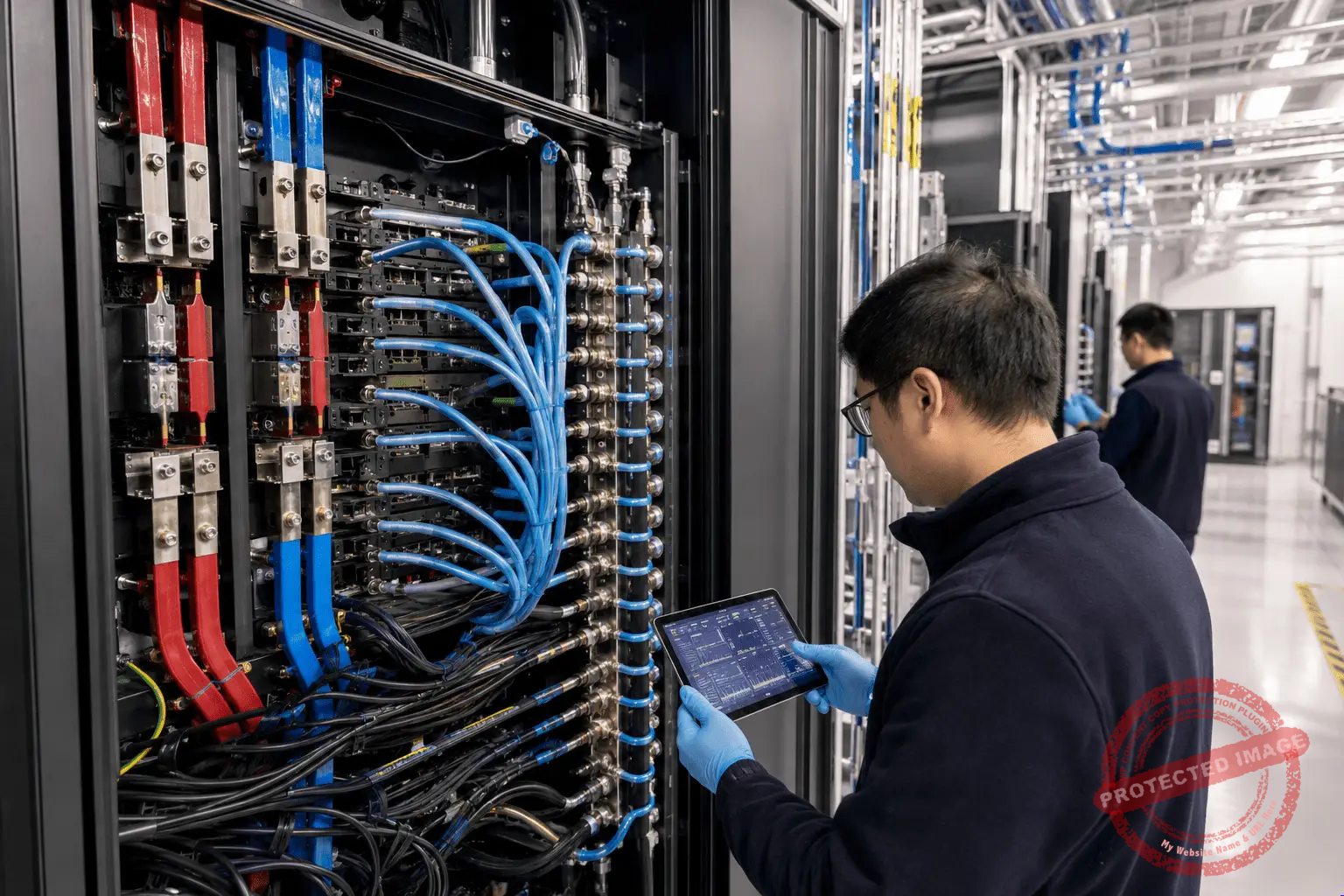
AI workloads are also changing the internal design of the data center. Rack-scale systems and high-density GPU deployments push far more power into a smaller physical footprint than conventional enterprise computing.
That makes power distribution and cooling inseparable. A site may have enough total utility capacity on paper but still struggle to support high-density AI racks without redesigned electrical rooms, busways, coolant distribution, heat rejection, and facility controls.
Schneider Electric’s 2026 work with NVIDIA around Vera Rubin AI factory reference designs points in this direction: optimized power, liquid cooling, higher rack density, and tokens-per-watt are becoming linked design concerns. The facility is no longer just the container for compute. It is part of the compute architecture.
Tokens Per Watt Becomes a Business Metric
As inference becomes a production workload, power efficiency becomes a direct economic lever. The question is not only “How many GPUs do we have?” but “How much useful AI output can we produce per megawatt?”
NVIDIA has framed this through tokens per watt and cost per token. The logic is straightforward: every watt lost to inefficient cooling, idle capacity, or poor power distribution is a watt that cannot be used to generate billable inference.
This is especially important for hosted GPU providers. If two platforms offer similar GPU inventory, the one with better utilization, cooling efficiency, scheduling, and power-aware workload management can produce more output from the same energy envelope.
That advantage compounds. Better tokens per watt can mean better margins, more competitive pricing, higher capacity from constrained sites, and stronger resilience when power is capped.
Onsite Power Is Moving From Backup to Strategy
Historically, on-site generation was often treated as backup infrastructure. Diesel generators and UPS systems were used to maintain uptime when the grid failed.
AI is changing that model. As grid interconnection timelines stretch, some operators are evaluating on-site generation, fuel cells, renewables, batteries, gas turbines, and other behind-the-meter approaches as primary or supplemental power sources.
This does not make on-site power simple. Operators still face fuel availability, emissions rules, permitting, cost, maintenance, and community scrutiny. But the reason it is gaining attention is clear: waiting years for grid capacity can delay revenue, strand capital, and weaken competitive position.
For AI infrastructure buyers, this also introduces a new diligence question. It is no longer enough to ask a GPU hosting provider what hardware they have. Buyers should ask how power is secured, what capacity is actually deliverable, and whether the provider’s expansion plan depends on uncertain utility timelines.
Power Constraints Favor Serious Operators
The power bottleneck may separate mature infrastructure operators from speculative capacity sellers.
A credible AI infrastructure provider needs more than access to GPUs. It needs utility relationships, energy procurement expertise, electrical engineering depth, cooling design, permitting discipline, and the ability to forecast demand realistically.
Uptime Institute’s 2026 data center predictions warn that AI-driven load growth will intensify pressure on constrained grids and that developers will not simply outrun the power shortage. That is an important point. Capital can buy servers quickly, but it cannot instantly build transmission capacity, substations, or social license.
This favors providers that treat energy as a first-class operating domain. It also favors customers that evaluate infrastructure partners with the same seriousness they apply to security, latency, and cost.
What Buyers Should Ask Before Committing to GPU Capacity
AI teams evaluating GPU hosting should add power diligence to their procurement process. Useful questions include:
- Is the advertised GPU capacity already powered and available, or dependent on future grid delivery?
- What is the provider’s time-to-power for expansion capacity?
- How does the facility handle high-density rack cooling?
- Does the provider measure performance per watt or cost per token?
- What redundancy exists for power delivery, cooling, and network connectivity?
- Are on-site generation or power purchase agreements part of the provider’s strategy?
- How does the platform manage utilization when power or thermal limits are reached?
- Can the provider support steady-state inference economics, not just bursty training jobs?
These questions are practical. They help distinguish real capacity from aspirational capacity.
The New AI Infrastructure Equation
The AI infrastructure equation used to be dominated by accelerator access. Now it is becoming a three-part equation:
Compute capacity + power availability + operational efficiency = usable AI output
A provider with GPUs but constrained power cannot scale. A provider with power but poor cooling cannot support dense racks. A provider with both but weak orchestration may still waste capacity through idle GPUs and inefficient scheduling.
The strongest AI infrastructure strategies for late 2026 and 2027 will integrate these layers. They will combine GPU access, high-density facility design, power-aware orchestration, liquid cooling, and cost-per-token optimization.
Final Thoughts: The Grid Is Now Part of the AI Stack
The future of GPU hosting will not be decided only by who buys the newest accelerators. It will be decided by who can power them, cool them, schedule them, and convert each megawatt into useful inference output.
Power availability has become a strategic constraint, not a facilities detail. For AI infrastructure providers, it shapes where to build, how to design, and how to price. For buyers, it determines whether promised capacity is dependable enough for production workloads.
In the AI factory era, energy is not adjacent to compute. Energy is the foundation of compute.
Researched and written by: Peter Jonathan Wilcheck
Reference Sites
- International Energy Agency: Key Questions on Energy and AI
https://www.iea.org/reports/key-questions-on-energy-and-ai/executive-summary - Uptime Institute: Five Data Center Predictions for 2026
https://uptimeinstitute.com/resources/research-and-reports/five-data-center-predictions-for-2026 - Uptime Institute Press Release: Developers Will Not Outrun the Power Shortage
https://uptimeinstitute.com/about-ui/press-releases/uptime-institute-announces-five-data-center-predictions-report-for-2026 - NVIDIA Technical Blog: Scaling Token Factory Revenue and AI Efficiency by Maximizing Performance per Watt
https://developer.nvidia.com/blog/scaling-token-factory-revenue-and-ai-efficiency-by-maximizing-performance-per-watt/ - Bloom Energy: 2026 Data Center Power Report
https://www.bloomenergy.com/wp-content/uploads/2026-power-report.pdf
Post Disclaimer
The information provided in our posts or blogs are for educational and informative purposes only. We do not guarantee the accuracy, completeness or suitability of the information. We do not provide financial or investment advice. Readers should always seek professional advice before making any financial or investment decisions based on the information provided in our content. We will not be held responsible for any losses, damages or consequences that may arise from relying on the information provided in our content.
 AAPL
AAPL AMD
AMD CIS.HA
 DELL
DELL IBM
IBM INTC
INTC MSFT
MSFT GOOG
GOOG HPE
HPE NVDA
NVDA TSLA
TSLA TMC
TMC MSI
MSI NOK
NOK ECDH26.CME
 OPEAZZX