


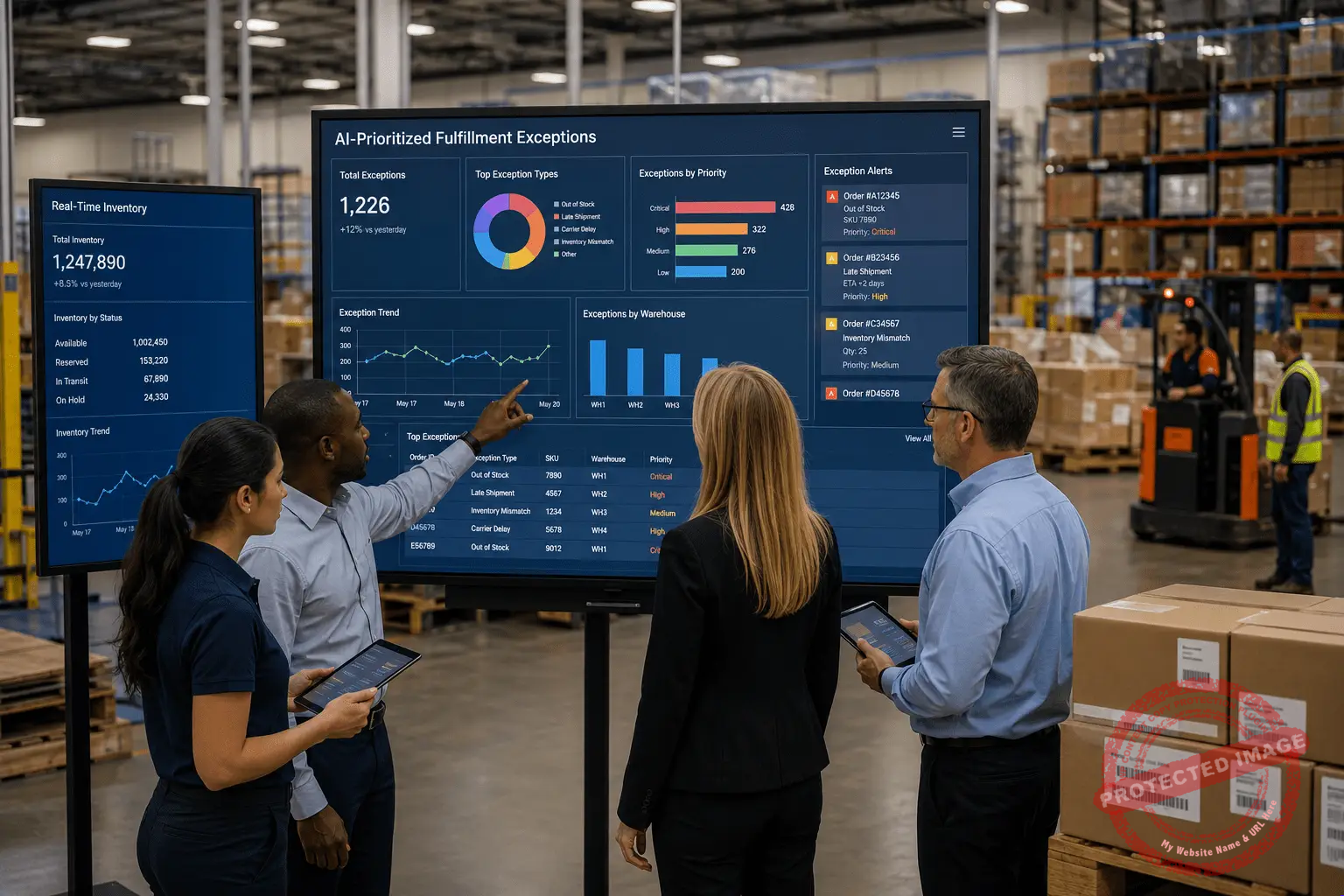
Supply chain leaders are no longer managing a temporary period of disruption. They are managing a business environment where disruption is part of the operating model. Trade policy shifts, freight volatility, supplier risk, labor constraints, climate events, and demand uncertainty now arrive together, often faster than traditional planning cycles can absorb.
That is why one of the highest-value uses of AI in supply chain management this year is not simply “better forecasting.” It is exception control: the ability to detect meaningful changes early, understand their operational impact, recommend practical responses, and help teams act before a small issue becomes a service failure or margin problem.
Recent supply chain research points in the same direction. Gartner’s 2026 technology trends highlight agentic AI and connected technologies as forces reshaping supply chains. CSCMP’s 2026 State of Logistics work describes persistent volatility and uneven but commercially meaningful AI adoption. The World Economic Forum’s 2026 global value chains outlook frames volatility as structural rather than cyclical. The practical conclusion is clear: companies need planning systems that can sense, prioritize, and respond faster.
1. The Problem Is No Longer Lack of Data
Many companies already have plenty of data. They have demand history, supplier records, ERP transactions, warehouse scans, transport milestones, purchase orders, inventory snapshots, customer service cases, and spreadsheets maintained by experienced planners. The problem is that the data is fragmented, delayed, inconsistent, or trapped in workflows that require people to manually reconcile what matters.
This creates a familiar pattern. A port delay appears in a carrier update. A supplier quality issue sits in an email thread. A demand spike is visible in order intake, but the forecast cycle will not refresh for another week. Inventory exists in the network, but not where the demand is moving. Finance sees cost pressure after operations has already made expensive recovery decisions.
AI can help here because exception control is partly a pattern-recognition problem and partly a workflow problem. Machine learning can identify abnormal changes in demand, lead times, supplier performance, or inventory behavior. Generative AI can summarize messy unstructured inputs such as emails, shipment notes, customs updates, supplier communications, and news. Optimization tools can compare feasible responses, such as expediting, reallocating stock, changing production sequence, or using an alternate supplier.
The important point is that AI should not flood teams with more alerts. It should reduce noise. A useful AI-enabled exception process answers four questions: What changed? Why does it matter? What options are realistic? What decision is needed now?
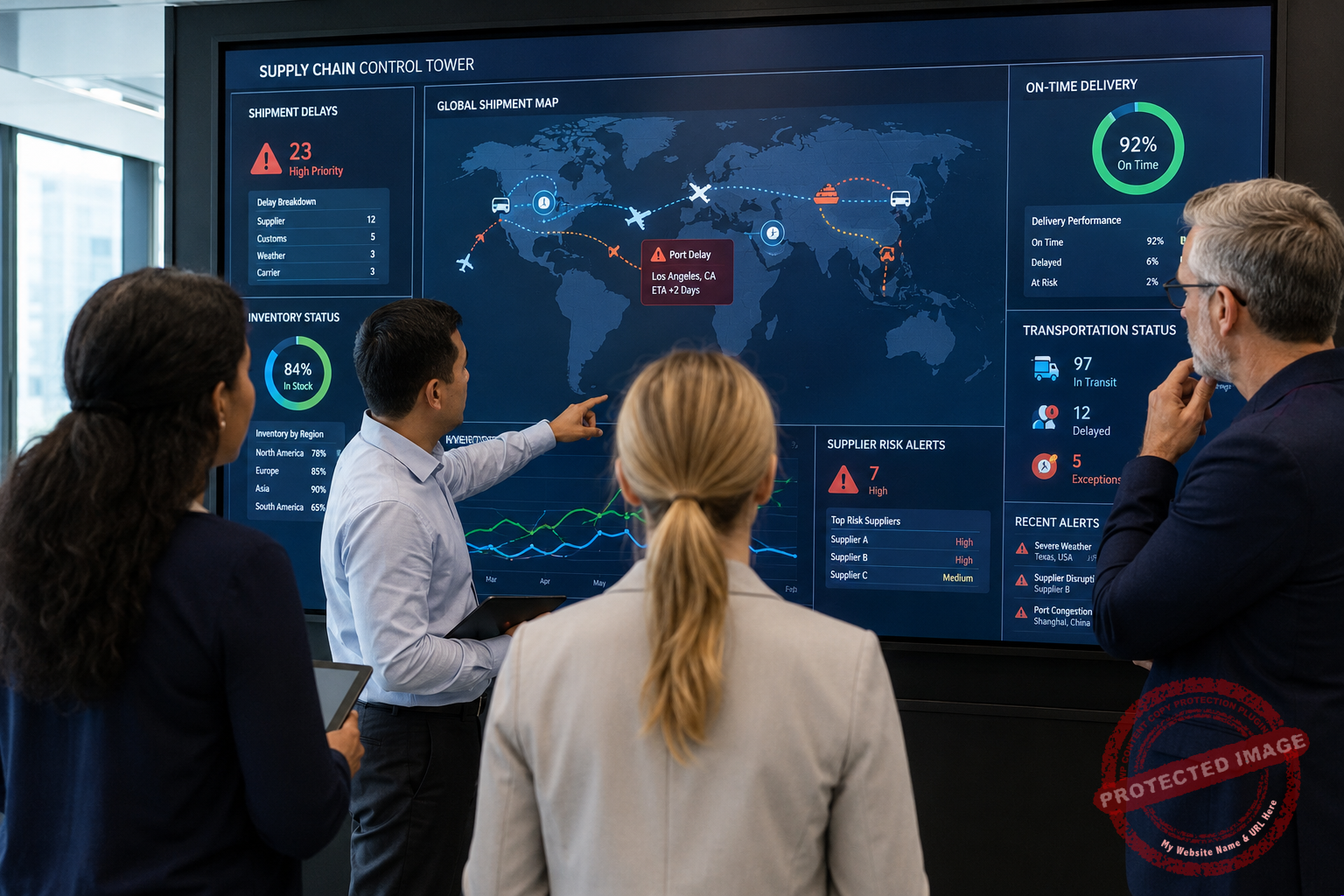
2. Forecasting Still Matters, but Response Speed Matters More
Forecast accuracy is still important. Poor demand signals create excess inventory in some places and shortages in others. But in volatile markets, even a good forecast can become stale quickly. The companies that perform better are not always the ones that predict every change perfectly. They are the ones that detect variance early and adjust with discipline.
This is where AI-enabled demand sensing and exception management can be more valuable than a large forecasting transformation. A retailer may see demand shifting by region due to weather, promotion timing, or competitor stockouts. A manufacturer may see orders accelerate in one product family while component lead times worsen. A distributor may find that customers are ordering earlier than usual because they are worried about tariffs or shortages.
In each case, the operational need is not a beautiful forecast chart. It is a decision: hold inventory, move inventory, buy ahead, constrain supply, substitute materials, communicate revised availability, or protect key customers. AI can support that decision by comparing live demand signals against historical norms, inventory positions, supplier constraints, and service commitments.
The human role remains central. Planners understand customer behavior, commercial priorities, production realities, and the informal risks that systems often miss. AI should give planners a faster first draft of the situation, not remove judgment from decisions that carry service, cost, and customer consequences.
3. Agentic AI Is Promising, but Governance Comes First
Agentic AI is getting attention because it can go beyond answering questions. In supply chain terms, an agent might monitor supplier disruptions, check affected parts, identify open purchase orders, review alternate sources, estimate customer impact, and draft recommended actions. Gartner has predicted wider inclusion of agentic capabilities in supply chain management solutions, and the direction makes sense.
But supply chains are not low-risk playgrounds for autonomous action. A wrong recommendation can create excess inventory, violate a contract, disrupt production, or damage customer trust. For most companies, the near-term opportunity is supervised autonomy: AI agents that monitor, analyze, recommend, and prepare actions while humans approve the decisions.
The best early use cases are bounded and measurable. Examples include late shipment triage, supplier risk monitoring, inventory exception summaries, purchase order follow-up, forecast variance explanation, tariff exposure review, and customer order risk prioritization. These tasks consume time, require multiple data sources, and benefit from consistent logic.
Governance should define what the AI can see, what it can recommend, what it can execute, and when escalation is mandatory. It should also track decision quality. Did the recommendation improve service? Did it reduce manual effort? Did it shift cost from one function to another? Did users trust it enough to change behavior?
AI without governance becomes another source of operational noise. AI with disciplined boundaries can become a practical decision-support layer.
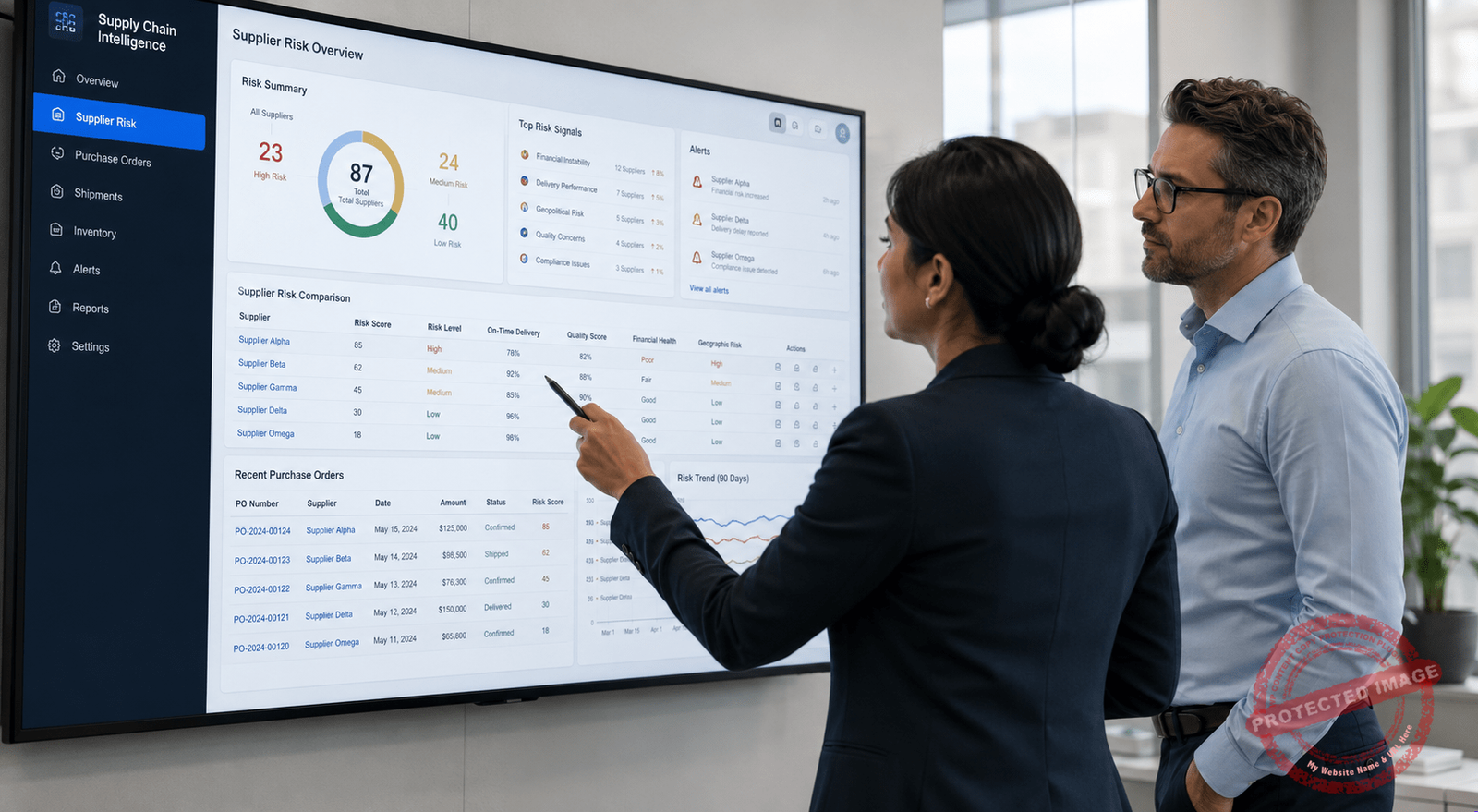
4. The Highest-Value AI Work Starts With Process Design
A common mistake is to start with the technology vendor rather than the operating process. The better starting question is: where do delays in recognition and response cost us the most?
For some companies, the answer is supplier risk. They find out too late that a sub-tier supplier is constrained, a geopolitical event affects a sourcing region, or a regulatory change will slow imports. For others, the pain is logistics exception handling, where teams manually chase carriers and update customers. In consumer goods, the issue may be demand volatility and promotion execution. In industrial manufacturing, it may be production rescheduling when parts arrive late.
Once the priority is clear, the company can design the AI-enabled workflow. Define the exception. Define the data required. Define the owner. Define the decision rights. Define the acceptable actions. Define the metrics. Only then should the company select or configure tools.
A practical first pilot might look like this: monitor late inbound shipments for top revenue products, classify the likely customer impact, recommend whether to expedite, reallocate inventory, adjust production, or notify sales, and track the financial result. That is narrow enough to manage but valuable enough to matter.
The data does not have to be perfect, but it must be good enough for the decision being supported. Shipment dates, item numbers, supplier codes, lead times, inventory availability, and customer commitments must be reasonably reliable. If those basics are weak, the first improvement may be master data discipline, not AI.
5. What Leaders Should Do Now
The practical path is to build an exception control capability in layers.
First, identify the top five recurring exceptions that cause service failures, premium freight, production disruption, or excess inventory. Rank them by business impact, not by which problem is most interesting technically.
Second, map how each exception is detected and resolved today. Many organizations discover that the actual process depends on email, spreadsheets, phone calls, and individual memory. That is useful to know. AI can only improve a process that leaders are willing to make visible.
Third, create a decision playbook. For each exception, define preferred responses, escalation rules, cost thresholds, customer priorities, and approval requirements. This gives AI a practical operating boundary.
Fourth, introduce AI where it reduces manual work or improves decision speed. Use it to summarize, classify, detect anomalies, recommend actions, and prepare communications. Keep humans in control of commercial and operational tradeoffs.
Fifth, measure outcomes. Track time to detect, time to decide, service impact, premium cost, planner workload, forecast bias, inventory movement, and decision acceptance. If the metrics do not improve, the pilot should be redesigned rather than celebrated.
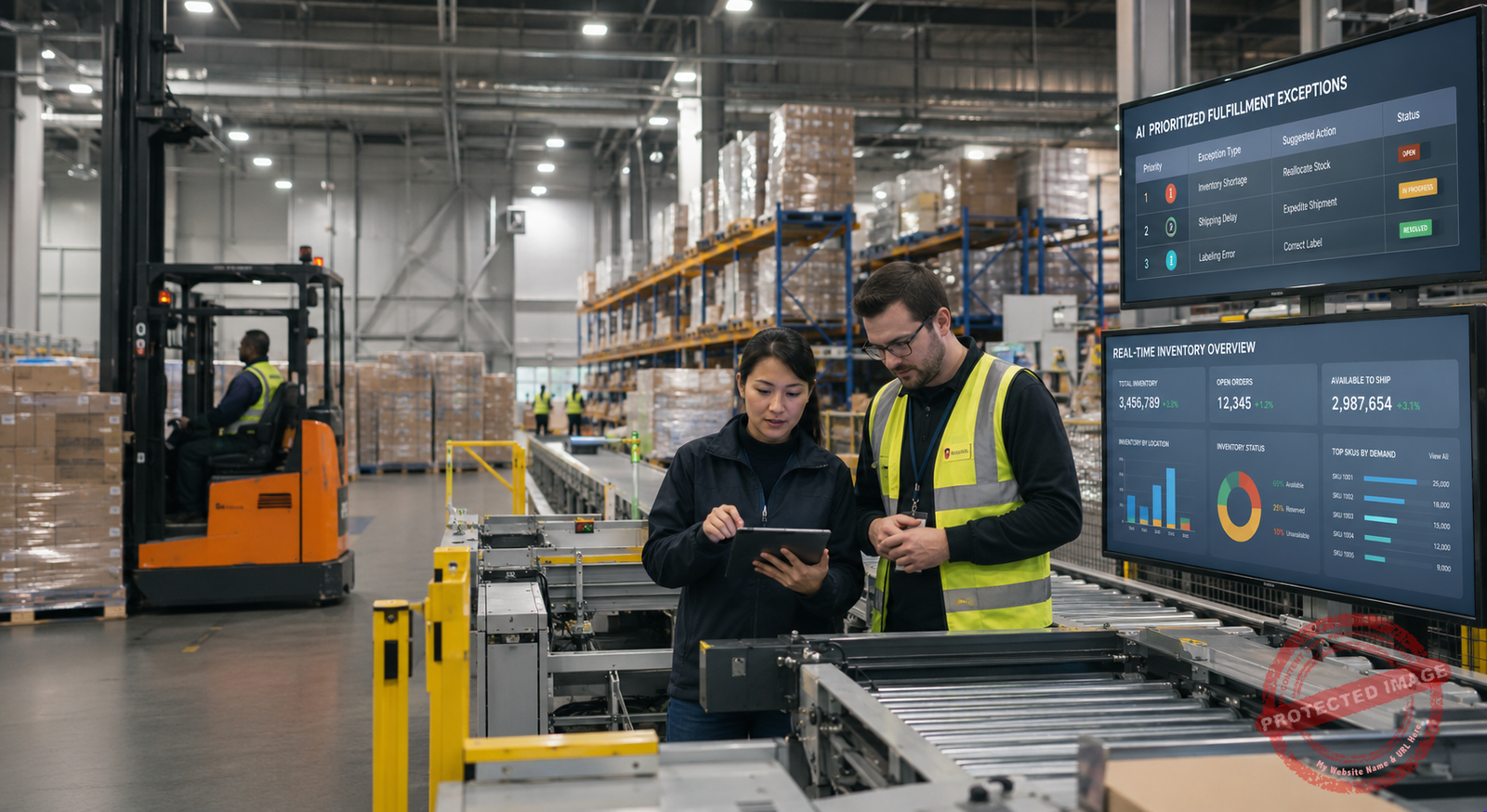
Forwarding thoughts: The Next Advantage Is Operational Responsiveness
AI will not remove volatility from supply chains. It will not replace supplier relationships, disciplined planning, sound inventory policy, or experienced operators. What it can do is help companies respond faster and more consistently when reality moves away from the plan.
The most valuable supply chain AI work in 2026 is likely to be practical, narrow, and embedded in daily decisions. It will help teams see exceptions earlier, understand tradeoffs faster, and act with better coordination across planning, procurement, logistics, manufacturing, and customer service.
The winners will not be the companies with the most impressive AI language. They will be the companies that connect AI to the hard operating work of protecting service, controlling cost, and building resilience into everyday decisions.
Researched and written by: Peter Jonathan Wilcheck
Reference Sites:
- Gartner: https://www.gartner.com/en/newsroom/press-releases/2026-06-30-gartner-identifies-top-supply-chain-technology-trends-for-2026
- CSCMP State of Logistics Report: https://cscmp.org/CSCMP/CSCMP/Educate/State_of_Logistics_Report.aspx
- World Economic Forum Global Value Chains Outlook 2026: https://reports.weforum.org/docs/WEF_Global_Value_Chains_Outlook_2026.pdf
- McKinsey on generative AI in supply chains: https://www.mckinsey.com/capabilities/operations/our-insights/beyond-automation-how-gen-ai-is-reshaping-supply-chains
- Thomson Reuters on 2026 supply chain disruption: https://tax.thomsonreuters.com/blog/2026s-supply-chain-challenge-confronting-complexity-and-disruption-in-global-trade-tri/
Post Disclaimer
The information provided in our posts or blogs are for educational and informative purposes only. We do not guarantee the accuracy, completeness or suitability of the information. We do not provide financial or investment advice. Readers should always seek professional advice before making any financial or investment decisions based on the information provided in our content. We will not be held responsible for any losses, damages or consequences that may arise from relying on the information provided in our content.
 AAPL
AAPL AMD
AMD CIS.HA
 DELL
DELL IBM
IBM INTC
INTC MSFT
MSFT GOOG
GOOG HPE
HPE NVDA
NVDA TSLA
TSLA TMC
TMC MSI
MSI NOK
NOK OPEAZZX