


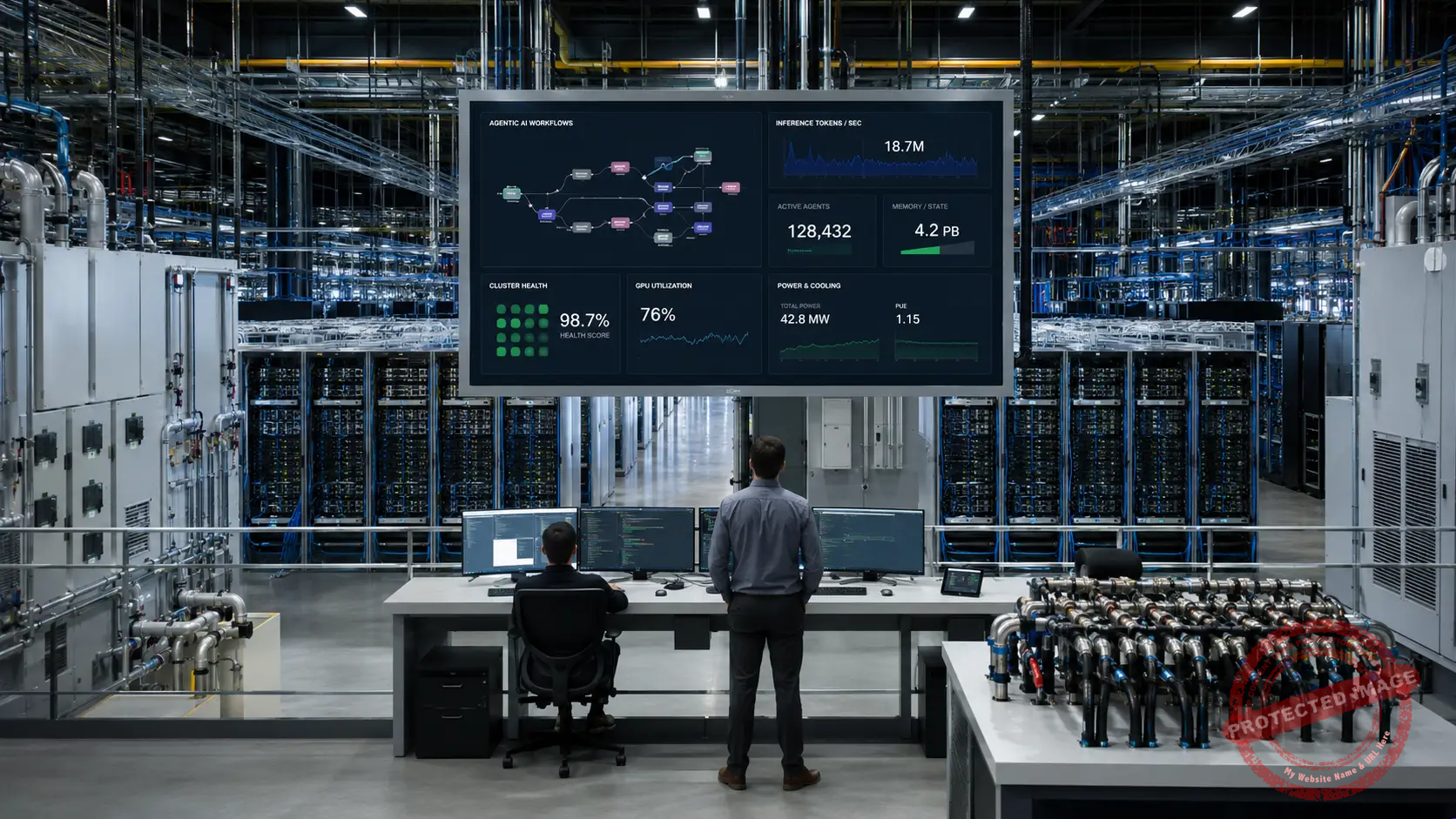
AI infrastructure is entering a new phase. The first wave of generative AI infrastructure was built around training large models and serving prompt-response chatbots. The next wave is being shaped by agentic AI: systems that reason, plan, call tools, retrieve data, execute workflows, and keep working across many steps instead of answering once and stopping.
That shift changes the infrastructure problem. A chatbot request may be brief, bursty, and stateless. An agentic workflow may run for minutes or hours, maintain memory, call multiple models, query vector databases, interact with APIs, and require fast feedback loops between inference, storage, networking, and orchestration. GPU hosting providers are no longer just selling accelerator access. They are being pushed to deliver complete AI execution environments.
Agentic AI Turns Inference Into a Continuous System
The most important infrastructure change is that inference is becoming the main event. Training remains expensive and strategically important, but production AI now generates the daily compute load. Every agent action may involve model calls, retrieval, ranking, planning, code execution, safety checks, and response generation. One user request can become dozens of inference operations.
This creates a new workload profile. Providers need high GPU utilization, low latency, large context support, and reliable scheduling across chains of dependent tasks. Techniques such as KV caching, speculative decoding, quantization, batching, and model routing are becoming infrastructure features rather than optional optimizations. Platforms such as vLLM matter because they directly affect how many tokens can be served per dollar and how quickly agents can reason through multi-step tasks.
The result is a market where raw GPU count is not enough. Buyers increasingly ask whether the provider can support long-running sessions, retrieval-augmented generation, observability, identity controls, autoscaling, and predictable token economics.
Power Is Now the Hardest Capacity Problem
For years, the GPU conversation focused on chip supply. That still matters, especially around high-bandwidth memory and advanced packaging, but the deeper constraint is power. AI clusters are moving toward rack-scale systems with extreme density. NVIDIA’s GB200 NVL72 and Vera Rubin NVL72 designs show where the market is heading: many accelerators operating as tightly connected rack-scale computers, often requiring liquid cooling and sophisticated power distribution.
This changes site selection. The best AI data center is not simply the one with cheap land or available fiber. It is the one with dependable multi-megawatt power, strong utility relationships, cooling capacity, and a path to future expansion. Uptime Institute has warned that AI growth will strain aging grids and force operators to rethink resiliency and sustainability strategies. In practical terms, power availability is becoming a competitive moat.
Some operators are exploring behind-the-meter power, renewable generation, battery storage, and even long-term nuclear options such as small modular reactors. Those strategies are not simple, fast, or universally available, but they reveal the direction of the industry: AI infrastructure planning is now energy planning.
Liquid Cooling Becomes Standard for Frontier Deployments
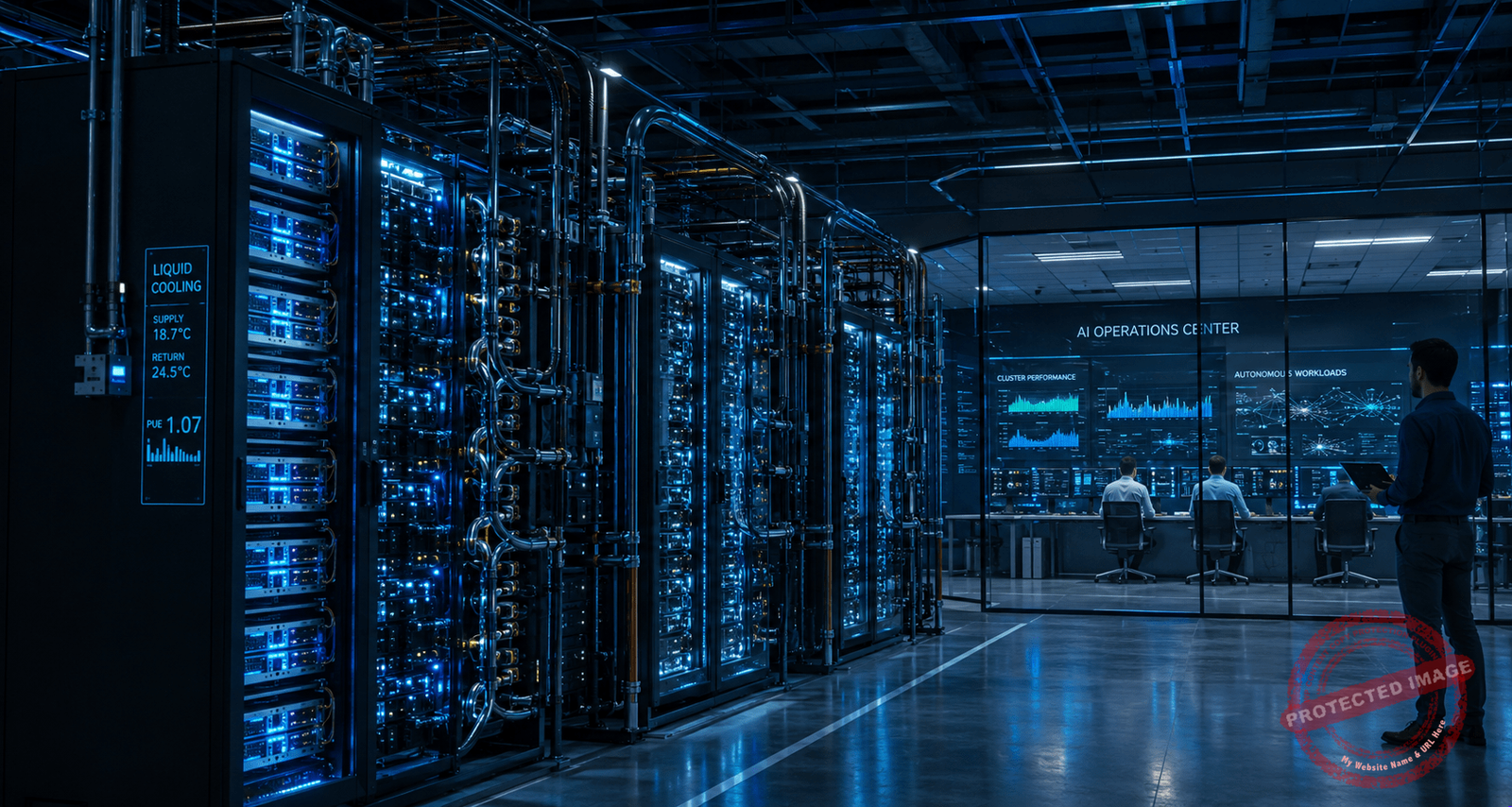
Air cooling is not disappearing everywhere, but it is no longer sufficient for the highest-density GPU clusters. Direct-to-chip liquid cooling, rear-door heat exchangers, coolant distribution units, leak detection, and thermal telemetry are moving into the operational mainstream.
This matters because agentic AI workloads are not occasional experiments. They are production systems that need sustained throughput. If racks cannot shed heat reliably, performance throttles, failure rates rise, and the economics break. Liquid cooling is therefore not a cosmetic facility upgrade. It is part of the compute architecture.
The providers that win will treat cooling as a software-visible control plane. They will monitor flow rate, temperature, pressure, rack health, and workload placement together. In a dense AI cluster, thermal management and job scheduling should inform each other.
The Rise of Altscalers and Specialized GPU Clouds
The hyperscalers still dominate global cloud infrastructure, but specialized GPU clouds have become serious competitors. These “altscalers” focus on high-performance AI clusters, faster access to scarce accelerators, bare metal options, and support for demanding training or inference workloads.
Their opportunity is clear. Enterprises, AI labs, and startups often need capacity faster than traditional procurement cycles can provide. They may want clusters tuned for PyTorch, Kubernetes, Slurm, InfiniBand, high-performance storage, or dedicated inference serving. A specialized provider can move quickly and design around AI from the ground up.
The risk is commoditization. Renting GPUs by the hour is not a durable strategy if supply normalizes or custom silicon becomes widely available. Altscalers will need to move up the stack with managed orchestration, storage, model-serving platforms, compliance support, observability, and cost controls.
Custom Silicon Fragments the Infrastructure Stack
NVIDIA remains central to AI infrastructure, especially for frontier training and large GPU clusters. But hyperscalers are investing heavily in their own accelerators. Google continues to evolve TPUs, AWS has Trainium and Inferentia, and Microsoft has introduced Maia for inference-focused workloads.
This diversification is rational. A hyperscaler that controls silicon, networking, compilers, model serving, and cloud services can optimize for cost, power, and workload fit. For customers, the tradeoff is portability. CUDA-based GPU infrastructure has a broad software ecosystem. Custom accelerators may offer attractive economics, but they can require different compilers, libraries, runtime assumptions, and deployment workflows.
The future will be heterogeneous. Training frontier models may still favor large GPU clusters, while steady-state inference may move to custom accelerators, smaller GPUs, or specialized inference chips. Infrastructure teams should design for workload placement, not hardware loyalty.
Agentic AI Needs Memory, Data, and Identity
Agentic systems depend on more than accelerators. They need access to enterprise context. That means vector databases, retrieval pipelines, metadata stores, file systems, permissions, audit logs, and application APIs are becoming part of the AI infrastructure stack.
Retrieval-augmented generation is a good example. In a simple chatbot, RAG may be a plug-in. In an agentic system, retrieval becomes continuous. The agent may need to search documents, compare records, cite sources, update state, and decide when to ask for human approval. Latency between GPU compute and data systems becomes a product issue.
Security also changes. When AI agents act on behalf of users or organizations, infrastructure must manage non-human identity. Each agent may need authentication, authorization, scoped permissions, policy enforcement, and revocation. The question is not only “Can the model answer?” It is “What is this agent allowed to do, under whose authority, with what audit trail?”
Hybrid AI and Repatriation Gain Momentum
Not every workload belongs in the public cloud forever. As inference volumes grow, predictable workloads may become cheaper on reserved bare metal, colocation, or private infrastructure. This is especially true when organizations have steady demand, sensitive data, strict latency requirements, or specialized networking needs.
Hybrid AI is not a retreat from cloud. It is a more mature placement strategy. Public cloud remains valuable for burst capacity, managed services, global reach, and experimentation. Dedicated infrastructure can be better for stable high-volume inference, proprietary data pipelines, or workloads where cost predictability matters.
A practical pattern is emerging: train or fine-tune where capacity is available, serve latency-sensitive workloads closer to users, and repatriate predictable inference once utilization is high enough to justify dedicated infrastructure.
Economics Move From Servers to Tokens
AI buyers increasingly think in tokens, not servers. That changes infrastructure packaging. A GPU hour is an input cost. A token is closer to a business-facing unit of value.
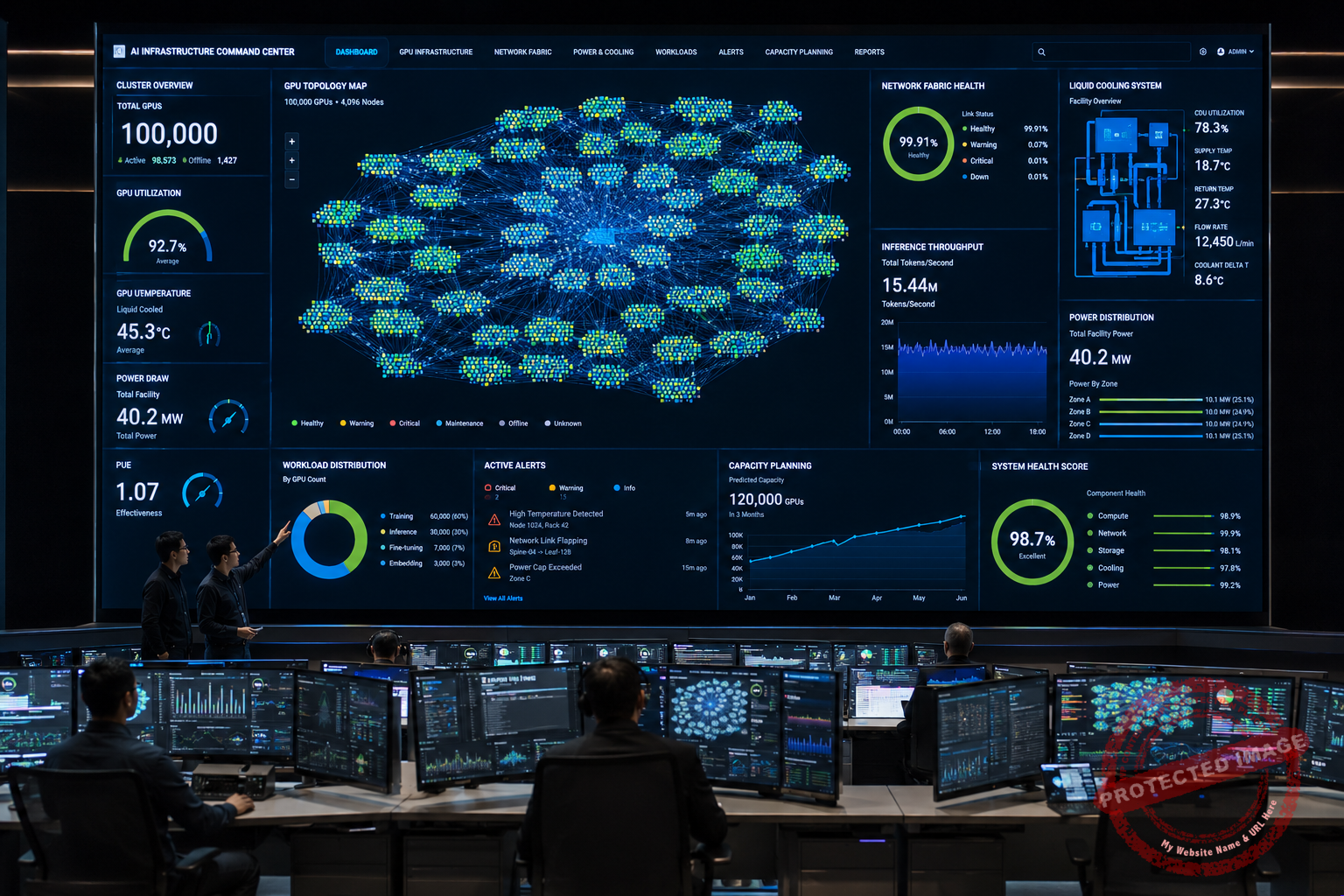
For hosting providers, this creates pressure to expose better metering and optimization. Customers want to understand cost per million tokens, latency by model, cache hit rates, throughput, idle capacity, and the effect of quantization or batching. FinOps for AI will become a standard discipline because agentic workloads can multiply hidden inference calls quickly.
The best platforms will make cost visible during design, not after the bill arrives. Teams should be able to compare model choices, context lengths, retrieval strategies, and serving configurations before they scale.
Edge AI Extends the Infrastructure Map
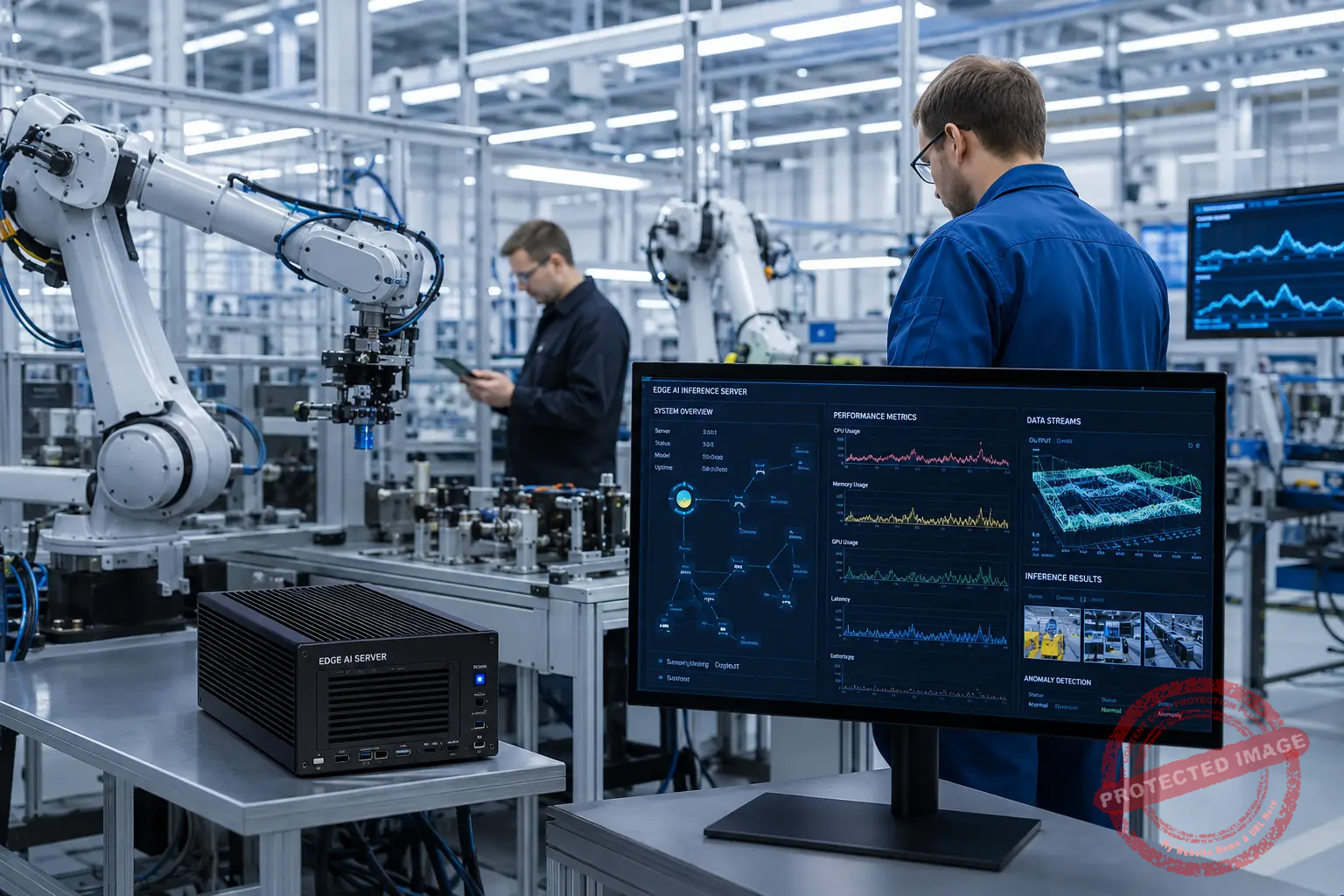
Agentic AI also pushes compute closer to users, machines, and real-world environments. Robotics, industrial automation, healthcare devices, retail systems, and autonomous workflows often cannot tolerate long round trips to distant regions. They need local inference, regional failover, and careful synchronization with central systems.
This does not mean every edge location needs frontier GPUs. Many edge workloads will use smaller accelerators or optimized models. But it does mean AI infrastructure is becoming more distributed. Central clusters will train and serve large models, while regional and edge nodes handle low-latency inference, safety checks, local context, and real-time control.
What Infrastructure Buyers Should Prioritize
Organizations evaluating GPU hosting in the agentic era should ask harder questions than “Which GPUs are available?” They should evaluate power resiliency, cooling maturity, network topology, storage throughput, inference-serving software, observability, security controls, and pricing transparency.
They should also separate experimental needs from production needs. A prototype may only require quick GPU access. A production agentic system needs uptime, auditability, scalable inference, cost controls, and strong integration with data systems. The infrastructure decision should follow the workload’s lifecycle.
Most importantly, buyers should design for change. Models, accelerators, and serving frameworks are evolving quickly. The safest architecture is modular: portable model artifacts where possible, clear APIs between retrieval and inference, workload-aware orchestration, and telemetry that exposes both performance and cost.
Looking forward
The shift to agentic AI is forcing GPU hosting to mature from accelerator rental into full-stack AI infrastructure. The winners will not simply own the most GPUs. They will combine power, cooling, networking, orchestration, inference optimization, data integration, identity, and cost transparency into a reliable platform for autonomous workloads.
Agentic AI makes infrastructure more stateful, more distributed, more power-hungry, and more operationally complex. For enterprises, the takeaway is simple: choose infrastructure for the workflow, not the benchmark.
Researched and written by: Peter Jonathan Wilcheck
Reference Sites
- Google Cloud: 2026 State of Infrastructure in the Agentic AI Era
https://cloud.google.com/resources/content/state-of-infrastructure-in-the-agentic-ai-era - Uptime Institute: Five Data Center Predictions for 2026
https://uptimeinstitute.com/resources/research-and-reports/five-data-center-predictions-for-2026 - NVIDIA: Vera Rubin NVL72
https://www.nvidia.com/en-us/data-center/vera-rubin-nvl72/ - NVIDIA: GB200 NVL72
https://www.nvidia.com/en-us/data-center/gb200-nvl72/ - vLLM Documentation: Speculative Decoding and Inference Optimization
https://docs.vllm.ai/en/latest/features/speculative_decoding/
Post Disclaimer
The information provided in our posts or blogs are for educational and informative purposes only. We do not guarantee the accuracy, completeness or suitability of the information. We do not provide financial or investment advice. Readers should always seek professional advice before making any financial or investment decisions based on the information provided in our content. We will not be held responsible for any losses, damages or consequences that may arise from relying on the information provided in our content.
 AAPL
AAPL AMD
AMD CIS.HA
 DELL
DELL IBM
IBM INTC
INTC MSFT
MSFT GOOG
GOOG HPE
HPE NVDA
NVDA TSLA
TSLA TMC
TMC MSI
MSI NOK
NOK OPEAZZX