


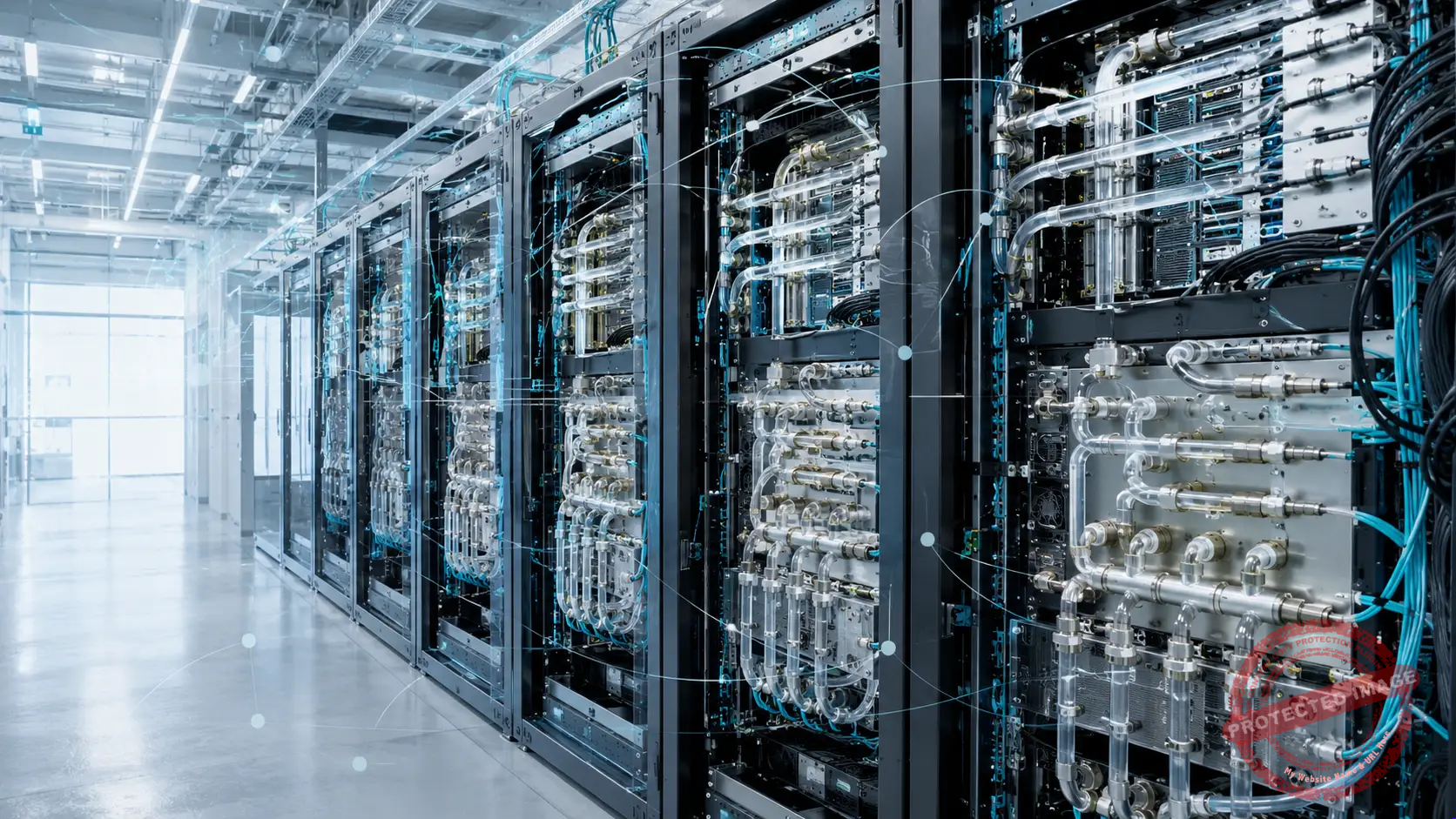
AI infrastructure is moving into a new phase. The first wave of generative AI hosting was built around large model training and simple prompt-response inference. A user entered a prompt, a model generated an answer, and the infrastructure challenge was mostly about throughput, latency, and GPU availability.
Agentic AI changes that pattern.
Instead of answering one prompt at a time, AI agents reason, plan, retrieve data, call tools, check results, and continue working across multi-step workflows. In practical terms, that means infrastructure can no longer be optimized only for short bursts of inference. It must support continuous reasoning loops, long-running context, persistent memory, secure tool access, and high volumes of machine-to-machine traffic.
Image prompt: Hyper-realistic, super high-resolution image of a modern AI data center operations room at night, engineers monitoring autonomous AI agent workflows across wall-sized dashboards, glowing GPU cluster maps, fiber network paths, and real-time inference metrics, cinematic lighting, documentary realism, no text overlay.
From Chatbots to Autonomous Workflows
Traditional chatbot infrastructure is relatively straightforward compared with agentic systems. A request comes in, the model produces a response, and the session ends or waits for another user turn. Even when retrieval-augmented generation is involved, the workflow often remains bounded.
Agentic AI is different because the model becomes part of an execution loop. An agent may break a goal into steps, query internal systems, call APIs, write code, schedule follow-up actions, validate outputs, and coordinate with other agents. AWS describes agentic AI as systems that can act independently toward predetermined goals, while NVIDIA frames agents around reasoning, planning, and action. Those definitions matter because they point directly to infrastructure consequences. Agentic workloads are not just “more AI.” They are AI systems with state, tools, memory, and operational responsibility. (aws.amazon.com) (nvidia.com)
For infrastructure teams, the key question becomes: how do you host AI systems that do not simply respond, but keep working?
The Inference Layer Becomes the Main Battlefield
As models move into production, inference becomes the dominant economic problem for many organizations. Training remains expensive and strategically important, but most enterprises will spend more time running models than building foundation models from scratch.
Agentic AI accelerates this shift because each task can trigger many inference calls. A single user request might create dozens of model invocations: planning, retrieval, tool selection, intermediate reasoning, validation, summarization, and final response. If multiple specialized agents collaborate, the number of calls can multiply again.
This changes how GPU hosting should be evaluated. Buyers should not look only at raw accelerator performance. They need to understand:
- Cost per useful completed workflow
- Latency across multi-step chains
- Queueing behavior under bursty agent traffic
- Memory pressure from long context windows
- Support for batching, caching, and low-precision inference
- Observability at the agent, model, and infrastructure layers
The best infrastructure for agentic AI will be the infrastructure that turns expensive accelerator time into reliably completed work.
Memory and Context Are Now First-Class Infrastructure Problems
Agentic systems depend heavily on memory. Some of that memory lives in application databases, vector stores, logs, and retrieval systems. But another important part lives inside the inference stack itself: context windows, KV cache, and intermediate state.
This is why optimizations such as KV cache quantization, speculative decoding, and efficient batching are becoming infrastructure features rather than niche model-serving tricks. vLLM documentation notes that quantizing KV cache can reduce memory footprint and support longer context windows, while speculative decoding can reduce inter-token latency under certain memory-bound conditions. (docs.vllm.ai) (docs.vllm.ai)
For agentic AI, these optimizations matter because agents often need to preserve context across many steps. If every reasoning loop consumes large amounts of memory, infrastructure cost rises quickly. If context is trimmed too aggressively, agents lose continuity and make poorer decisions. The operating model has to balance context length, memory footprint, latency, and accuracy.
Agentic AI Changes the Network Pattern
AI infrastructure discussions often focus on GPUs, but agentic AI also changes the network.
In a training cluster, the most important traffic pattern is often high-bandwidth synchronization between accelerators. In agentic inference, the system may generate heavy east-west traffic between model servers, retrieval systems, tool APIs, security services, orchestration layers, and observability pipelines.
That means low latency and low jitter become more important across the whole service path, not only inside the GPU cluster. A slow vector database lookup, overloaded API gateway, or noisy internal network can degrade the user-facing workflow even when the GPU itself is healthy.
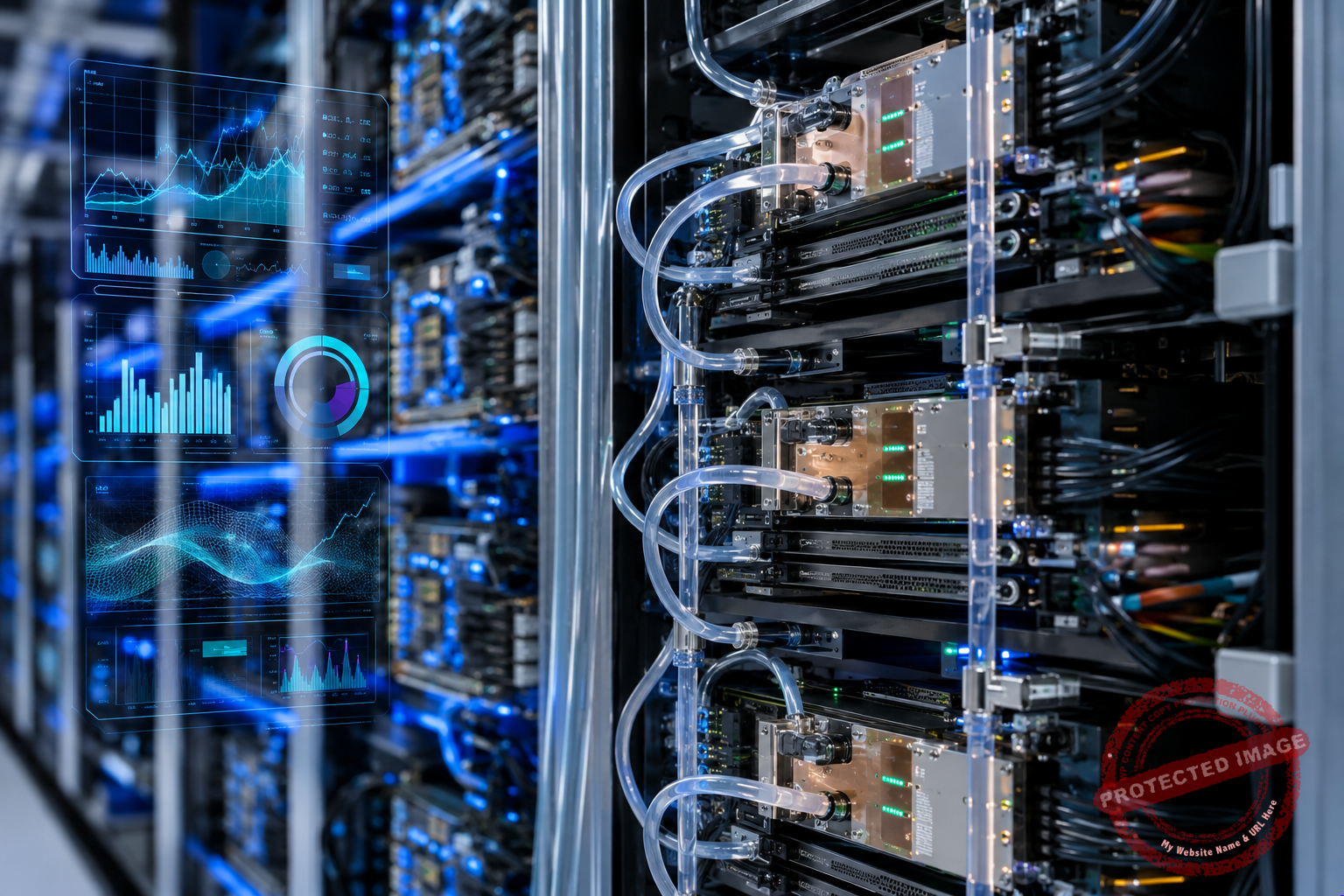
This is one reason rack-scale AI systems are becoming more relevant. NVIDIA’s GB200 NVL72, for example, is positioned as a rack-scale, liquid-cooled system connecting 36 Grace CPUs and 72 Blackwell GPUs in a single NVLink domain. The broader point is not that every enterprise needs that exact system. It is that AI infrastructure design is moving from individual servers toward integrated compute, memory, networking, and cooling architecture. (nvidia.com)
Custom Silicon Will Matter More for Agentic Inference
The agentic AI era will not be served by one hardware pattern. GPUs will remain central for flexible, high-performance workloads, but inference-heavy environments will increasingly evaluate custom accelerators where economics justify the software tradeoff.
Google describes Ironwood as a TPU generation designed for the age of inference, and AWS positions Trainium around high-performance AI training and inference economics. These platforms show where the market is heading: infrastructure buyers want more choices for production AI, especially when workloads are predictable enough to optimize around specific silicon.
The tradeoff is fragmentation. GPUs still benefit from a broad software ecosystem, mature tooling, and portability. Custom silicon can improve cost-performance for certain workloads, but it may require teams to adapt frameworks, deployment pipelines, and performance-tuning practices.
For agentic AI, the practical answer is likely hybrid. Use flexible GPU infrastructure for fast-changing models, complex workloads, and broad compatibility. Use custom accelerators where inference patterns are stable, measurable, and worth optimizing.
Security and Governance Move Into the Infrastructure Layer
Agentic AI raises a security issue that ordinary chatbots do not: agents can act.
They may access tools, trigger workflows, inspect data, modify systems, or initiate transactions. That makes identity, authorization, logging, and policy enforcement part of the infrastructure design. Microsoft’s agentic AI security guidance emphasizes securing code, agents, and models throughout the development lifecycle, reflecting a broader industry shift: agents need guardrails at runtime, not just safety rules in prompts. (microsoft.com)
Infrastructure teams should plan for:
- Per-agent identity and permissions
- Tool access boundaries
- Audit logs for agent actions
- Human approval gates for high-risk operations
- Cost controls for runaway reasoning loops
- Observability that connects prompts, tool calls, model outputs, and system events
The production question is not only “Can the model reason?” It is “Can the platform prove what the agent did, why it did it, and whether it was allowed?”
What AI Infrastructure Buyers Should Prioritize
For organizations planning agentic AI deployments, the best infrastructure strategy starts with workload shape rather than vendor preference.
If the workload is latency-sensitive, prioritize regional placement, optimized serving stacks, and low-jitter networking. If it is memory-heavy, evaluate context management, KV cache efficiency, and accelerator memory capacity. If it is steady-state and predictable, consider reserved capacity or custom silicon. If it is experimental, prioritize flexible GPU access and fast provisioning. If it handles sensitive data or regulated workflows, private or sovereign hosting may matter more than headline performance.
The strongest platforms for agentic AI will combine five capabilities:
- Efficient inference serving
- Long-context memory management
- High-throughput internal networking
- Secure tool and identity governance
- Cost visibility at the workflow level
That last point is critical. Agentic AI can make infrastructure costs harder to predict because one user goal may generate many hidden model calls. GPU utilization alone is not enough. Teams need to measure cost per agent run, cost per completed task, and cost per business outcome.
Final Thoughts: Agentic AI Needs Infrastructure Built for Work, Not Just Answers
The shift to agentic AI is not just a software trend. It changes the underlying assumptions of AI hosting. Infrastructure must support continuous reasoning, persistent context, secure action, high-volume inference, and complex service-to-service traffic.
The winners will not simply be the teams with the most GPUs. They will be the teams that design infrastructure around the way agents actually behave: iterative, stateful, tool-using, and operationally accountable.
Researched and written by: Peter Jonathan Wilcheck
Reference Sites
- AWS, “What is Agentic AI?” (aws.amazon.com)
- NVIDIA, “Transform Your Business With Agentic AI” (nvidia.com)
- NVIDIA, “GB200 NVL72” (nvidia.com)
- Google, “Ironwood: The first Google TPU for the age of inference” (blog.google)
- vLLM Documentation, “Quantized KV Cache” (docs.vllm.ai)
Post Disclaimer
The information provided in our posts or blogs are for educational and informative purposes only. We do not guarantee the accuracy, completeness or suitability of the information. We do not provide financial or investment advice. Readers should always seek professional advice before making any financial or investment decisions based on the information provided in our content. We will not be held responsible for any losses, damages or consequences that may arise from relying on the information provided in our content.

 AAPL
AAPL AMD
AMD CIS.HA
 DELL
DELL IBM
IBM INTC
INTC MSFT
MSFT GOOG
GOOG HPE
HPE NVDA
NVDA TSLA
TSLA TMC
TMC MSI
MSI NOK
NOK ECDH26.CME
 OPEAZZX