


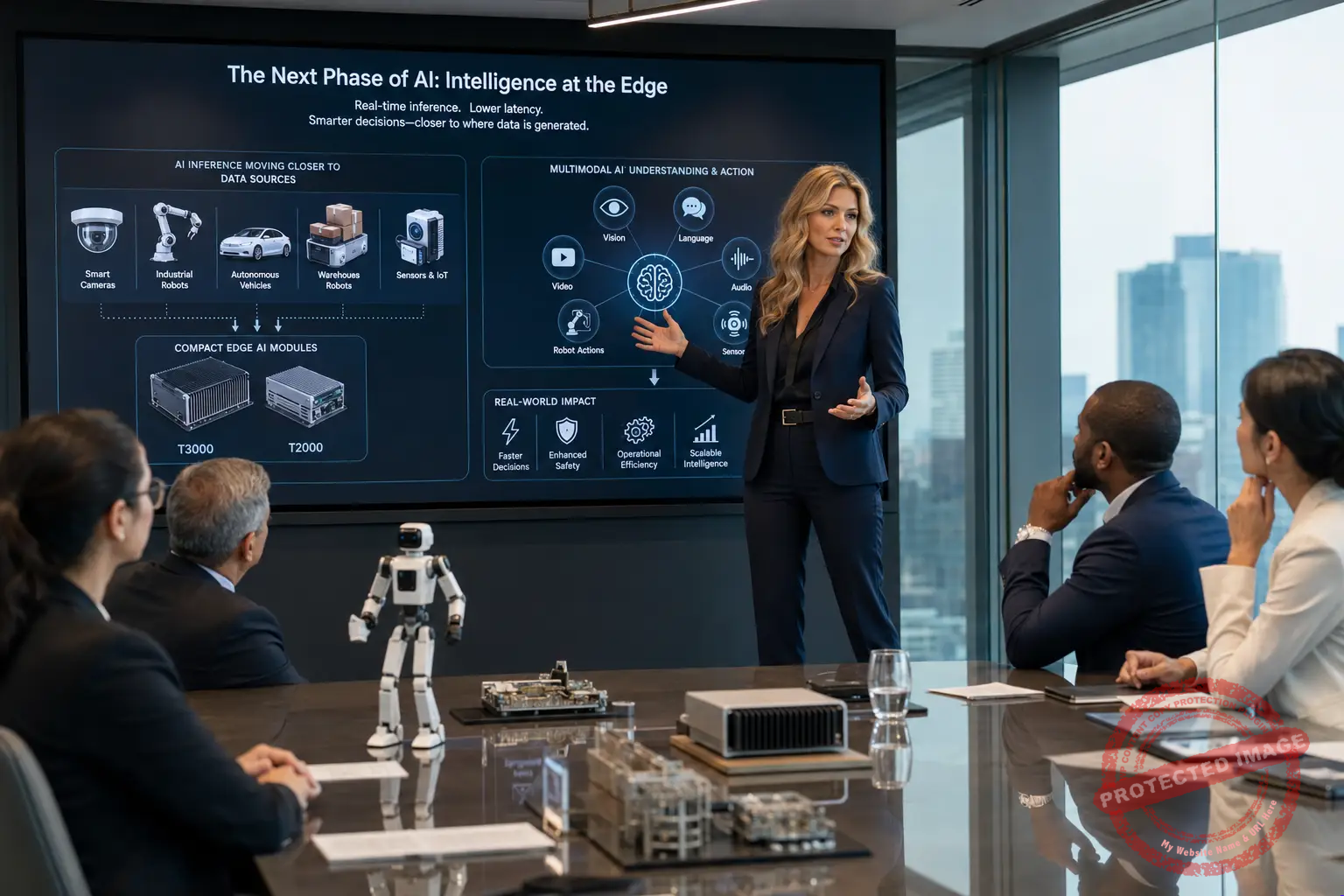
Edge AI is entering a new phase. For years, the big promise was simple: move inference closer to where data is created so systems can respond faster, use less bandwidth, and keep sensitive information local. That still matters. But the workload has changed. Today’s edge systems are no longer just detecting objects in a camera feed or classifying sensor data. They are beginning to run multimodal AI: models that combine vision, language, video, audio, sensor streams, and sometimes robot actions.
That is why Nvidia’s July 2026 announcement of the Blackwell-based Jetson T3000 and T2000 modules is important. These modules are designed to push more serious AI workloads into robots, industrial machines, cameras, vehicles, and autonomous edge systems without forcing every decision through the cloud.
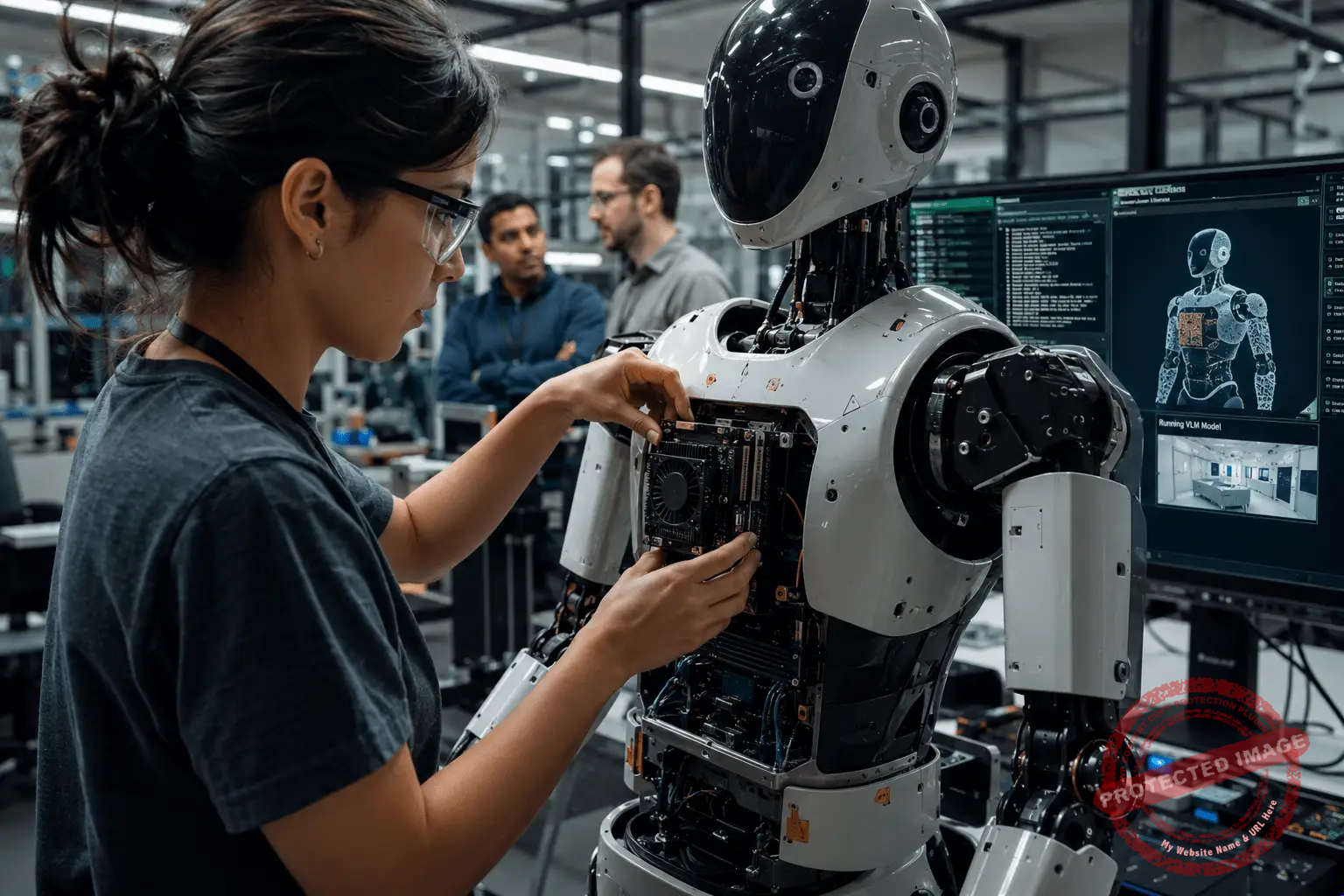
From Edge Inference to Physical AI
Traditional edge inference usually meant running a trained model locally. A smart camera could detect a person. A factory sensor could identify a vibration anomaly. A retail kiosk could recognize a product. These are useful applications, but they are usually narrow.
The next generation is broader. Robots and autonomous machines need to perceive the world, reason about what is happening, and decide what to do next. That means handling camera feeds, depth sensors, language commands, mapping data, safety constraints, and action planning at the same time. Nvidia often refers to this category as physical AI: AI that operates in the real world, not just on text or images.
The Jetson T3000 and T2000 are part of that shift. Nvidia says the T3000 delivers 865 FP4 teraflops of AI compute with a Blackwell GPU, an eight-core Arm Neoverse CPU, 32GB of LPDDR5X memory, 273GB/s of memory bandwidth, and 25 GbE connectivity. The T2000 is smaller again, offering 400 FP4 teraflops and 16GB of memory for a wider range of visual AI agents, autonomous mobile robots, and industrial systems.
Why Local Multimodal AI Matters
The cloud is still essential for training, fleet learning, large-scale simulation, monitoring, and heavy analytics. But many edge AI decisions cannot wait for a round trip to a data center.
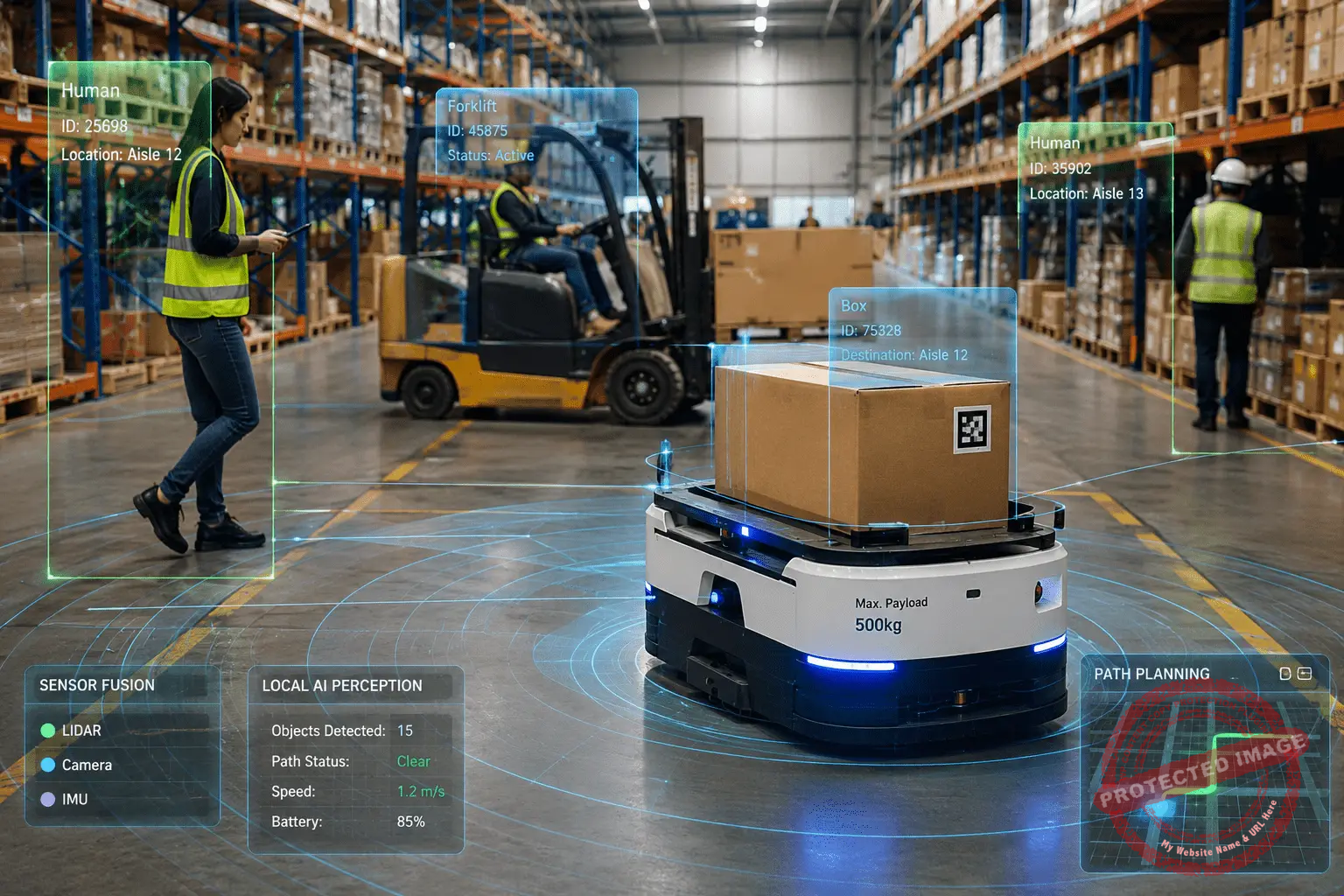
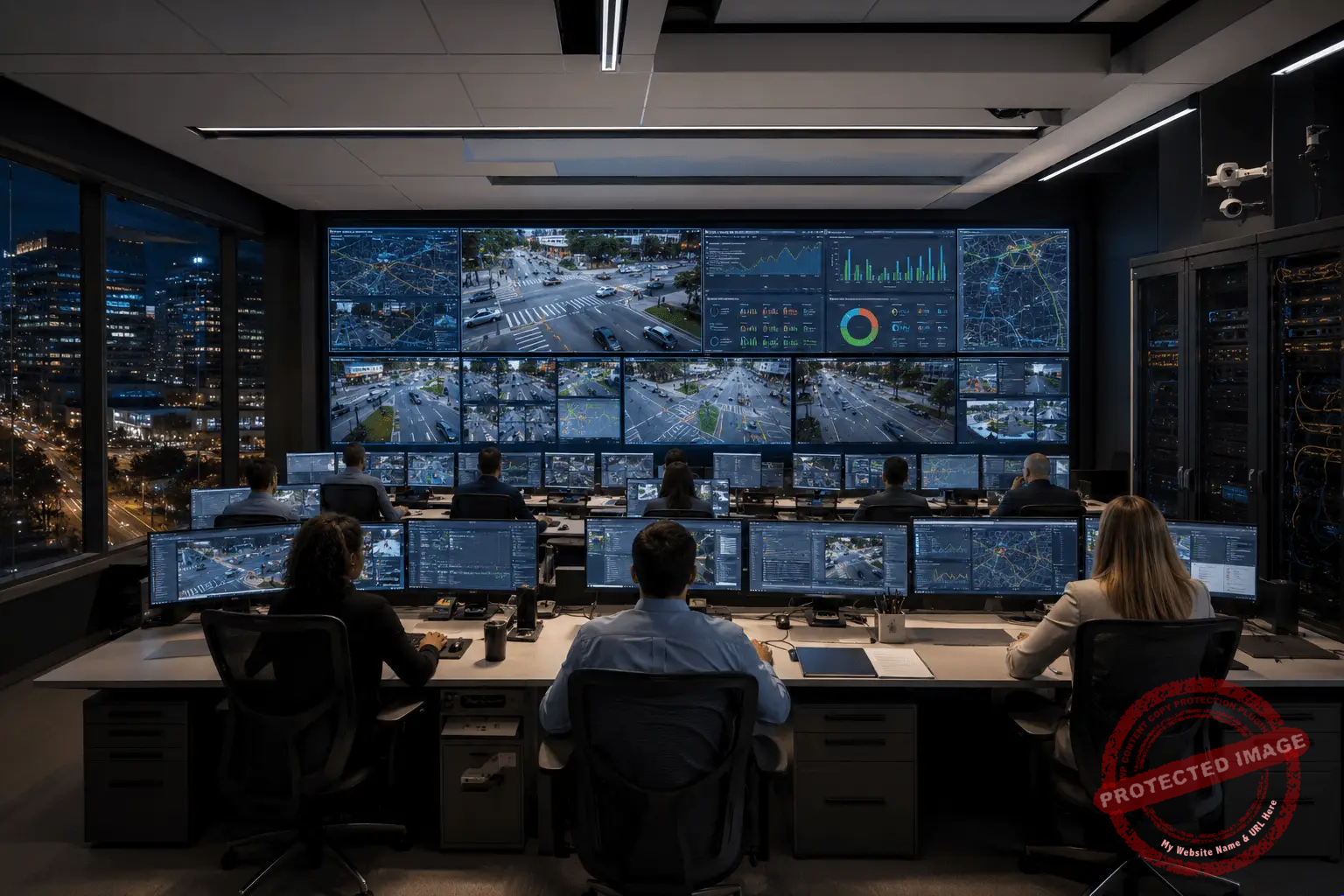
A warehouse robot navigating around workers needs fast local perception. A roadside traffic system may need to react even when network connectivity is unreliable. A hospital-assistive robot may process sensitive visual and voice data that should not be casually streamed to the cloud. A smart factory system may generate huge volumes of video and sensor data that would be expensive to upload continuously.
This is where localized AI hardware changes the equation. Running inference at the edge can reduce latency, preserve bandwidth, improve reliability, and limit unnecessary exposure of sensitive data. The tradeoff is that edge devices must work inside strict power, thermal, memory, and cost limits. A data center GPU can be large, hot, and power-hungry. A robot module has to fit inside a moving machine.
The Real Breakthrough Is Performance per Watt
Raw compute numbers are useful, but edge AI is really about performance per watt. A robot or embedded system cannot simply add more servers when the workload grows. It has a power budget, a thermal envelope, a physical enclosure, and a bill of materials.
That is why the T3000 is interesting. Nvidia positions it as roughly half the size and power of the T5000 while still offering strong inference performance for multimodal workloads such as large language models, vision-language models, vision-language-action models, and world foundation models. In plain English, Nvidia is trying to make more advanced robot intelligence practical in smaller, cheaper, more deployable systems.
The T2000 matters for a different reason: scale. Not every edge device needs the highest-end robotics computer. Many systems need enough AI performance to run useful visual agents, language-assisted inspection, local summarization, or autonomy features at a lower memory and power point. If the T3000 is for more capable robots and industrial machines, the T2000 is the sign that Blackwell-class edge AI is moving toward mainstream deployment.
Memory Is Becoming a First-Class Design Constraint
A quiet but important part of Nvidia’s announcement is memory optimization. Multimodal models are often memory-hungry. At the edge, memory capacity can determine whether a model fits at all, whether multiple workloads can run together, and whether a product can ship at an acceptable cost.
Nvidia says its Jetson agent skills can help optimize memory usage, system configuration, and deployment tasks across Jetson devices. This matters because a smaller memory configuration can lower system cost and power requirements. It also reflects a larger truth about Edge AI: hardware alone is not enough. The winning systems will combine efficient chips, optimized runtimes, quantized models, careful memory planning, and software stacks that make deployment less painful.
Cosmos 3 Edge and the Rise of On-Device World Models
The hardware story is also tied to model architecture. Nvidia introduced Cosmos 3 Edge as a 4-billion-parameter model for embodied systems that can see, reason, and generate actions through on-device inference. That does not mean every robot is suddenly fully autonomous or human-level intelligent. It does mean the industry is moving toward smaller world models that can run locally and support real-time decision-making.
For developers, this points toward a hybrid future. Large cloud models may help train, simulate, evaluate, and update systems. Smaller local models may handle real-time perception, reasoning, and action. The edge becomes the place where decisions happen, while the cloud remains the place where large-scale learning and orchestration happen.
The Tradeoffs Are Still Real
The excitement should not hide the engineering constraints. FP4 teraflops are not the same as universal application performance. Real-world results depend on model architecture, memory bandwidth, software optimization, thermal design, sensor load, batching, latency targets, and safety requirements.
Edge AI also raises deployment questions. Who updates the models? How are failures handled? What happens when lighting, weather, accents, objects, or environments change? How do teams validate behavior in safety-sensitive settings? More local intelligence can improve privacy and responsiveness, but it also requires strong observability, testing, security, and lifecycle management.
The Takeaway
Nvidia’s Jetson T3000 and T2000 announcement is not just another chip launch. It signals that multimodal AI is moving closer to the machines that need it: robots, cameras, industrial systems, smart infrastructure, and autonomous devices.
The larger shift is clear. Edge AI is becoming less about simple local inference and more about localized reasoning under real-world constraints. The winners will not be the systems with the biggest model alone. They will be the systems that balance latency, power, privacy, memory, cost, and reliability well enough to work outside the lab.
Reference Sites:
- Nvidia Blog: NVIDIA Introduces New Jetson Thor Computers to Advance Mainstream Robotics and Edge AI
- Nvidia Jetson Thor: Advanced AI for Physical Robotics
- ServeTheHome: NVIDIA Announces Expanded Jetson Thor Lineup with Mid-Range T3000 and T2000 Modules
- CNX Software: NVIDIA launches smaller, mainstream Jetson T2000 and T3000 modules
- Hugging Face: Introducing Cosmos 3 Edge
Researched and Written by Peter Jonathan Wilcheck
https://techonlinenews.com/
https://www.peterjonathanwilcheck.com/
What do you think will matter most for next-generation edge AI: lower latency, better privacy, lower power use, or stronger local reasoning?
Please add your personal commentary on where you think edge AI hardware will make the biggest real-world impact first.
Post Disclaimer
The information provided in our posts or blogs are for educational and informative purposes only. We do not guarantee the accuracy, completeness or suitability of the information. We do not provide financial or investment advice. Readers should always seek professional advice before making any financial or investment decisions based on the information provided in our content. We will not be held responsible for any losses, damages or consequences that may arise from relying on the information provided in our content.

 AAPL
AAPL AMD
AMD CIS.HA
 DELL
DELL IBM
IBM INTC
INTC MSFT
MSFT GOOG
GOOG HPE
HPE NVDA
NVDA TSLA
TSLA TMC
TMC MSI
MSI NOK
NOK ECDH26.CME
 OPEAZZX